5 Black missing-person and death cases that still leave families searching for answers
From decades-old disappearances to more recent deaths, these cases show why families continue pressing authorities for answers and accountability. Black


From decades-old disappearances to more recent deaths, these cases show why families continue pressing authorities for answers and accountability.
Black Americans are disproportionately represented in missing-person reports, while concerns persist about racial disparities in media coverage and public attention given to missing people. For families whose loved ones disappear or die under uncertain circumstances, unanswered questions can persist for years or even decades.
TheGrio examines five cases involving Black Americans whose deaths or disappearances have raised questions, prompted public scrutiny, or remained unresolved. By reviewing documented facts, official findings, family concerns, and the status of each case, we aim to draw attention to the people behind the headlines while distinguishing confirmed information from unproven allegations.
Rev. A.D. King
A.D. King was the younger brother of Martin Luther King Jr. and a Baptist minister and civil rights activist who fought segregation and advocated for Black Americans. Working outside the national spotlight that his brother received, King played an active role in the civil rights movement. As pastor of Zion Baptist Church in Louisville, Kentucky, he helped lead a campaign for an open-housing ordinance in 1968.
Just a year after Martin’s death, A.D King was found dead in his Atlanta, Georgia’s home swimming pool on July 21, 1969. King’s death was officially classified as a drowning, but his wife, Naomi King, strongly rejected the conclusion and believed he had been murdered. Naomi questioned the official conclusion, citing her husband’s exceptional swimming ability and concerns about the autopsy findings. She said no water came from his lungs when people tried to resuscitate him, and described bruising on his forehead along with marks around his neck.
In a wider context, A.D. spent years facing threats connected to his activism. King’s history of activism, the bombing of his home in 1963 and his family’s continuing questions have contributed to suspicions surrounding his death.The distinction between the official finding and the family’s objections remains central to understanding the case.
Nolan Wells 
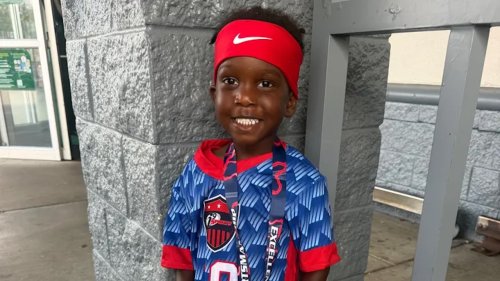
Nolan Wells was an 18-year-old college student athlete from Mississippi. His family described him as someone who never met a stranger, and loved to just sit down and talk. He was non-confrontational, and wanted to include everyone he could.
On July 4, 2026, Nolan Wells traveled to a barrier island off of Mississippi’s gulf coast, named Horn Island with some friends for the holiday. When the boat returned and Wells was nowhere to be found, his family reported him missing. Wells’ dead body was recovered from the water on July 6. The medical examiner later classified his case and cause of death as undetermined. According to an independent pathologist hired by the family, the examination found no water in Wells’ lungs, stomach or throat. Bruising to his head was also noted and questions arose regarding his phone, which has deleted messages. The family has since disputed aspects of the accounts provided by people who were with him.
On September 21, the Jackson County grand jury released its findings after hearing from 43 witnesses and reviewing evidence. The panel concluded that no criminal charges were warranted and declined to indict anyone in connection to Nolan’s death. Because the cause and manner of death remain undetermined in medical findings, credible new evidence suggesting that Nolan’s death was non-accidental could allow the case to be seen by a new grand jury. Christine Wells-Wonsley and Elmore Wonsley continue to seek answers and call for further federal scrutiny.
Larry Stackhouse Jr.
Larry Darnell Stackhouse Jr. was a 19-year-old from Syracuse, New York, who worked at a nursing home around the time of his disappearance. His parents described him as a well-behaved young man who was working toward earning his GED. Questions surrounding his disappearance have persisted in the Syracuse community for more than two decades.
On Dec. 2, 2005, Stackhouse left his parents’ home between 6 and 6:30 p.m. He was reportedly on his way to a local basketball game. When he failed to return home overnight, his parents reported him missing the following morning.
According to accounts provided by the family, Stackhouse’s friend initially said he had dropped Larry off at a store near his home. The friend later changed his story, claiming Stackhouse had been involved in an altercation with Native American individuals at the basketball game.
Stackhouse’s father, Larry Stackhouse Sr., has publicly expressed his belief that his son was murdered and his body concealed. However, the family has yet to receive answers about what happened that night.
Stackhouse Jr.’s parents have continued searching for information through missing-person flyers, public appeals, vigils and media interviews, but their efforts have yet to produce confirmed leads or a resolution. In October 2021, Spectrum News reported on the family’s frustration with what they viewed as a lack of public attention and an inadequate investigative response to their son’s disappearance.
Jelani Day
Jelani Day was a 25-year-old Black graduate student at Illinois State University. Born in June 1996, he grew up in Danville, Illinois, and was remembered by his family as caring and full of promise.
On Aug. 25, 2021, Day’s mother reported him missing. The following day, his white 2010 Chrysler 300 was found in a wooded area in Peru, Illinois. The vehicle’s license plates had been removed, and his keys and whereabouts remained unknown. After a week of searching, Day’s body was found in the river near the Illinois Route 251 Bridge in Peru. The coroner ruled drowning as the cause of death.
Day’s wallet and school lanyard were recovered at separate locations. A radio was found near his body, while clothing was discovered on the opposite bank of the river. His mother, Carmen Bolden Day, questioned the pace of the search, the process used to identify her son’s remains and the communication she received from authorities.
In August 2026, WAND News reported that the Jelani Day Foundation was advocating for Illinois Senate Bill 3932. As described in the report, the proposed legislation would require the FBI to be notified when human remains found in Illinois remain unidentified after 72 hours. Peru police have stated that they have no active leads or new information to report.
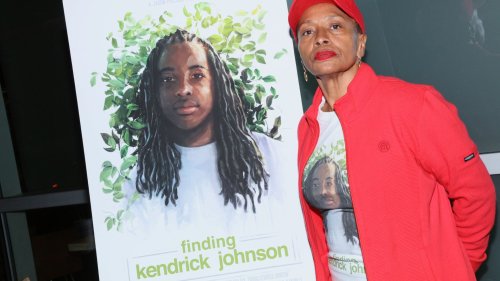
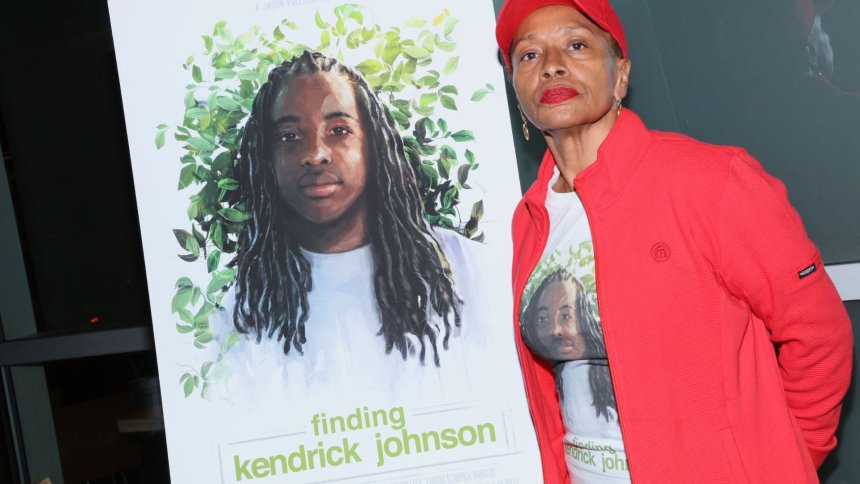
Kendrick Johnson
Kendrick Lamar Johnson was a 17-year-old from Valdosta, Georgia, and the son of Kenneth and Jacquelyn Johnson. He attended Lowndes High School, where he was a student-athlete on the basketball team.
Johnson was last seen alive at school at approximately 1:27 p.m. on Jan. 10, 2013. The following day, students found him upside down inside a rolled-up wrestling mat stored vertically in the school gym, with his legs protruding from the opening. On May 2, the Georgia Bureau of Investigation’s medical examiner concluded that Johnson died from positional asphyxia and classified his death as an accident, determining that he had become trapped while trying to retrieve a shoe. The sheriff’s office subsequently closed its investigation.
A second autopsy commissioned by Johnson’s family reached a different conclusion. Private medical examiner Dr. William Anderson attributed Johnson’s death to blunt-force trauma to the right side of his neck and near his jaw, concluding that the death could not have been accidental. According to his family, Johnson also had abrasions on his hands and marks resembling stun-gun prongs on his wrists.
The school had security cameras, and federal investigators reviewed footage during their initial investigation. In 2013, CNN analyst Victor Blackwell examined the footage and concluded that some of it appeared to have been altered and that important video was missing. These findings added to the family’s concerns about the circumstances surrounding Johnson’s death.
According to an April 2026 update from the Lowndes County Sheriff’s Office, the case remains listed as active.
Share
What's Your Reaction?
 Like
0
 Dislike
0
 Love
0
 Funny
0
 Angry
0
 Sad
0
 Wow
0