Black freshman enrollment at Harvard drops nearly 50% since Supreme Court ended affirmative action
New enrollment figures reveal widening racial disparities at some of the nation’s most prestigious universities, although other schools have managed


New enrollment figures reveal widening racial disparities at some of the nation’s most prestigious universities, although other schools have managed to reverse earlier declines.
Three years after the Supreme Court struck down race-conscious college admissions, the impact is becoming increasingly apparent at some of the nation’s most selective universities, where Black freshman enrollment has fallen dramatically.
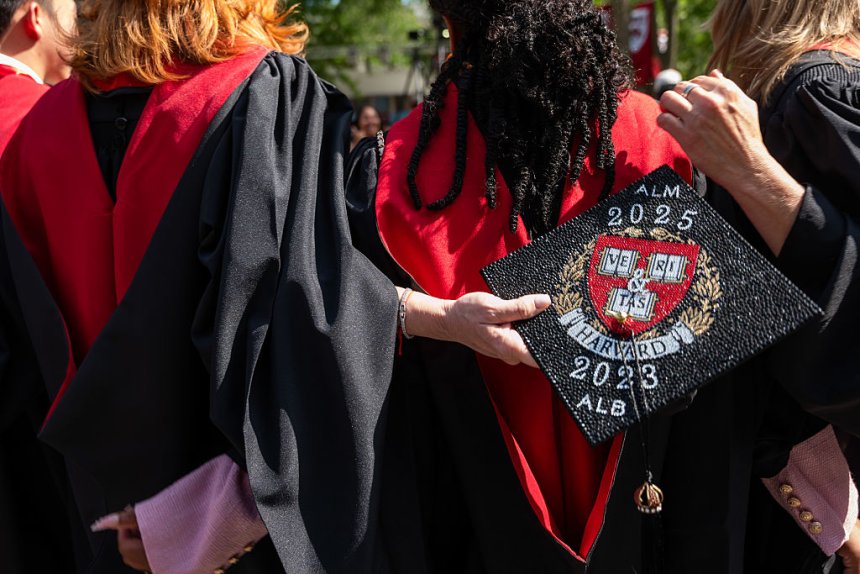
At Harvard University, Black students account for just 9.3% of this fall’s incoming class, down from 18% in 2023, the year the Supreme Court ruled against affirmative action in college admissions.
According to new enrollment data released by Harvard this week and reported by The New York Times, the percentage of Asian American freshmen has risen to 43%, compared to 37% in 2023 and 2024.
The shift is particularly significant at Harvard, where only about 4% of applicants are admitted and a degree can provide access to influential professional networks and career opportunities.
The decline in Black enrollment has been gradual but consistent. In 2024, the first year Harvard admitted students under its revised admissions policies, Black freshmen represented 14% of the incoming class. That figure has continued to fall, reaching 9.3% this year.
Hispanic and Latino enrollment has also declined, from 16% two years ago to 11.4% this fall.
A changing landscape at elite universities
Harvard isn’t alone in experiencing significant demographic changes.
At Yale University, Black students make up approximately 10% of this year’s incoming class, compared with 14% two years ago. Hispanic and Latino enrollment has also fallen, from 19% to 12%, while Asian American enrollment has climbed from 24% to 33%.
The changes follow the Supreme Court’s landmark 2023 decision in Students for Fair Admissions v. Harvard, which prohibited universities from using race as a factor in admissions decisions.
The ruling emerged from a legal challenge brought on behalf of Asian American applicants who argued that Harvard’s admissions practices discriminated against them.
Evidence presented during the case showed that Asian American applicants often had higher standardized test scores but received lower subjective personality ratings from admissions officers.
Supporters of the ruling maintain that admissions decisions should not consider race, while opponents argue that eliminating race-conscious admissions makes it more difficult for universities to address longstanding inequalities in educational access.
But the enrollment figures also reveal that the impact hasn’t been uniform across institutions.
At Princeton University, Black freshman enrollment rebounded to 8.9% this fall after dropping to 5% last year. The latest figure is roughly equivalent to the university’s Black enrollment before the Supreme Court ruling.
Amherst College has experienced a similar recovery. Black students represented just 3% of its incoming class immediately following the decision, but that figure has increased to 9% this fall.
Columbia University, meanwhile, has seen relatively little change. Black students account for 13% of this year’s incoming class, up slightly from 12% last year.
The differences raise questions about how universities are approaching recruitment, financial aid and admissions policies in the post-affirmative-action era.
What does declining Black enrollment mean for opportunity?
The stakes extend beyond campus demographics.
Elite universities have historically served as gateways to influential careers in business, law, medicine, government and academia. Changes in who gains admission could eventually affect who has access to those opportunities.
Richard D. Kahlenberg, who testified on behalf of the plaintiffs in the Supreme Court case, told The New York Times that Harvard’s decline in Black enrollment was avoidable.
“Harvard’s old model was to give large racial preference to upper middle class Black and Hispanic students,” said Kahlenberg, who advocates for greater socioeconomic diversity in admissions. He argued that the university should instead focus on expanding opportunities for academically qualified students from working-class backgrounds.
Yale law professor Justin Driver also described Harvard’s declining Black enrollment as predictable but avoidable. He suggested that universities could pursue alternative strategies to maintain diverse student populations, although he criticized the Trump administration for “peddling distorted interpretations” of the Supreme Court’s decision.
Those approaches may include expanded financial aid, targeted outreach to underserved communities and greater consideration of socioeconomic disadvantage, provided they comply with federal law.
However, universities are navigating those decisions amid increased scrutiny from the Trump administration, which has adopted a strict interpretation of the Supreme Court ruling and challenged diversity initiatives across higher education.
The administration has also sought additional admissions records from Harvard, arguing that the information is necessary to determine whether the university is discriminating against white applicants. Harvard has challenged aspects of the government’s request, and the dispute remains pending in federal court.
There are limitations to the enrollment data. Some students decline to disclose their race, and differences in how universities report multiracial students can complicate comparisons.
Still, the decline in Black enrollment at Harvard and Yale represents a notable shift just three years after the Supreme Court’s decision.
And while some universities have demonstrated that Black enrollment can recover without race-conscious admissions, the latest numbers raise an important question about whether the nation’s most prestigious institutions will continue to reflect the diversity of the students seeking access to them.
Share
What's Your Reaction?
 Like
0
 Dislike
0
 Love
0
 Funny
0
 Angry
0
 Sad
0
 Wow
0