Is the ‘Thriller’ dance derived from the cake walk? The theory examined
We unpack the theory that keeps haunting the “Thriller” dance and its origins year after year during spooky season. Each


We unpack the theory that keeps haunting the “Thriller” dance and its origins year after year during spooky season.
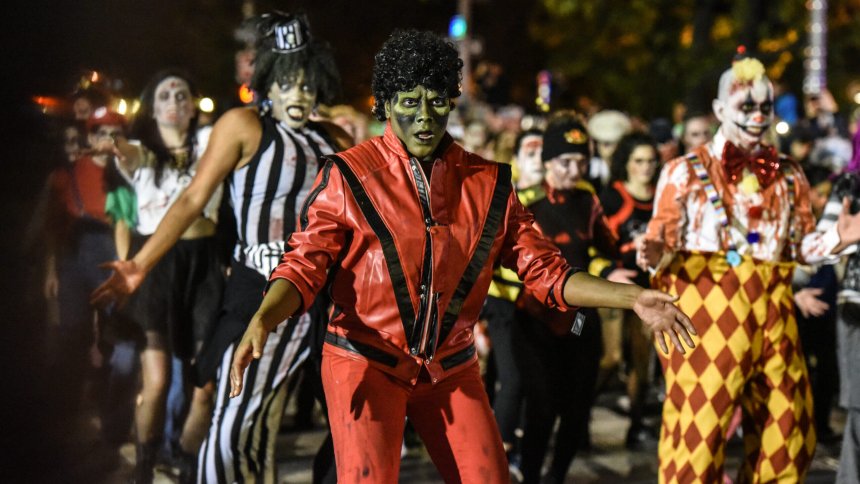
Each spooky season, much like the living dead themselves, the infamous dance from Michael Jackson’s “Thriller” music video rises once again. Our timelines become awash in all manner of people recreating the choreography in increasingly elaborate ways, giving us their best renditions of the King of Pop, his unsuspecting date, or any one of the undead dancers who famously surrounded him.
What also doesn’t seem to die, year after year, is the comparison between the iconic routine and another famous dance, the cakewalk. And we have to admit, the two do bear some resemblance.
The infamous “Thriller” dance, which debuted in the groundbreaking short film on MTV on Dec. 2, 1983, was choreographed by Jackson alongside Michael Peters, incorporating elements ranging from jazz and street dance to the stiff, unnatural movements of movie monsters. Meanwhile, the cakewalk, a dance dating back to slavery, has its own complex history, as its influence can still be felt today.
For years now across social media, including viral Instagram posts and Reddit forums, people have claimed that the “Thriller” dance is a direct descendant of the cakewalk. Watching the two dances side by side, while both have stiff movements that give way to something unexpected like a hand raise here or there, “Thriller’s” is decidedly more monstrous while the cakewalk is more formal. It’s also true that later iterations of the cakewalk became even more cartoonish.
The cakewalk was born out of the 19th century in the American South, when enslaved Black people would perform elaborate dances that were, unbeknownst to some of their white spectators, making complete fun of them. According to the Smithsonian’s National Museum of American History, the dance took inspiration from the European Grand March, with enslaved couples adding their own shuffles, high kicks, and African-inspired movements to the otherwise formal procession.
Competitions were sometimes held on plantations, with the best dancers winning, you guessed it, a decorated cake, hence the name. However, for most, the real prize may have been getting to make a complete fool out of the people who enslaved them, right in front of their faces.
The famous ragtime musician Shepard Edmonds once recalled from stories passed down to him how the enslaved performers were parroting the so-called “high class high manners” of the big house, “but their masters, who gathered around to watch the fun, missed the point.”
However, by the late 19th century, white minstrel performers had stolen the cakewalk and were donning blackface and using its exaggerated movements to mock Black people as ridiculous caricatures in their minstrel shows. So rather than relent, Black performers, including George Walker, merely elevated the dance, bringing it into their vaudeville routines with more polish. The dance eventually found its way further into musical theater and other forms of entertainment, while its elaborate footwork and theatrical flourishes echo in Black dance to this day.
So, does that mean the cakewalk was among the inspirations for the “Thriller” dance? Well, that’s a little harder to say. What we do know is that Jackson and Peters, who had previously collaborated on the choreography for “Beat It,” were famously tasked with figuring out how to make a group of zombies dance without losing the spooky factor and making the whole thing look ridiculous.
Discussing the process with MTV in 1999, Jackson recalled experimenting with different movements alongside Peters, even showing up to rehearsals wearing monster makeup to help get into character.
“It was a delicate thing to work on because I remember my original approach was, ‘How do you make zombies and monsters dance without it being comical?’” he said at the time, per American Songwriter.
Together, the two creatives eventually combined the stiff, more ghoulish movements with jazz- and more modern-inspired steps, giving the world one of the most famous pieces of choreography ever. They even hired dancers who specialized in pop and locking to really sell the zombie troupe. In behind-the-scenes footage from the making of “Thriller,” Peters marveled at Jackson’s ability to pick up movements that other dancers had spent years perfecting.
“It’s really wonderful to watch, because it’s an innate gift that he has,” Peters said.
Whether the cakewalk ever crossed Jackson’s or Peters’ minds during those rehearsals remains an unknown. But considering the long, complicated history of Black dance in America, we suspect the comparison will be back to haunt us next Halloween.
Share
What's Your Reaction?
 Like
0
 Dislike
0
 Love
0
 Funny
0
 Angry
0
 Sad
0
 Wow
0