Young advocates push for Broward County (Fla.) School Board to make menstrual products accessible to all students
This month, the Broward County School Board approved a Menstrual Hygiene Product Access Pilot Program following months of student advocacy.

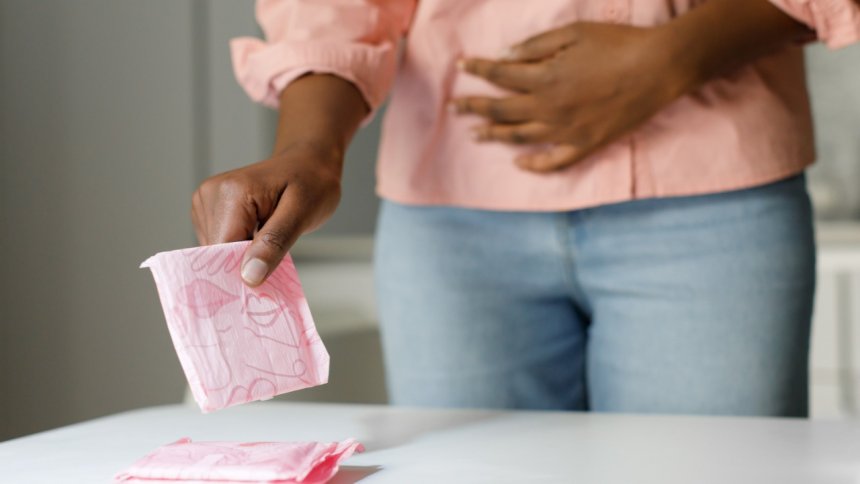

This month, the Broward County School Board approved a Menstrual Hygiene Product Access Pilot Program following months of student advocacy.
Earlier this month, student advocates like Adiya Mukhitdinov, Jakayla S. Perez Munoz and Anaya Andre celebrated a major win in the fight to make menstrual hygiene products more accessible to students in Broward County, Florida. On October 13, the Broward County School Board approved a proposed Menstrual Hygiene Product Access Pilot Program that will provide free menstrual products in designated student restrooms at seven public schools across the district.
The decision came after months of student advocates and organizations like Promote Her, Period, PRISM, and the Youth Action Fund working together to address period poverty and how the lack of access to menstrual products, resources, and education impacts women of all ages, but especially young women in school. And during a school board meeting earlier this month, 20 girls attended and shared their testimonies of how the lack of menstrual resources impacts their academics, mental health, engagement, and attendance,
“Getting the opportunity to share my story with the board and emphasize the urgent needs in our community meant everything to me,” Perez Munoz said of the moment. “Sitting in the room to hear the resolution pass in not just three, but seven schools in my county was a surreal moment. As a student who has experienced the disruption and stress of lacking menstrual products while in school, I know just how critical of a system this is.”

“The students had such amazing testimonies and such impactful stories that we really didn’t give the school board an opportunity to say no,” Andre told theGrio. “I don’t have the words to describe even in the moment the feeling of them passing this resolution…but being able to continue to uplift the student voices because it’s something that they wanted was a really rewarding experience.”
For “Promote Her, Period” founder Andre, who is now a 20-year-old college student at the University of North Carolina at Chapel Hill, her advocacy work began in 2022 while she was a student in the Broward County school system.
“I realized that there were no period products in my school, and I thought that was crazy because I was like, ‘Well, toilet paper is offered in the bathrooms. Why aren’t period products offered in the bathrooms?’” she shared. “Recognizing the problems that I had within my own community. I wanted to do something about it.”
What began as a small grant to make 50 feminine hygiene product bags has since blossomed into a full-time non-profit organization committed to fighting for menstrual equity and empowering the next generation of advocates to find and use their voice. Forming a coalition with Youth Action Fund and PRISM, Promote Her, Period began working on ways to bring the pilot program to life. Incorporating students every step of the way, students attended meetings with various school board members and district staff, helped with phone banking, petitions, and events to get the word out to as many people as possible.
“Period poverty is such an important topic,” Mukhitdinov, a 17-year-old high school senior, told TheGrio, reflecting on her work with Promote Her, Period. “[The organization] has given me a voice and opportunity to lead and make an impact on so many girls who don’t get the supplies they need. But also, it has given me a community of friends and other ambitious young people who want to make change and want to help their communities.”
At the school board meeting, 20 students testified to local legislators, explaining how product shortages can contribute to missed classes, reduced focus, and anxiety about managing periods at school. In the U.S., 1 in 4 teens and 2 in 5 adults struggle to afford period products, and these barriers are especially notable for teens of color in low-income households.
“One thing I wish more people understood about young people and their advocacy is that we know, as much as adults hate to admit it, more than they do in terms of what works and what trends,” Mukhitdinov shared. “Most of the time, we aren’t trying to ask for things to be done at the biggest scale possible, sometimes it truly does start in our communities and people have to understand that we are advocating for what we feel needs to be changed and fought for, and if we are fighting for a cause, you better bet that future generations will thank us because those people didn’t give us the things and/or opportunities we needed.”
Currently, Broward County Public Schools provides menstrual hygiene products through a school-based system, with availability and access varying by campus. Through the pilot program, the seven schools across the county will provide free menstrual products in designated student restrooms, including at least one single-stall restroom and at least one high-traffic, multi-stall restroom, so that students no longer have to visit a school clinic, front office or designated staff member to obtain the products they need.
“This victory belongs to the students who recognized a problem and refused to accept that it couldn’t be addressed,” Miles Davis, Policy Director at PRISM, said. “They brought their experiences, their ideas, and their determination to the table. Our role was to help translate those ideas into actionable policy and give young people the tools to advocate for themselves. This is what youth-led advocacy can accomplish when we invest in the next generation of leaders and ensure they have a meaningful seat at the table.”
Andre, who acknowledges that her work follows in the footsteps of previous generations like Ashley L. Eubanks’ The Beauty Initiative, hopes this success is only the start of the movement to get free menstrual products and equity across the state, the country, and, one day, the world. And regarding youth advocacy, she hopes the coalition’s success inspires more students at the high school and college levels to take initiative and become their own advocates.
“Sometimes it’s hard to speak up, but if this school board meeting taught me anything. It’s that complacency is not an option, especially when it comes to change that you want to see within your own community,” Andre concluded. “I think students always hear the phrase, ‘Oh, students and young people are the leaders of tomorrow,’ but honestly, like they’re the leaders of today.”
Share
What's Your Reaction?
 Like
0
 Dislike
0
 Love
0
 Funny
0
 Angry
0
 Sad
0
 Wow
0