Why HBCUs must move beyond survival mode
OPINION: Howard’s enrollment controversy highlights the need for sustained investments as more students choose Black colleges. Editor’s note: The following

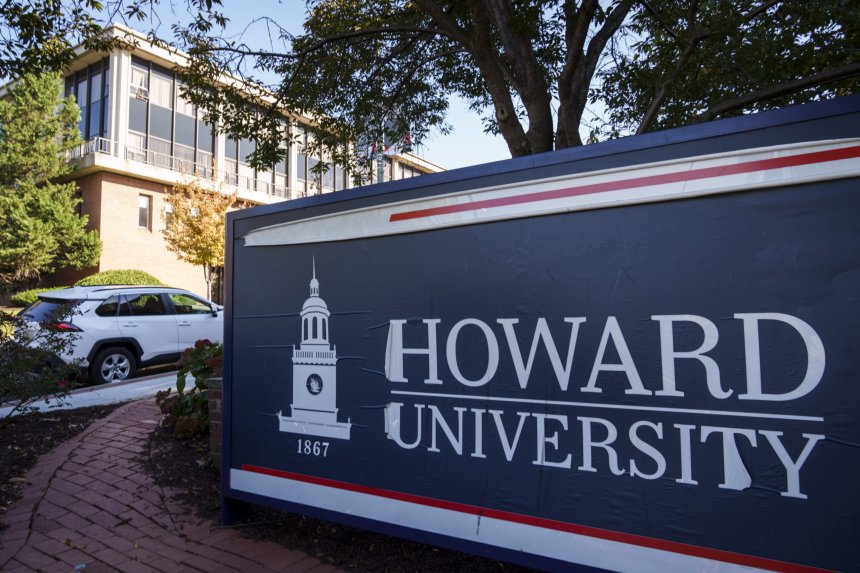

OPINION: Howard’s enrollment controversy highlights the need for sustained investments as more students choose Black colleges.
Editor’s note: The following article is an op-ed, and the views expressed are the author’s own. Read more opinions on theGrio.
Howard University’s unenrollment of 500 incoming freshmen broke the internet. While the university pointed to admissions and enrollment protocols, the controversy reflects a larger challenge: demand for Historically Black Colleges and Universities (HBCUs) is outpacing their institutional capacities.
Howard’s enrollment crisis is a symptom of a broader trend facing these institutions. The surge in enrollment is driven by political, social, and cultural forces. From the end of affirmative action to Black students seeking campuses where they feel safer and more affirmed, to renewed interest sparked by the reboot of “A Different World,” Black children across the country are applying and enrolling in higher numbers.
The United Negro College Fund has dubbed this ”the HBCU effect,” which speaks to the impact that HBCUs have on Black culture in spite of being intentionally and systemically underfunded and under-resourced. As more students choose HBCUs, those long-standing inequities have become impossible to ignore. The surge has created record application and enrollment numbers, placing tremendous pressure on institutions with already strained infrastructures.
Over enrollment is intended to prevent the effects of summer melt, the term for students who decommit from their May choices and shift plans elsewhere.
But what happens when everyone shows up?
Despite the temptation of over enrollment, HBCUs must stand firm on capacity and only accept waitlisted students after a specific date. That would give an accurate sense of housing capacity.
But capacity extends far beyond housing and admissions. The gaps now making headlines are the cumulative result of more than a century of inequitable public and private funding.
HBCUs have been denied funding owed to them since the establishment of the Second Morrill Land Grant Act of 1890, an act that intentionally made provisions for HBCUs. Some state legislatures, like those in Maryland, have instead redirected those funds to predominately white institutions (PWIs).
At the philanthropic level, HBCUs only receive .41 percent of big philanthropy funding.
Yet underfunding has never stopped HBCUs from investing in students. HBCUs have punched above their weight for over a century, focusing on their missions to serve their students with fewer resources. Despite chronic misappropriation of funds, HBCUs invest a greater percentage of their revenue into instruction than their counterparts.
Like the Black communities they serve, HBCUs have spent generations operating in survival mode, stretching limited resources while continuing to produce extraordinary outcomes. But serving more students requires more than a spot; it requires ensuring every part of the institution can sustain them once they arrive.
When enrollment is discussed most people simply think of recruiting and admissions. However, enrollment management includes every single office on campus in the life cycle of a student from their admission through their transition to hopefully active and engaged alumni.
Institutional overwhelm also shows up in class enrollment and scheduling. A class intended to instruct 40 students might now accommodate 80 students, causing faculty to scramble to find a suitable alternative space and/or professor for the course. When those solutions aren’t possible, the burden falls on faculty, students, and academic departments alike.
While increased enrollment can generate additional revenue, it also places significant strain on institutions that have operated in survival mode for over a century. In order to begin thriving, HBCUs must look at targeted areas of investment that provide the highest leverage for long-term growth.
Priority investments include: student and faculty housing, upgraded and modernized internal and external systems, increased faculty and staff capacity, updated standard operating procedures (SOPs), and stricter auditing guidelines, especially in financial aid—all will go a long way.
These investments, however, require significant and sustained funding.
Large gifts from Mackenzie Scott and The Arthur M. Blank Family Foundation have created the perception that HBCUs suddenly have unlimited financial resources. Others believe that these funds increase university endowments. These are misconceptions. Funds should be used to mitigate crises such as this. Endowments are not capacity itself; they typically do not cover daily operational expenses. And one time gifts are generally allocated to specific projects.
Like any complex enterprise, HBCUs require diverse and sustainable financial ecosystems needed for such large scale changes. Relationships with state and local municipalities, philanthropy and alumni giving must be established.
But financial resources are only one piece of the capacity equation. HBCUs must also confront the realities of physical expansion and its impact on the communities they call home.
Many HBCUs are located in historically disinvested urban centers or isolated rural areas. As these areas face rampant gentrification and the intrusion of data centers, HBCUs must look for ways to expand that do not alienate the community. The criticism of Columbia’s expansion in a historically Black district is a warning. HBCUs must incorporate communities beyond the ivory towers to create a system that enables them to expand without displacing.
But the community also has internal work to do.
As with institutions, individuals in survival mode are less likely to give and extend grace. Far too many of us in social media-land look for moments to immediately pounce on HBCUs and their graduates.
Moving from survival to sustainability requires mutual accountability. Policymakers must fulfill their funding obligations. Philanthropy must invest equitably. Institutional leaders must plan for growth strategically. Alumni must make sustained donations, no matter the amount. And everyone must extend the grace these institutions have long extended to generations of Black students.
Institutional capacity is not measured by how many students a university can admit but by how well it educates, houses, and supports them on their way to graduation. If this moment teaches us anything, it is that the future of HBCUs depends not on enrolling the most students, but on building the capacity to ensure every student who arrives has the opportunity to thrive.
Julienne Louis-Anderson, M.A.is an alumna of Howard University and Xavier University of Louisiana. The former educator writes about the intersection of culture and politicswith education and human development.
Frederick V. Engram Jr., Ed.D. is an alumnus of Johnson C. Smith University. He is an Assistant Professor of Higher Education at Fairleigh Dickinson University and author of Black Liberation through Action and Resistance: MOVE.
Tamill Harris, MPA, Ph.D. is an alumna of Clark Atlanta University. She is Lecturer of Political Science at Howard University, Founder of Urban Justice Governance Lab and author of Cultural Outmigration: How Atlanta’s Income Inequality and Demographic Shift Impacts the City’s Culture
Share
What's Your Reaction?
 Like
0
Like
0
 Dislike
0
Dislike
0
 Love
0
Love
0
 Funny
0
Funny
0
 Angry
0
Angry
0
 Sad
0
Sad
0
 Wow
0
Wow
0