What the Nolan Wells grand jury decision does—and doesn’t—mean
Former prosecutor and civil rights attorney Charles Coleman Jr. explains the grand jury’s “no true bill,” and what’s next for

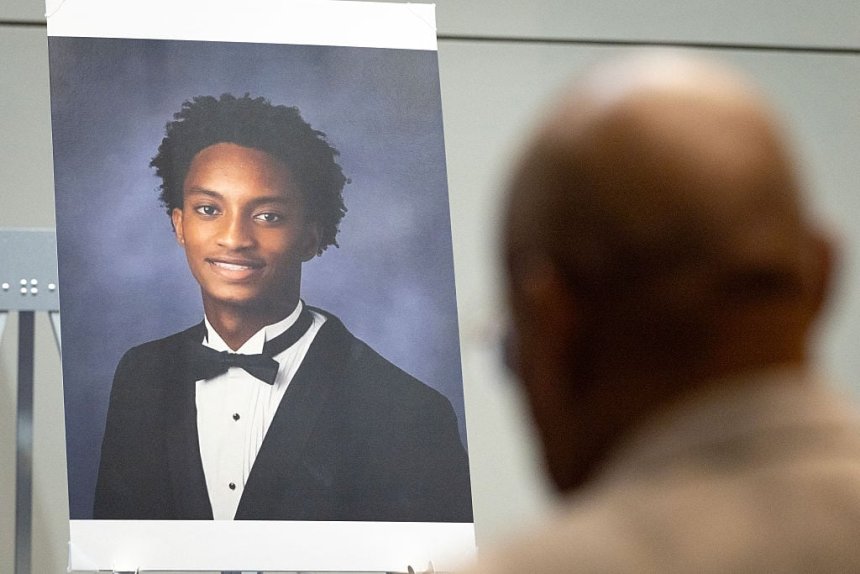

Former prosecutor and civil rights attorney Charles Coleman Jr. explains the grand jury’s “no true bill,” and what’s next for the Nolan Wells case.
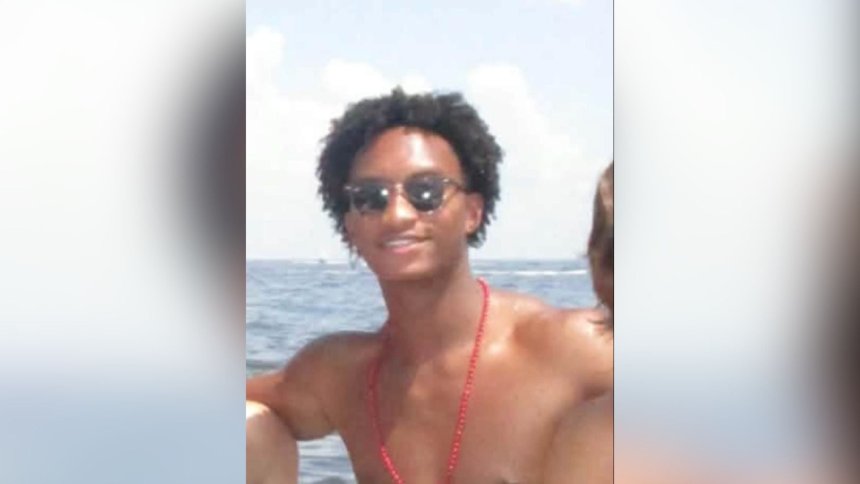
When news broke that a Mississippi grand jury had returned a “no true bill” in the death of Nolan Wells, many people heard one thing: case closed. Charles Coleman Jr., a civil rights attorney and former Brooklyn prosecutor, says that’s the wrong takeaway.
“There’s what’s happened and what you can prove,” Coleman told theGrio. “Do not believe that the grand jury made a decision on what happened. They made a decision on what can be proven, given the evidence that was put in front of them.”
Here’s what the decision means, what it doesn’t, and what could come next.
What is a grand jury and a “no true bill”?
A grand jury is a group of citizens who decide whether prosecutors have enough evidence to formally charge someone with a crime. That standard is called probable cause. When the grand jury votes to charge someone, the result is an indictment. When it doesn’t, it returns a “no true bill.” However, that does not mean no crime occurred, as Coleman explains: “It does not mean that a crime necessarily did not occur. It means that the evidence that they had did not give them enough to go forward.”
Who controls what the grand jury sees?
Prosecutors control almost everything a grand jury sees. Grand jury proceedings are secret. In theory, the secrecy protects people under suspicion from being tried in the court of public opinion before any charges are filed. It also means the public rarely knows what jurors actually heard, which helps explain why Wells’ parents and legal team did not know when the proceedings began.
“What witnesses are called, what evidence is presented, what testimony gets in front of the actual grand jurors is at the discretion of the prosecutors,” Coleman said. “The integrity of the prosecutor is a central issue because it really speaks to the ultimate integrity of the actual presentation.”
That’s why the old saying that a prosecutor can “indict a ham sandwich” cuts both ways, he explained. A strong presentation can secure charges, and “a lackluster presentation in front of the grand jury gives you a better shot” at avoiding them. For Black communities, Coleman underlines the painful history the process carries.
“We have seen the grand jury weaponized against us, where we have not had an opportunity to have counsel present, to have ourselves present, to testify in front of the grand jury, and even if we do testify, we can’t have our attorney object or intercede or ask us questions in front of the grand jury as the defendants,” he noted. “It is a process that was originally designed to protect the individual, but quite frankly, we’ve seen it repeatedly weaponized against individual suspects, and in many cases, those suspects have looked like me, like Nolan Wells, like a number of other Black folks who’ve gotten railroaded by America’s justice system.”
Throughout this investigation, social media has been flooded with theories, videos and conflicting claims. And while the court of public opinion considers all these factors, Coleman explains that most of those elements are not shown to the grand jury unless they have been authenticated. They hear evidence gathered by law enforcement and testimony from witnesses who were actually interviewed by investigators.
Why are people questioning the new cited cause of death?
In its report, the grand jury stated it “finds that the position of, the condition of, time of discovery, and location of Mr. Wells’ body is consistent with drowning.” During a press conference on September 22, the Wells family’s attorney, Ben Crump, highlighted that portion of the report, underscoring that it is a “diagnosis of exclusion,” meaning it is the diagnosis that remains after all other differential possibilities have been excluded.
“A diagnosis of exclusion means that the cause, the actual cause of death, cannot be definitively explained. And so, basically, with an inability to rule anything out, we’re going to go with what is the closest, most logical thing. He was in water. He was found in water. We may believe he drowned,” Coleman explained. “It does not mean definitively that he drowned, because if they did, they would not put that diagnosis of exclusion caveat on it.”
Thus explaining Crump’s focus on the evidence of blunt force trauma found on the back of Wells’ head during the independent autopsy conducted by Dr. Roger A. Mitchell Jr.
“The district attorney called the state’s investigation exhaustive. Was it exhaustive, or were they just exhausted? Because an exhaustive investigation should lead to the truth of what happened to Nolan Xavier Wells,” the Crump said. “The Mississippi District Attorney in Jackson County, McIlrath, will have us accept these three words: ’We’ll never know,’ and just move on. But I say there are three different words that should come to the front of your mind when you think of Nolan Xavier Wells, and those three words are ‘blunt force trauma.’”
What role does race play in this case?
While District Attorney Myers McIlrath claims that “there is absolutely no evidence to support the allegations that Nolan’s disappearance and death were racially motivated,” Coleman, like many experts and social media users, called out the danger of that dismissal. As Crump emphasized, no one knows if race played a part in what happened to Wells; however, Coleman says the dismissal ignores history.
“To summarily dismiss the notion of race in this conversation is to reject the historical context of what it is to understand Mississippi, its history,” he told theGrio noting the fact that Wells, a Black boy, went missing while out with a group of predominantly white boys. “The idea that you can immediately dismiss the notion of race and how it may play a role in how this case has been handled,w hat happened to Nolan Wells and the community’s reaction is a complete denial of history. That does not automatically assume that race was a factor, but to use this and to use this outcome to ignore the notion of race is disingenuous, both historically and intellectually.”
He continued: “Her statement really does fly in the face of what we understand is the history of race in America and violence against Black people, and so it is not just a trauma that follows us from generation to generation. It is an understanding of history that, unfortunately, she missed the mark when she made her comments the way she did, not fully appreciating what this case means to us, to Nolan Wells’s family, and to the legacy of race in America.
What happens now?
Though the prosecutor isn’t required to take further action, new evidence could lead to the case being presented to a grand jury again.
“The DA, in my opinion, made a little bit of a mistake in terms of the way that she framed her statement today, as if to say this is it, this is over. The more appropriate framing might have been that this investigation is still ongoing and they’re still open to receiving information from anyone who has it that might shed further light on what happened to Nolan Wells,” Coleman noted.
Attorney Crump has called for the full, unredacted reports rather than the summary that was released, and with the support of the NAACP, both parties are pushing for transparency in the investigation. Similarly, understanding that Horn Island is federal property, the Congressional Black Caucus and the family’s attorneys have asked the Justice Department to open a federal investigation.
“It does not mean that we won’t find out,” Coleman concluded. “It just means that we have to keep pressing for answers.”
Share
What's Your Reaction?
 Like
0
Like
0
 Dislike
0
Dislike
0
 Love
0
Love
0
 Funny
0
Funny
0
 Angry
0
Angry
0
 Sad
0
Sad
0
 Wow
0
Wow
0