The Supreme Court’s new term is underway. Here’s what’s at stake for Black Americans
Advocates are closely watching cases involving voting rights, Title IX, immigration and the court’s growing use of emergency rulings. The

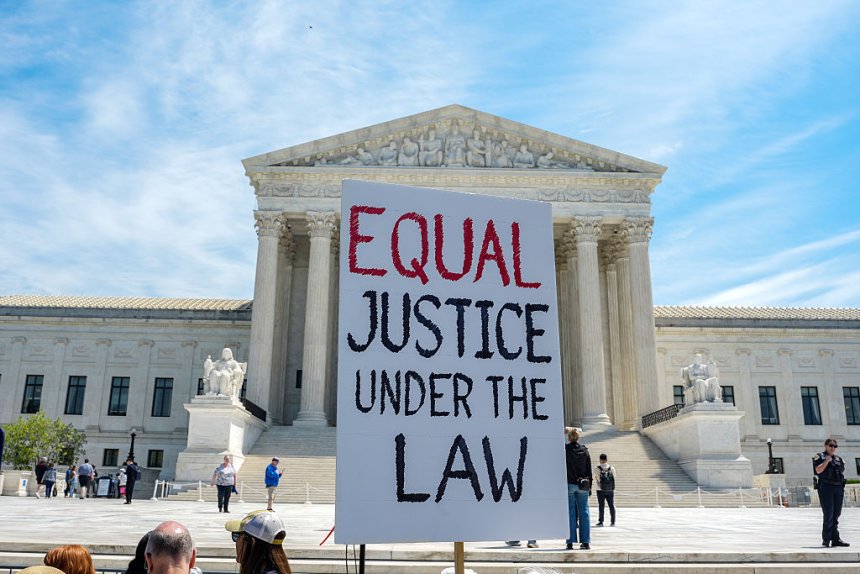

Advocates are closely watching cases involving voting rights, Title IX, immigration and the court’s growing use of emergency rulings.
The new term of the United States Supreme Court is officially underway, and several cases before the justices could have real impacts on Black Americans and the rights and communities that matter most to them.
“Every case coming before the court will be consequential for Black Americans,” Stasha M. Rhodes, executive director of United for Democracy, tells theGrio.
On Monday, the nine justices officially started their 2026-2027 term. It follows the last term, which saw controversial rulings, most notably Louisiana v. Callais, which struck down a crucial part of Section 2 of the Voting Rights Act of 1965. The court ruling essentially gutted the landmark voting rights law, making it extremely difficult for Black voters to prove racial discrimination.
Rhodes, who holds a Juris Doctorate from Southern University Law Center, says Black Americans are witnessing this new term for the Supreme Court, having seen firsthand “how much can be lost when a handful of people have the power to weaken protections.” The Juris Doctorate tells theGrio, “This Supreme Court has sort of lit a fire underneath us.”
Rhodes explained, “After Callais, I think we’re in a different environment where [Black Americans] are no longer afraid, both voters and elected leaders, to talk about real structural change that can be useful.”
The advocate says the overarching message after the gutting of the VRA is that “the Supreme Court won’t save us.” She told theGrio, “While the Supreme Court is operating above a larger agenda outside of Trump’s MAGA scope, they are still enablers of huge portions of his agenda, and I think over the next two years, the Supreme Court will help determine how far this administration can go and how much power the public has to push back against it.”
Here are some of the many cases and issues that will come to the Supreme Court this term, and why every Black American should pay attention.
Republican National Committee v. Mi Familia Vota

This case involves a law passed by Republicans in Arizona that requires voter-registration applicants to provide “satisfactory evidence” of U.S. citizenship when submitting a state registration form. The Supreme Court will rule on whether the law violates the National Voter Registration Act, which essentially bans states from systematically purging voter rolls within 90 days of Election Day.
“The concern is that eligible Americans could lose their voice because of paperwork, barriers, or mistakes in voter roll removals,” explains Rhodes. “We should have accurate voter rolls and safeguards that keep eligible citizens from being wrongly excluded.”
For Black and brown voters, Rhodes says access to the ballot has always been “fundamental” to their ability to “demand all of the things we need.”
Ultimately, RNC v. Mi Familia Vota raises a question about “whether the political system makes that participation easier or puts more obstacles in the way,” says Rhodes.
Republicans have long argued that bills requiring citizenship or IDs are about safeguarding democracy; however, advocates say it’s really about making it harder to vote for Black and other voters who tend to vote for the Democratic Party.
“The RNC has shown that they are not interested in ensuring that everyone has fair and easy access to the ballot, because if that’s the case, they aren’t able to push their agenda,” says Rhodes. “We are faced with an RNC whose interest is to ensure that fewer people have access to the ballot, and that’s what this case is about.”
Crowther v. Board of Regents

This case will determine whether Title IX provides employees of federally funded educational institutions a private right of action to sue for sex discrimination in employment.
Rhodes tells theGrio that the case will be especially critical for Black women working in education, most especially universities, and whether they will have protections against sex discrimination and other workplace remedies.
“For Black women working in education, access to remedies for sex discrimination is part of protecting their livelihoods and their ability to advance,” she explained. Rhodes added, “A promise of equal treatment needs a way to hold institutions accountable when they violate it, and that connects directly to the larger question we’re asking about whether or not these systems give ordinary people the power to demand accountability.”
Department of Homeland Security versus D.V.D.

This federal class-action lawsuit challenges the U.S. government’s policy of executing third-country deportations without prior notice or a chance to raise persecution or torture fears. The Trump administration’s policy sends noncitizens with final removal orders to nations they are not from, and that were never named during their immigration proceedings.
Rhodes warns that if the Supreme Court allows President Trump to continue third-country deportations, Black immigrants will disproportionately suffer.
“We’re seeing that in how Haitian immigrants have been treated,” she said of the Trump administration’s ending of Temporary Protected Status for Haitian migrants, despite their home country being in turmoil and the U.S. government warning its own citizens not to travel to the storied Caribbean nation.
“It’s been sort of a broader call from the RNC and from MAGA, and so I think that they certainly do stand to be disproportionately impacted,” says Rhodes. She added, “It’s frustrating too because they have not received an organized pushback like some other communities of color within the American political system. And so I do think that they stand to be harmed by this disproportionately.”
Shadow Docket and Ketanji Brown Jackson’s dissents

A hidden variable in this new Supreme Court term will be how the justices handle the “Shadow Docket.” These emergency orders allow the court to issue injunctions outside of its regular, fully briefed merits process. Such requests often block lower-court rulings and are typically handled quickly, often without oral argument.
Over the past few months, Justice Ketanji Brown Jackson has publicly called out the conservative majority’s uptick in granting Shadow Docket rulings in favor of President Trump. Most recently, she told an audience at the University of the District of Columbia David A. Clarke School of Law that shadow docket cases should remain an exception rather than becoming a faster route to the Supreme Court for certain litigants.
“This Supreme Court has used the shadow docket in ways we’ve not seen any other justices use it,” Rhodes tells theGrio.
As Justice Jackson continues to chart her unique path as the Supreme Court’s first Black female justice, Rhodes says Jackson brings necessary “rigor and clarity” in explaining what the court’s decisions “mean to people’s actual lives.”
“When she challenges the majority, she makes the stakes visible. Who loses protection? Who gains power? And I think for Black Americans…seeing a Black woman exercise that authority matters,” Rhodes tells theGrio. “Her voice helps shape the legal debate and gives the public a way to understand and challenge the majority’s reasoning.”
Rhodes said Jackson’s literal presence on the bench “makes clear why representation and structural reform have to go together.” However, she explained, “One justice can’t carry the responsibility of making an entire institution accountable.”
She added, “We need a court whose structure and standards protect people’s rights.”
The advocate says that not only do Justice Jackson’s dissents matter because they explain in detail the consequences of the majority conservative court’s decisions, but they also “preserve a legal argument that future courts and lawmakers can act on.”
Supreme Court reforms
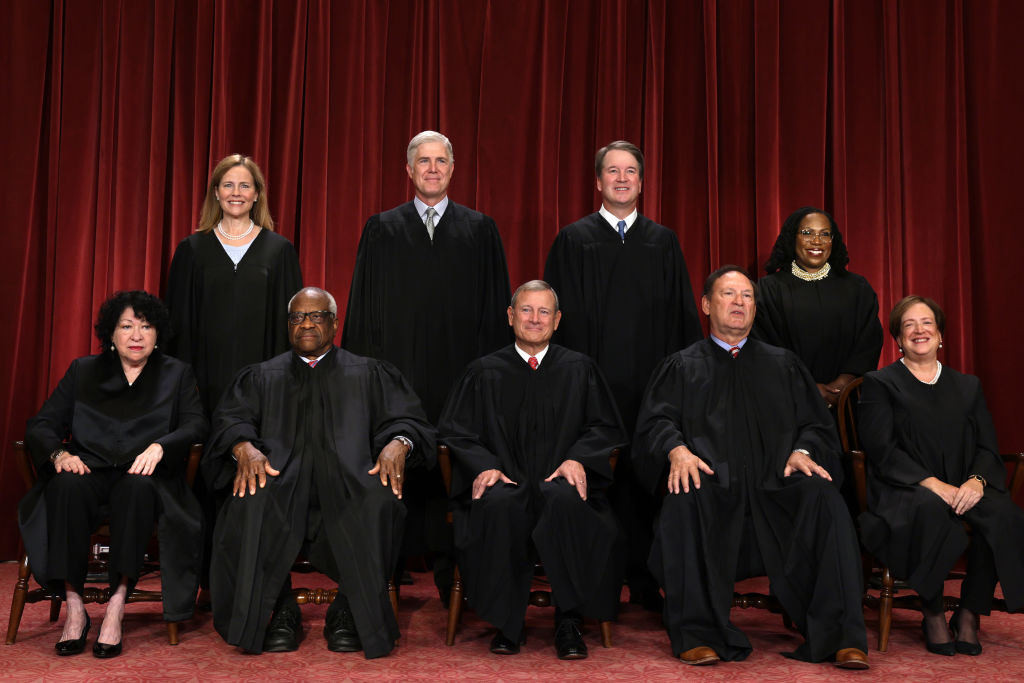
Following the Supreme Court’s many controversial decisions, from gutting voting rights and federal abortion protections to granting the president of the United States broad immunity, many advocates and Democrats are calling for major reforms to the Supreme Court, including binding ethics rules and term limits (justices serve lifetime appointments).
Rhodes reminds us that for most Americans, rights have come through the judicial process; therefore, the Supreme Court serves as a “power center that helps to push back against stuff that the other branches push on us.”
“We are no longer living in that world, and so I think we support meaningful Supreme Court reform,” she tells theGrio. “The goal is a court that protects people’s rights and is accountable for how it exercises its enormous power.”
Rhodes says “the urgency is clear” for Black Americans.
“We are watching protections won through generations of struggle become harder to enforce, and many of those things evaporate before our eyes,” she said. “Every year we delay acting on reforms, people live with those consequences, and those consequences can last for decades.”
Share
What's Your Reaction?
 Like
0
Like
0
 Dislike
0
Dislike
0
 Love
0
Love
0
 Funny
0
Funny
0
 Angry
0
Angry
0
 Sad
0
Sad
0
 Wow
0
Wow
0