Jasmine Guy and the burden of ‘Black don’t crack’
Jasmine Guy responds to the ageism discourse sparked by the “A Different World” reboot landing on Netflix. After the iconic

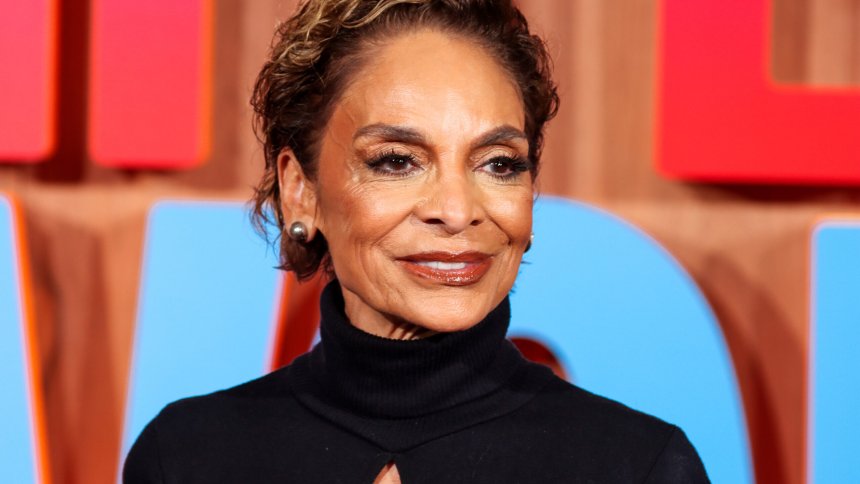

Jasmine Guy responds to the ageism discourse sparked by the “A Different World” reboot landing on Netflix.
After the iconic Jasmine Guy stepped back into the role of the legendary Whitley Gilbert in Netflix’s highly anticipated “A Different World” sequel with pitch-perfect bougie poise and her unmistakable crackly southern belle twang, the veteran actress quickly began to trend online.
Not because of her clever callbacks to the original series, or her jaw-dropping style, which included Chanel sets and fur coats wrapped around lime-green outfits. No. Because she had aged.
Since “A Different World” premiered on the streamer on Thursday, the internet has been ablaze with critics lambasting the 64-year-old actress for looking her age, as defenders call it out for what it is: ageism.
“We are so accustomed to facelifts, Botox fillers filters and editing that we have completely forgotten what real aging looks like,” a user on Threads wrote. “We praise people for altering themselves then turn around and criticize somebody for looking exactly like their age. Make it make sense.”
It has been exactly 39 years since “A Different World” first premiered on NBC on Sept. 24, 1987, and more than 33 years since the original series ended in 1993. In the decades since, Guy has continued acting across television, film, and theater, appearing in everything from “Dead Like Me” and “The Vampire Diaries” to “Grey’s Anatomy” and “Harlem,” while also directing, writing, and performing onstage. So forgive the woman if she looks like she has lived some of the years she has been blessed to see. “Black don’t crack” is a myth because, as many of us can assure you, it does, in fact, crack. And when it does, it is not a moral failing. It is not proof of some nonexistent drawback of being multiracial. It is not a choice either.

While most often used in a flattering sense to praise someone, particularly Black women, for maintaining a youthful appearance well into middle or advanced age, the phrase comes with some baggage. There is some science behind the perception. Higher levels of melanin can offer some natural protection against ultraviolet radiation (albeit very minimal), and darker skin tends to show some signs of photoaging, including fine lines and wrinkles, later than lighter skin. Over time, those differences have helped fuel the idea that the melanin in our skin creates some kind of vampiric fountain of youth effect.
But as organizational psychologist Dr. Cranla Warren wrote in a 2024 essay examining the phrase, “The roots of this phrase lie in a long history of how Black people—and Black women especially—have been viewed through a lens that focuses primarily on our physical attributes.”
“From slavery to the modern-day beauty industry, Black bodies have been both fetishized and objectified, frequently discussed in terms of our durability, strength, and outward appearance,” she continued. “The ‘compliment’ ‘Black don’t crack,’ draws from these objectifying trends, as it emphasizes a perceived physical superiority over other racial groups rather than recognizing Black individuals for our internal qualities, achievements, and complexity.”
The “compliment” has also become a suffocating, misogynistic expectation. Women like Tracee Ellis Ross and Angela Bassett have been subjected to public conversations about how well they are or are not aging, while Viola Davis has spoken openly about the particular cliff women can encounter in Hollywood after 40 and 50. Just earlier this year, Vivica A. Fox opened up about the double standard in Hollywood.
Meanwhile, men are generally afforded far more grace to get older onscreen. No tea, no shade, but the men from the senior cast of “A Different World” also look about three decades older than the versions of themselves who once roamed Hillman’s campus. Because they are. Yet much of the discourse around the returning cast has focused on Guy.
For generations, women have warned about the ways they begin to feel invisible to society as they age, starting especially around 50. The music on the radio isn’t sung by anyone remotely their age. The starlets dominating red carpets get younger and younger. The romantic leads stop looking like them. The stories on television and in film begin to push them toward the margins. For Black women, that disappearance can be even more pronounced. A recent Women’s Media Center analysis found Black women over 50 remain underrepresented in leading scripted roles, even as audiences say they want to see more of them.

At the same time, a new order has been rising. Gayle King, at the age of 69, became a Sports Illustrated Swimsuit Issue star. Halle Berry is not only openly discussing menopause, vaginal dryness, and which lube works for her, but she has built part of her wellness business around helping other women do the same. Meanwhile, Octavia Spencer spent this summer racing across Europe, starring in the action-comedy “Ride or Die.” And who could forget that this year, 31-year-old Justus Kelley became the first married woman, first mother, and first woman in her 30s to win Miss USA. So it may be time to get used to seeing women age beyond the ones in our families and everyday lives.
Plus, y’all keep asking for these reboots of things that are 30-plus years old. The people involved have lived since then, and it is going to show in how they carry their bodies, how they speak, how they think, and, yes, how they look. Youth is precious, but aging is a privilege. We should all hope to be so lucky.
As the discourse raged well into Monday, Guy seemingly addressed the backlash in an Instagram post.
“The internet can be brutal to women as we grow older. It asks us to celebrate life while criticizing every sign that we’ve lived it,” she wrote in the caption of the post, which included a montage of her in a gold gown seen during the show.
“Growing older brings change, and I won’t pretend every change is easy. But beauty, style, and joy don’t have an expiration date,” she continued. “Let’s spend less time judging ourselves and each other, and more time loving each other, making memories, and living the life we’re here to live.”
Share
What's Your Reaction?
 Like
0
Like
0
 Dislike
0
Dislike
0
 Love
0
Love
0
 Funny
0
Funny
0
 Angry
0
Angry
0
 Sad
0
Sad
0
 Wow
0
Wow
0