The Fifteen Percent Pledge has a $1 million problem
Aurora James and the Fifteen Percent Pledge are facing a $1 million lawsuit from the company that planned the organization’s

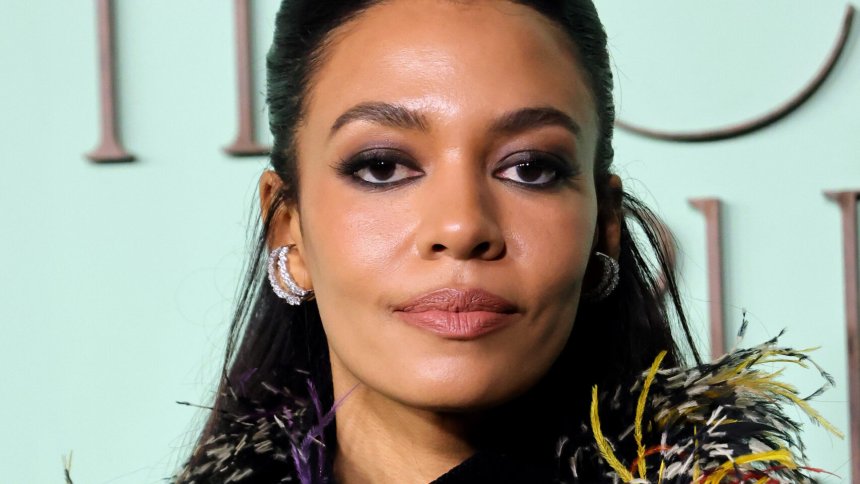

Aurora James and the Fifteen Percent Pledge are facing a $1 million lawsuit from the company that planned the organization’s annual gala.
The Fifteen Percent Pledge, an organization founded to uplift Black brands, owes two white men more than $1 million.
According to a complaint submitted in the Supreme Court of the State of New York, the organization and its founder, designer Aurora James, are facing a lawsuit from The Gathery over what the creative agency alleges are unpaid expenses totaling hundreds of thousands of dollars stemming from its involvement in the organization’s annual gala earlier this year.
On Feb. 7, the nonprofit hosted its annual fundraising gala, known for its “Black Tie, Black Designer” dress code, at Paramount Studios in Los Angeles, welcoming hundreds of star-studded guests, including Kelly Rowland, Kimora Lee Simmons, and even Meghan Markle. Tina Knowles received the organization’s inaugural Trailblazer Award, while Maed Beauty founder Denise Vasi received a $100,000 Sephora Beauty Grant.
In the court documents reviewed by theGrio, The Gathery, founded by Nicky Balestrieri and Luigi Tadini, alleges that, following the big night, the Pledge was still on the hook for $777,871.84 in unpaid expenses. The suit also names Philanthropic Ventures, the nonprofit’s fiscal sponsor.
James, who also founded the luxury accessories brand Brother Vellies, launched the Fifteen Percent Pledge in June 2020 via an Instagram post inviting all of the companies making promise after promise to the Black community in the wake of George Floyd’s murder to actually put their money where their mouths were. Given that Black people make up roughly 15% of the U.S. population, she figured major retailers should commit at least 15% of their shelf space and purchasing power to Black-owned businesses.

Major corporations, including Sephora, Nordstrom, and Macy’s, eventually signed on, and the organization has since grown from a post online into a nonprofit working with dozens of major companies and thousands of Black entrepreneurs. From pop-up markets to regular guides and a directory for Black brands, it has launched several innovative initiatives to bolster brands, including the gala, which has become a fundraising staple for the organization and a star-studded celebration of Black brands and entrepreneurs. According to the complaint, The Gathery had produced the event in 2024 and 2025 without issue before returning for a third year.
This time around, the agency alleges the Pledge began falling behind on payments months before anyone walked the stylish carpet. According to the complaint, the organization initially agreed to pay The Gathery $1,534,109.34 in 11 installments beginning in October 2025. Two subsequent change orders increased the total cost of producing the gala to $1,734,588.11. By Jan. 27, the complaint alleges the Pledge’s accountant told The Gathery the organization did not have the financial resources to cover its overdue balance. Three days before the gala, James signed an amended agreement acknowledging the Pledge was in “material breach” of its contract after missing six payments and failing to make another in full, according to the filing.
“Her additional representations about ability and intentions to pay are fraudulent statements made with the intent to induce TGI to finish the 2026 Gala rather than cut losses when 15PP first defaulted,” reads the lawsuit.
The Gathery alleges that it continued to produce the event and to advance money to vendors. After receiving an additional $200,000 payment, the agency says it was left with $777,871.84 in unpaid principal. It is now seeking at least $1,082,965.28, including interest and legal fees. The lawsuit also names James personally in a fraud claim, alleging she continued directing and expanding the project despite knowing the organization did not have the resources to pay for it.
Request for comment made to both the Fifteen Percent Pledge and the attorneys representing The Gathery were not immediately returned.
It is undoubtedly bad press for an organization built around helping Black businesses thrive. It has also led to heaps of misinformation and assumptions about exactly what happened, including that James owes a Black-owned business money or that the lawsuit is somehow proof that the entire Fifteen Percent Pledge was too good to be true.
Except that The Gathery is not a Black-owned business. Now, that fact doesn’t make an unpaid bill any less unpaid if the allegations in the lawsuit are ultimately proven true. However, it should change the conversation around what this particular lawsuit means for an organization whose entire reason for existing is to get more money and opportunities into the hands of Black businesses.
There is another question there, too. Why was an organization built to create opportunities for Black businesses, spending more than $1.7 million with a white-owned creative agency to produce its biggest event in the first place?
On its face, it is an obvious contradiction. But Black businesses also know this story well. They arrive, move onto our radar, build something with a solid foundation, and then, sometimes, struggle to keep up with the scale of what they’ve built. The same barriers to access that made the Fifteen Percent Pledge necessary in the first place don’t magically disappear once a Black business or organization becomes successful. In fact, that has been a large part of James’ point all along.

In her 2023 memoir, “Wildflower,” James writes about the Black brands she encountered while building Brother Vellies and working in fashion, many of which had the talent, ideas and quality to compete but did not always have the same business savvy, access or industry relationships as their larger competitors. It was part of what informed her understanding of just how difficult it could be for Black entrepreneurs to get through the gate in the first place.
Sometimes, whether we like it or not, getting through the gate still means working with the people who already know how to get through it. Would it have been nice to learn that the Pledge spent that $1.7 million with a Black-owned production company? Of course. But given the alternative many immediately assumed, it is also a relief to learn that the small business allegedly left holding the bag was not one of the very Black businesses the Pledge was created to help. This would be a different story if it were.
At some point, it may be worth circling back on how quickly some were willing to believe that it was. Why are we so quick to jump to the worst possible conclusion about something built for us? Why can it sometimes feel easier to believe these things were always destined to fail than to believe they might actually work?
When James spoke to theGrio two years ago, she had something to say about where we put our attention.
“We are in an attention economy. People are competing for your attention beyond anything else,” the designer said. “What you give your attention to is what will win the day. The Kardashians win because they get our attention on all the different platforms. It’s tough. America has a lot of different ways. So, if we redirect our attention, we can also redirect a lot of the power in this country.”
Share
What's Your Reaction?
 Like
0
Like
0
 Dislike
0
Dislike
0
 Love
0
Love
0
 Funny
0
Funny
0
 Angry
0
Angry
0
 Sad
0
Sad
0
 Wow
0
Wow
0