In ‘Your Mother, Your Mother, Your Mother,’ Adia puts the weight of eldest-daughterhood on screen
In ‘Your Mother, Your Mother, Your Mother,’ Adia explores the complicated expectations placed on daughters and what happens when you


In ‘Your Mother, Your Mother, Your Mother,’ Adia explores the complicated expectations placed on daughters and what happens when you let them go.
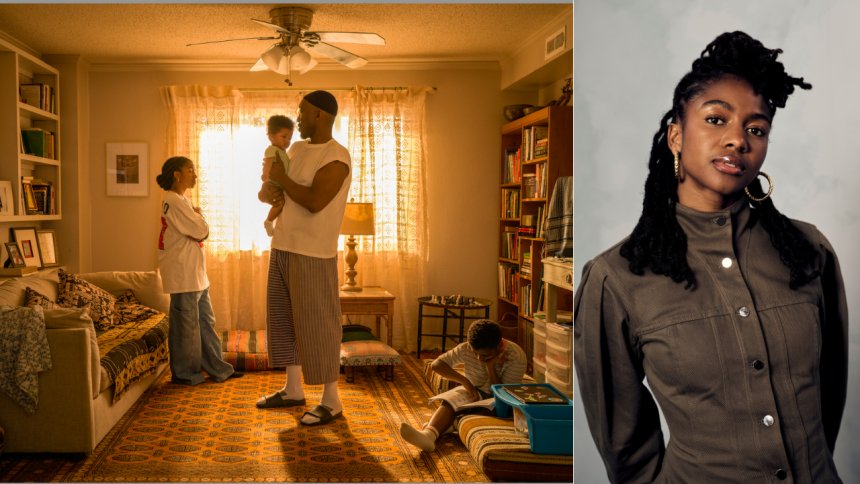
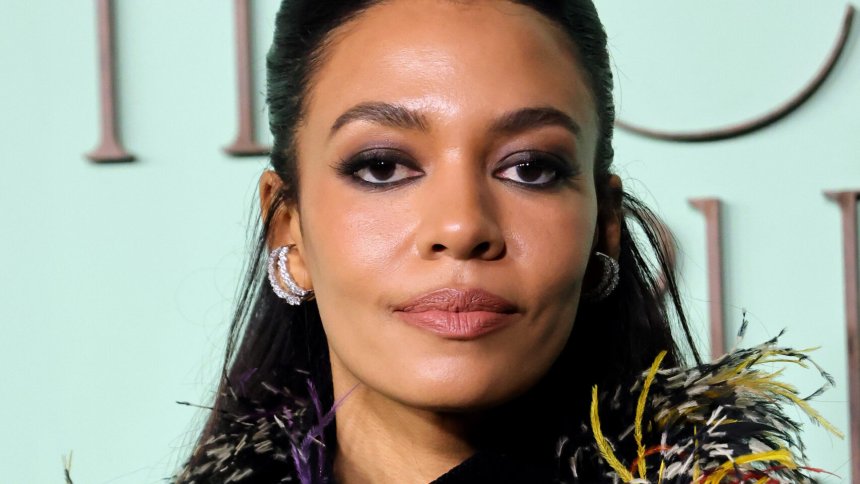
Every eldest daughter knows the job description, even though nobody ever handed it to her: keep the peace, watch over your siblings, keep it together. For Adia, the breakout star of Bassam Tariq’s “Your Mother, Your Mother, Your Mother,” that unspoken role wasn’t something she had to research. She’s lived it.
In the film, Fatiha is a teenager navigating life after her mother’s death while her father, Latif (Mahershala Ali), a grieving hitman and single dad, is barely holding himself together. The action will keep you on the edge of your seat, but it’s Fatiha’s quiet weight, the way she’s pulled into the role of second parent before she’s done being a kid, that lingers.
“I deeply resonated with Fatiha because I, too, am the eldest of my siblings,” Adia shared. “As the eldest, sometimes we are left with picking up the leftovers that our parents may or may not knowingly give us to look after.”
Often seen as “responsible,” “reliable,” and sometimes a “second mom,” the oldest daughter in a household carries unspoken expectations and responsibilities that are often placed on her without the option to reject them. So much so that it has been labeled “Eldest Daughter Syndrome” (EDS), which experts define as a unique constellation of behavioral, emotional, and social manifestations stemming from these expectations, characterized by the disproportionate caregiving and leadership roles they assume.
And throughout “Your Mother, Your Mother, Your Mother,” creator Bassam Tariq shines a subtle but poignant spotlight on the expectations and roles of managing family dynamics that are imposed on girls from a young age through Adia’s character.
“Women in general are kind of seen more in that maternal way, even as children, and so it’s tough to assume that role and have that put on you,” Adia said, reflecting on how much the experience of an eldest daughter and eldest son can vary. And while she relates to the weight of those responsibilities, the actress says the role taught her a lesson in compassion for others and, most importantly, herself.
“I think the biggest thing I took away was compassion for my siblings, their hardships when they’re going through tough times…and compassion on myself when I’m having tough times and also not trying to assume the role of like super parent or secondary parent. So, having compassion on yourself and forgiving yourself if you feel like you have to step into that role, and maybe not really wanting to step into that role of being a parental figure, because it’s tough, especially for daughters and eldest daughters,” she said.
Throughout the film, Tariq spotlights the duality of life and the constant juxtapositions that exist not only in society but also within individuals, in a way that feels as polarizing as the world we live in.
“I wanted to bring us into a polarized world,” Tariq shared with theGrio, “but also show that what connects us all is really grace, and the grace that we offer each other, so I wanted to start us off with that polarizing place to see that maybe there are ways that we can actually strangely come together. That’s the only way that we’re going to move forward through this remarkable time that we’re in.”
While the film is driven by action that’ll have you on the edge of your seat, its ethos stems from Tariq’s reflections as a father. “What is parenthood if not repeatedly stepping on landmines, only to discover that our children are often the ones piecing us back together?” he wrote, reflecting on the balance of grace and compassion within such an action-packed film. And just as he sees children as having healing power for parents, the director of “Your Mother, Your Mother, Your Mother” sees younger generations as the key to resolving real-world issues.
“I’m like a millennial, and I find so much hope with like Gen Z and how they’ve been mobilizing and talking about things, how they’re breaking cycles of whatever it is, whether it’s oppression or you know when you saw yeah, just so many movements that have been happening recently, and and it just moves me, and it actually makes me want to be a better father… a better creative.”
Share
What's Your Reaction?
 Like
0
Like
0
 Dislike
0
Dislike
0
 Love
0
Love
0
 Funny
0
Funny
0
 Angry
0
Angry
0
 Sad
0
Sad
0
 Wow
0
Wow
0





![New Song: Josh Levi – ‘Say It [Remix]’ (featuring Brandy)](https://thatgrapejuice.net/wp-content/uploads/2026/09/brandy-thatgrapejuice-2026-say-it-remix-josh-levi.jpg)