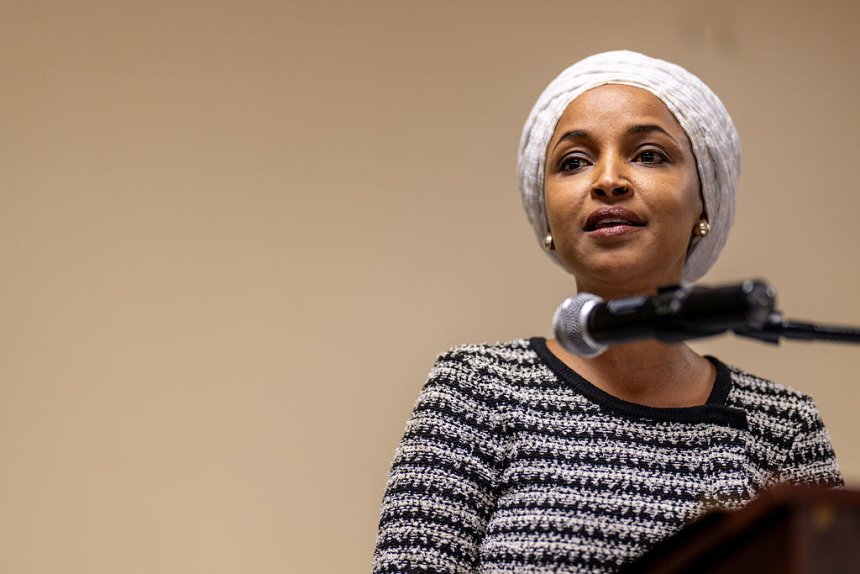
Nyesha Stone isn’t waiting for anyone to save Black journalism
In this Q&A, Nyesha Stone, the founder of Carvd N Stone, opens up about how she got started, why she

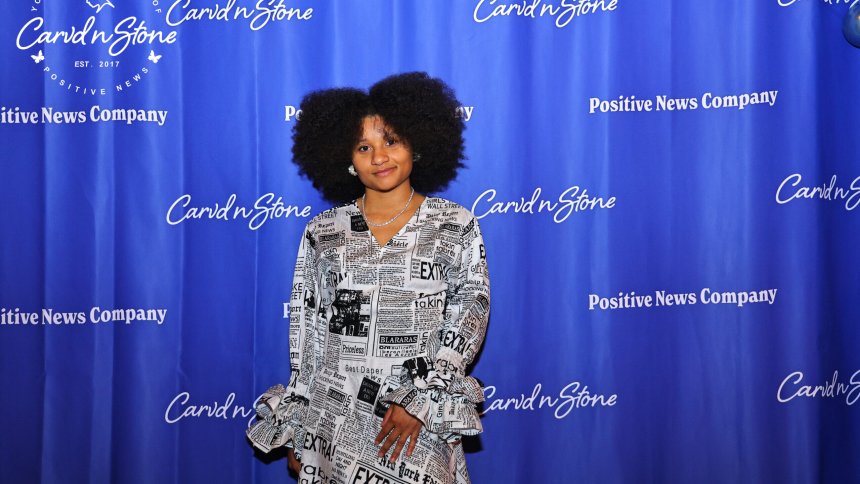

In this Q&A, Nyesha Stone, the founder of Carvd N Stone, opens up about how she got started, why she prioritizes good news, and so much more.
About ten years ago, Nyesha Stone was a student journalist in the field working for local outlets when she realized a pattern among her colleagues. Good news about Black life in her native Milwaukee was becoming increasingly hard to find.
“I just couldn’t realize why their perspective, their lens, was so different,” Stone said of non-Black reporters to theGrio over Zoom. “How are they only focusing on the negative?”
A journalism student at the University of Wisconsin-Milwaukee at the time, she studied the history of the Black press, learning how generations of Black journalists had challenged the narratives told about their communities by creating their own platforms. Stone decided she could do the same.
“I wanted to be rebellious just like that,” she recalled. “You guys say nothing good exists in the city of Milwaukee when it comes to a Black community? I want to show you that it does.”
In 2017, she launched Carvd N Stone, an independent news platform dedicated to telling the kinds of stories she wasn’t seeing enough of.
“I did not plan for it to be a positive news company,” she explained. “I just realized within a year I was only covering positive news.”
Nearly a decade later, through the platform, the award-winning journalist has covered hundreds upon hundreds of stories, expanded her coverage to a global reach, helped raise more than $30,000 for scholarships and grants, imparted journalism skills to more than 100 students, launched a book fair, a podcast, hosted not one but two panels, and has grown her mission through the Carvd N Stone Foundation. At a time when the news cycle can feel particularly relentless, and the future of journalism is increasingly uncertain, she’s making a case for more positive news and a different kind of media company.
The 30-year-old media maven, who is now based in Georgia, sat down with theGrio to discuss the changing media landscape, the business of journalism, and why she’s determined to keep telling stories that, from arts and entertainment to business and community to health, politics, and more, show Black communities in their best light.
The below Q&A has been edited and condensed for clarity.

theGrio: You launched Carvd N Stone in 2017 while you were still in college, but the inspiration actually goes back to the 2016 election. How did that experience, along with what you were seeing in local news coverage of Milwaukee, inspire you to start telling stories yourself?
Stone: We went to Western Wisconsin, Iowa, and Minnesota to see why these areas flipped the most from blue to red. It was in those times that I realized that journalism could get me into doors and talking to people that I usually wouldn’t talk to. It opened up my eyes to realize that although they did vote for Trump, they also wanted the same things that people back in Milwaukee wanted. They wanted better healthcare for their families. They wanted better-paying jobs. They wanted better resources. I then began to write for local newspapers. Right away, I saw a disparity.
theGrio: Nearly a decade later, you’ve gone from a college student with an idea to a full-time entrepreneur who’s built a platform, created opportunities for other journalists, and given back to your community. When you look back at everything you’ve accomplished, what has this journey taught you?
Stone: Honestly, I don’t give myself enough grace. When I look back on this almost decade, I’m just like, who was that 20-year-old? I’m just like, damn! Like, you were really standing up for yourself in rooms where people weren’t trying to give you a voice. Now, I’m confident in what I bring to journalism, but I’ve fought so much just to have a voice, and I’m just proud of myself for not giving up.
theGrio: Journalism has changed so much over the last decade. Between shrinking newsrooms, layoffs, AI, and the rise of independent media and content creators, there’s been a lot of conversation about whether the industry is dying. You’ve been pretty outspoken about disagreeing with that. What do you think people are getting wrong about its evolution?
Stone: For one, it’s not dying. I feel like even throughout time, [journalism] has always evolved, but it never went away. Every industry evolves. Everything. For example, you can use music. Is music dying out because we now have streaming? No. All these things still exist. It’s just different. It’s just changing. It’s just evolving.
I do think that people don’t understand the importance of journalists anymore. I think we used to be a well-respected industry, and now, with social media, streaming, and the ability to just order a mic flag and all these things, journalism has become diluted.
No disrespect, but we now have content creators and influencers picking up mics and doing interviews. But I want people to realize that’s not all journalism. That’s one of the easiest parts of journalism. What people aren’t realizing is that there are still journalists that are still out here doing the actual reporting, sitting down, doing the sourcing, doing the reporting for those content creators to then go make content.
So we aren’t dying out. We just need our respect back, and we also need people to begin to fund us.
theGrio: One thing you’ve learned along the way is that doing meaningful journalism and making money don’t have to be mutually exclusive. How have you approached building a sustainable business around Carvd N Stone, and what do you think needs to change about how journalists are valued and compensated?
Stone: If you look at the Chicago Defender, the person who started it [Robert Sengstacke Abbott] became a millionaire. So why can’t we also be millionaires and also inform our community? I would like companies to start looking at journalists, using our skills, and paying us for them. We’ve been taught in school that you should not take money, but that’s not fair for us.
Now, with Carvd N Stone, the service that we do provide is a paid storytelling campaign. So that’s how we are working with Amazon in the city of Milwaukee. We’re agreeing we’re going to cover this one story. You’re going to pay for it, but guess what? I have 100% editorial control.
We might agree on this story, and I may interview the person, but I’m still treating it exactly as if it were [an article]. But now I’m able to actually get paid for it. And these people already have a marketing budget, so why can’t I get paid from these organizations? It still has to go with my ethics. I’m tired of writing an article, and you’re the one getting sales, but I actually don’t have money for groceries.
theGrio: Carvd N Stone is known for positive news, but as you’ve pointed out, that doesn’t mean ignoring the very real challenges facing Black communities. How do you approach reporting on those issues?
Stone: I think that at the end of the day, journalism is informing, and so I take that as the lens. I know specifically that my hometown, Milwaukee, has a food desert. We covered a Black-owned grocery store in Milwaukee that gave away $10,000 worth of fresh food. So not only am I covering that, but I’m also telling you that they need support, too. I’m addressing that I know this food desert is here. I’m telling you the data. I’m sourcing other people. I’m looking at data, but there’s the flip side too. We know this problem exists, but here’s a potential solution.
I’m not saying that this stuff doesn’t exist. That’s not the point of Carvd N Stone. I want you to know that I know bad things are happening in this world, but I also want you to know there are good things and good people addressing them.

theGrio: We’re living through a particularly overwhelming news cycle, and it’s easy to feel like there’s no escaping it. What advice would you give people who want to stay informed but are struggling with the onslaught of bad news?
Stone: You know the block button works, right? If you see an article or a video you don’t like, why would you share it and say I don’t like it? Stop giving any clicks to people you actually do not support. To the people who actually are consuming the news, I just want y’all to be more vigilant. I know a lot of people don’t necessarily always go click on the article, but please do. Please go click on the article. Please actually go read it. Please actually watch the full interview and not just this stupid soundbite.
The reason you’re seeing the things that you see is because you actually keep liking it, you actually keep sharing it, and you actually keep engaging with it. Stop it. That’s really the simplest thing you can do. Block them. Don’t mention them. They can keep doing it, but if they got no views, it don’t matter. I don’t think they really understand how big of an impact that they play in the role in what news is actually produced.

theGrio: You’ve already taken Carvd N Stone well beyond Milwaukee, but it sounds like your vision for the company is much bigger than what we’ve seen so far. What are you hoping to build over the next decade, and what would you ultimately like Carvd N Stone to become?
Stone: We’re going to continue covering positive news. But I’ve always had a 10-year plan. The goal is to eventually have the CNS news channel. We’re eventually going to have a CNS chopper. We’re eventually going to have reporters doing beats again. We’re a legit news company, and I found a way to create a creative business model where people are now paying us to literally do articles.
In a time when people say no one is paying for real journalism, actually, people are paying for it because they’ve been looking for it. It’s just that people weren’t pitching it in the right way, which is why I did the business program. We’re going to eventually expand to be able to produce more news in different ways. We’ve had a podcast. We did two seasons. I stopped it, but eventually I want to bring it back. I just need a bigger team, so really it’s just doing exactly what we’re doing, expanding on it, and being able to give more opportunities to other journalists who deserve them.
theGrio: Throughout our conversation, you’ve talked about being a human being first and a journalist second. That’s a great philosophy. What does that mean to you in practice, and how has it shaped the kind of journalist you want to be?
Stone: Human being first, journalist second, means I see you. Have you ever been to an event and then somebody just pops up with a camera and doesn’t say anything and just starts recording? Journalist first, human being second.
I’ve been in abusive relationships. I’ve been in bad situations, and I don’t want that to be a headline. So why would I make that a headline for someone else? I think there are important stories out there, but why do we as journalists have to make other people feel bad just to get views, just to get paid? It just doesn’t sit right in my heart to do that. I hurt just as much as you hurt, too. We wouldn’t be here as journalists without other people. We are telling other people’s stories.
Share
What's Your Reaction?
 Like
0
 Dislike
0
 Love
0
 Funny
0
 Angry
0
 Sad
0
 Wow
0