Marcia Ann Gillespie changed the world of media as editor-in-chief of ESSENCE, but she almost never got the job
The former Essence editor-in-chief, who died at 82, leaves behind a legacy of creating space for Black women to tell

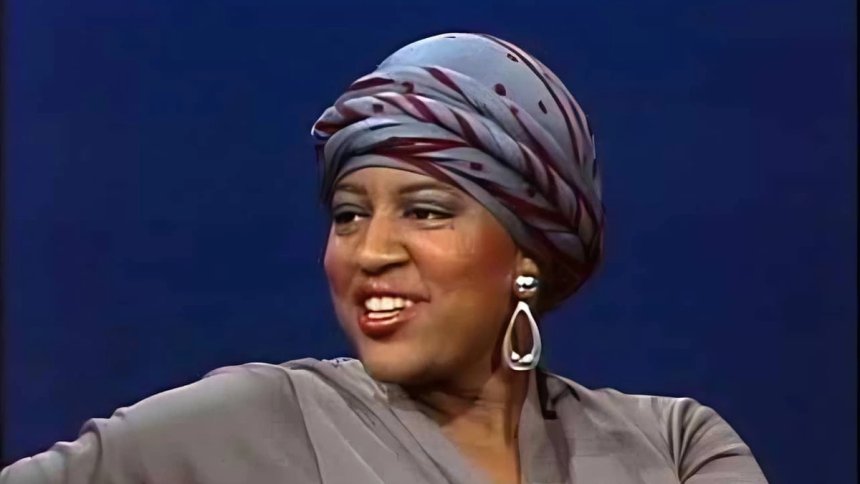

The former Essence editor-in-chief, who died at 82, leaves behind a legacy of creating space for Black women to tell their own stories.
Before Marcia Ann Gillespie became the editor-in-chief of Essence magazine at just 26 in 1971, she briefly found herself out of a job at the very same publication she would eventually go on to transform.
The legendary journalist and publishing pioneer died on Saturday, Oct. 31, at the age of 82, according to Essence, bringing renewed attention to her remarkable career and legacy.
Over her nearly decade-long tenure at Essence, Gillespie helped turn a fledgling magazine into a cultural institution that unapologetically celebrated Black women and shaped how many of them saw themselves for generations to come. With her death arriving at a time such as this, when Black women journalists around the country are facing layoffs, shrinking newsrooms, and increasingly having to forge their own paths, there’s an urgency to her story, especially considering how close she came to never leading the publication at all.
For anyone somewhat familiar with Gillespie’s career, her rise from managing editor to editor-in-chief in just a year may come across like a fairly smooth ascent. However, it was anything but. Behind the scenes, ESSENCE was going through a tumultuous start marked by growing pains, infighting over the magazine’s direction, and a revolving door of editorial leadership.
Gillespie joined the publication in 1970, shortly after its launch, but her tenure was nearly cut short when then-editor-in-chief Ida Lewis fired her. In a twist that could have come straight out of a plucky television media drama, ESSENCE co-founder Ed Lewis (of no relation) then fired Ida and brought Gillespie back, appointing her acting editor-in-chief while the magazine continued its search for a new editor.
In the 2023 docuseries “Time of Essence,” which chronicles the publication’s rise, it’s revealed that the pioneering media maker wasn’t considered for the job, even though she was already doing it. Instead of just accepting that, she rolled up her sleeves and got to work on a written proposal outlining her vision for the magazine. It was so compelling that it won her the gig, but initially on a three-month trial.
“Part of how I became Editor-in-Chief was that I had the audacity to think I knew what the magazine needed,” she recalled in a 2017 interview with Black Enterprise.
Under Gillespie’s leadership, ESSENCE became one of the country’s fastest-growing women’s magazines, giving Black women a place to see their beauty, ambitions, struggles, and triumphs treated with the seriousness they deserved. In an appearance on the 1970s PBS program, “Woman,” she opened up about the importance of Black women being able to tell their own stories, rather than having their identities and experiences defined by others.
“My life story has yet been, you know, to be told and I have to tell it. And it is different,” she said at the time.
Unfortunately, Black women having to fight to prove they deserve a promotion, or at the very least the opportunity, didn’t exactly go out of style with the rest of the 1970s. In September 2025, the only full-time Black opinion columnist at The Washington Post at the time, Karen Attiah, made headlines when she was fired after posts she made on social media that addressed race and political violence following the assassination of right-wing commentator Charlie Kirk. Months later, an arbitrator ruled that the newspaper had violated its union agreement and ordered her reinstatement with back pay. Meanwhile, Attiah continued reaching readers through her independent newsletter, The Golden Hour.
Joy Reid also lost her primetime MSNBC program in 2025, “The ReidOut.” But instead of waiting for another network to come calling, she launched her own independent media operation, joining other Black women journalists and commentators, including Tiffany Cross and Jemele Hill, who have each built platforms outside traditional newsrooms.
Throughout 2025 and into this year, layoffs and restructuring at major publications, including The Washington Post, CBS News, Teen Vogue, and more, have cut jobs and diminished coverage for many people of color. Across social media, Black women have been pouring out and sharing their own experiences of being laid off, pushed out, or forced to rethink careers they spent years building, with some turning to newsletters, podcasts, and other mediums.
While there’s something inspiring about watching Black women build their own platforms and create opportunities where none seem to exist, there’s also something exhausting about how often they’re left with little choice. Over 50 years after Gillespie first had to convince a group of men that she was qualified to lead a magazine about Black women, why are so many women who look like her still having to make the case for their talent, perspectives, and place in an industry that has never been particularly welcoming to them?
But if there’s anything to be learned or to find encouraging in the story of a woman who once advised other aspiring leaders to “be prepared to stand your ground,” it’s that even the most discouraging setbacks can lead to something extraordinary. At 26, she had no clue that the magazine she was fighting to lead would become a cultural institution, or that her work would help change American publishing. She simply believed she had something worth contributing and refused to take “no” for an answer. Losing your job doesn’t have to mean losing voice, especially when you keep hold of your “why.”
Speaking with ESSENCE in 2020, she shared what she hoped to accomplish during her time at the magazine all those years ago.
“I wanted to celebrate us,” she said, adding, “I wanted to help inspire us because I believe, as I always do, that we are capable of changing the world.”
Share
What's Your Reaction?
 Like
0
 Dislike
0
 Love
0
 Funny
0
 Angry
0
 Sad
0
 Wow
0