Black unemployment rises sharply to 7% as economists point to Trump policies
Black workers, particularly Black women, continue to face mounting economic strain as federal job cuts and other Trump policies reshape



Black workers, particularly Black women, continue to face mounting economic strain as federal job cuts and other Trump policies reshape the labor market.
The Black unemployment rate has risen yet again under the second Trump presidency after initially seeing modest declines, according to the latest U.S. jobs report.
According to the U.S. Bureau of Labor Statistics, the jobless rate for Black Americans reached 7% in September, up from 6% the previous month.
“Black workers are losing ground in Donald Trump’s economy month after month, and their families are paying for it with paychecks that get eaten by inflation, savings accounts that get smaller instead of larger, and fewer opportunities to get ahead,” said Brandon Weathersby, a spokesperson for American Bridge 21st Century, in a statement to theGrio.
“Black workers have always been the canary in the coal mine, and right now, with unemployment rising, it is a warning to every working family in America that Trump’s economy is breaking down,” said Weathersby. He added, “Instead of showing any urgency to help the people getting hurt the most, Trump is ignoring them, and he’s putting more energy into attacking journalists who cover this economy than into fixing it.”
Since Trump took office, the Black unemployment rate has, for the most part, steadily increased. After seeing an all-time record low of 4.8% during the Biden-Harris administration, the jobless rate for Black Americans peaked to its highest level (8.2%) since the coronavirus pandemic in 2021. 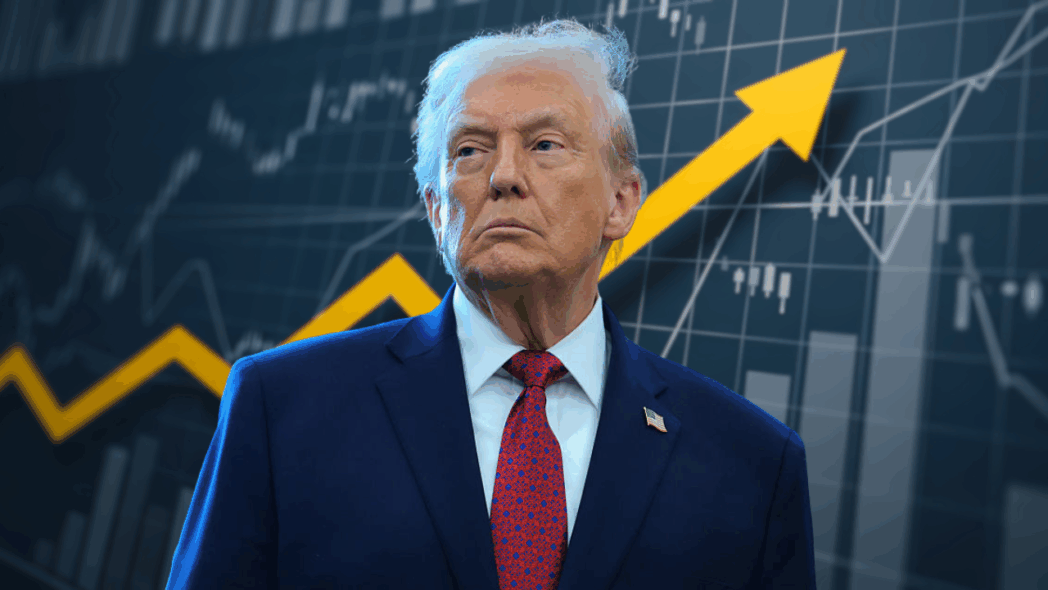
Gbenga Ajilore, chief economist at the Center on Budget and Policy Priorities, told the Grio that President Donald Trump‘s policies are directly responsible for the reversal of Black unemployment.
“Labor force participation rate rose by a lot, but employment did not rise by a comparable margin, leading to the higher unemployment rate,” he said.
Ajilore explained that “a lot of this has been driven by Black women,” who have seen steep job cuts since Trump entered office in January 2025. An estimated 110,00 Black women lost their jobs in 2025, and more than 300,000 of them have been left jobless as of the present day—though there are higher projections.
A new poll of Black women conducted by The Highland Project found that 21% say they have been affected by federal job cuts. Cornell Belcher, president of brilliant corners Research & Strategies, who conducted the poll, told theGrio, “There is extraordinary economic angst among African American women, quite frankly, and a level of angst that I have not seen even during recessions.”
Economic experts have said that Trump’s job cuts to the federal workforce, executive actions to eliminate DEI in the public and private sectors, tariff policies, and war in Iran have created a confluence of strain for Black workers.
Ajilore says concerns remain as the federal government continues to “shed jobs,” which he sees as a direct result on the Black unemployment rate.
He told theGrio, “This industry has shed over 300,000 jobs over the past year and a half.”
In June, theGrio asked President Trump about the steady increase in the Black unemployment rate, to which he said, “We’re doing very well with the Black jobs, African-American jobs.” The president claimed “it’s all coming back,” as he hedged on the opening of new coal and auto plants to bring down the jobless rate among Black Americans.
Trump told theGrio at the time that the White House’s announcement of investments in coal plants and the auto industry will bring more jobs to Black communities.
“Where your Black worker is really going to do well is when those factories open. So, I think they’re going to be great. We’ve been doing well. It’s been a big focus for me,” he said at the time.
On Friday, after the release of the latest jobs report, Kevin Hassett, White House director of the National Economic Council, told reporters the rising level of Black unemployment is “cause for concern.”
“We’re going to watch closely; we’re going to study it closely,” he said.
Share
What's Your Reaction?
 Like
0
Like
0
 Dislike
0
Dislike
0
 Love
0
Love
0
 Funny
0
Funny
0
 Angry
0
Angry
0
 Sad
0
Sad
0
 Wow
0
Wow
0