Why Are Foreclosures Rising? And Who’s Being Hit The Hardest?
Source: Muhammad Labib Adilah / Getty Why are foreclosures rising across the U.S.? Concerns about housing affordability are weighing heavily on many Americans, as aspiring homeowners try to break into the market while many existing homeowners struggle to hold on to their properties. Why are foreclosures rising? Here’s a closer look at the data. A [...]


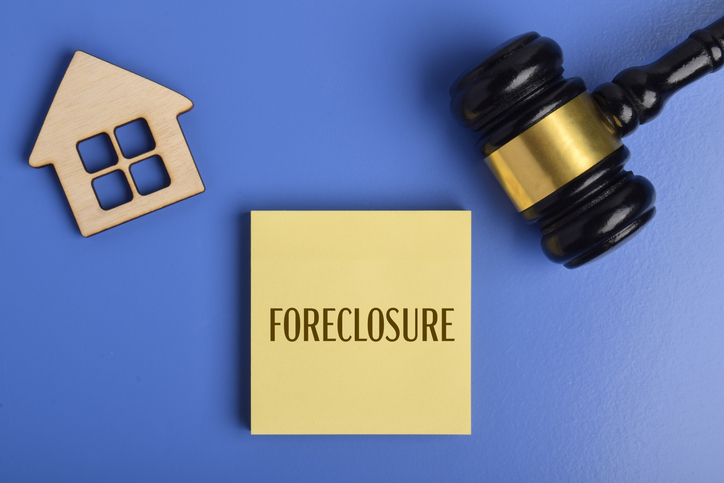
Why are foreclosures rising across the U.S.? Concerns about housing affordability are weighing heavily on many Americans, as aspiring homeowners try to break into the market while many existing homeowners struggle to hold on to their properties.
Why are foreclosures rising? Here’s a closer look at the data.
A new report from property data provider ATTOM shows that foreclosure activity is on the rise. Nearly 119,000 U.S. properties recorded a foreclosure filing in the first quarter of 2026, a 26% increase from the same period last year. In February 2026 alone, 38,840 properties had foreclosure filings, slightly down from January but still above year-ago levels.
Rob Barber, CEO of ATTOM, notes that “foreclosure activity in February marked the 12th consecutive month of annual increases, extending a gradual upward trend that began early last year.”
Nationwide, one in every 3,701 housing units had a foreclosure filing in February, with foreclosure starts climbing 14% year over year. The states with the highest foreclosure rates were Indiana, South Carolina, and Florida.
Looking more closely at the data, Indiana recorded the highest number of properties in foreclosure, with 1,864 filings, while West Virginia had the fewest, at just 20. By rate, however, Florida, South Carolina, and Indiana ranked as the top three most affected states.
Florida, the nation’s third-most populous state, had 4,504 foreclosure filings out of 10,256,470 housing units, equal to one in every 2,277 homes. The counties with the highest foreclosure concentrations were Taylor, Highlands, and Polk.
South Carolina followed closely, with one in every 2,217 homes entering foreclosure. Out of 2,443,039 housing units, 1,102 were affected. The counties with the highest foreclosure rates were Dorchester, Kershaw, and Chester.
Indiana ranked first, with a foreclosure rate of one in every 1,597 homes. Of its 2,976,568 housing units, 1,864 were in foreclosure. The counties most impacted were Morgan, Grant, and Madison.
Certain groups are particularly vulnerable to the current housing pressures. Recent buyers from 2022 to 2024 face elevated risk, having purchased at higher prices and interest rates with less equity as a buffer. Lower-income and first-time buyers, especially those using FHA or VA loans, according to Investopedia, are also experiencing higher delinquency rates, with FHA borrowers significantly more likely to fall seriously behind than those with conventional loans.
Notably, while FHA offers lower interest rates for borrowers with lower credit scores, conventional loans often have lower overall costs if you have a 760+ credit score and 20% down, as they avoid high FHA mortgage insurance premiums, The Mortgage Reports notes.
Homeowners with variable-rate mortgages are confronting sharp payment increases as their loans reset in a high-rate environment. Meanwhile, older Americans and retirees living on fixed incomes are being squeezed by rising property taxes.
Beyond mortgage payments, many households are facing rising costs associated with homeownership, including insurance premiums, property taxes, and higher interest rates.
“All of these rising costs associated with holding a home, you have increasing pressure on existing homeowners to continue to be able to afford and pay for their mortgages,” Geoff Smith, executive director of the Institute for Housing Studies at DePaul University, told CBS News in an article posted in 2025.
Economic conditions are also playing a role. Todd Teta, chief product and technology officer at ATTOM, pointed to a slowdown in hiring as a contributing factor, noting that job losses often lead to increased mortgage delinquencies.
What can homeowners do to avoid foreclosure?
Homeowners facing rising costs and financial pressure should act early to protect their homes. Staying current on mortgage payments, building a small emergency cushion, and reaching out to lenders at the first sign of trouble can open the door to options like loan modifications or temporary forbearance. Reviewing expenses, refinancing if possible, and seeking guidance from a housing counselor can also help create a more manageable path forward in an increasingly challenging market.
SEE MORE:
Share
What's Your Reaction?
 Like
0
Like
0
 Dislike
0
Dislike
0
 Love
0
Love
0
 Funny
0
Funny
0
 Angry
0
Angry
0
 Sad
0
Sad
0
 Wow
0
Wow
0