Gabrielle Union on why it took 34 years to heal from sexual trauma — and how society stands in the way
As part of commemorating April, Sexual Assault Awareness month, Gabrielle Union is opening up about her 34-year healing journey. After

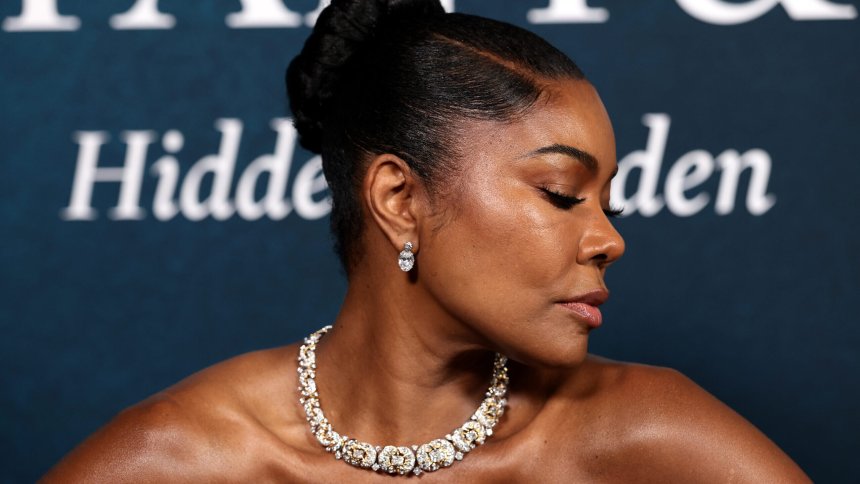
As part of commemorating April, Sexual Assault Awareness month, Gabrielle Union is opening up about her 34-year healing journey.
After navigating life through the lens of Post-Traumatic Stress Disorder (PTSD) for nearly 34 years, Gabrielle Union can be present now.
However, before she began therapy specifically for PTSD in October through Nema Health, the 53-year-old actress could not even enjoy a sunny afternoon in the backyard with her daughter. Before long, her mind would transport her out of that picturesque scene and into all of the frightening possibilities and what-ifs of how the moment could turn sour in an instant.
“I can’t watch you do cartwheels if I’m thinking about a fictitious criminal mastermind who somehow thwarts security and comes through the back gate,” she said during a recent sitdown with Lashauna Cutts, LCSW, senior clinical director and trauma therapist at Nema Health. “I can’t parent. I can’t be present like that.”
The mother of four and wife of former NBA star Dwyane Wade added, “It’s created a peace in our home, in our marriage that everyone is appreciative of … I clearly was not as aware of the heaviness that existed in our house.”
“Now I’m just watching cartwheels,” she continued. “I can be present enough to actually hear what she’s saying.”

It took Union over three decades to reach this point, not just because healing takes time, but because of how inaccessible healing from trauma can be, especially for Black women. She is opening up at a time when gaps in understanding treatment options, along with pressures like the “strong Black woman” stereotype, and a legacy of biased care, are creating barriers to navigating PTSD and seeking care, even as Black women face disproportionate rates of traumatic events, including sexual violence.
“I lived with PTSD for 34 years after being sexually assaulted at 19. I did everything I was supposed to do (allllll the therapy, year after year) and recovery still felt out of reach,” Union wrote in the caption of her post sharing the clip of the sitdown.
“What I didn’t know (and what most people don’t know) is that there’s a treatment designed specifically for trauma,” she continued. “It took me 34 years to find it. I wouldn’t wish 34 years of suffering on anyone.”
Research has shown that while roughly eight out of 10 Black women will experience some form of trauma in their lives, Black girls can also face higher rates of childhood mistreatment, including both sexual and physical abuse, as well as neglect. As they grow older, Black women are also more likely to encounter violence in intimate relationships and other types of sexual harm. According to the National Black Women’s Justice League, nearly 1 in 5 Black women are survivors of rape, and 41% of Black women experience sexual coercion and other forms of unwanted sexual contact.
Now, despite these odds, for Black women in particular, the normalization of trauma and chronic stress through stereotypes and stigmas keeps many from ever actually seeking help. Historically Black women have been socially conditioned to be resilient in the face of much, including their own tragedies, complexities, and vulnerabilities. According to data, this has led many to engage in self-sacrificing behavior, including suppressing emotions, resisting help, and prioritizing others over themselves. Roughly 58% of Black adults who need mental health resources won’t go on to seek them.
Unhealed trauma can manifest in a variety of ways, including chronic mental health conditions, emotional disregulation, physical health conditions like chronic pain and inflammation, strained relationships, and more. However, as the Union finally realized, there are specific treatments that target trauma beyond standard talk therapy.
The actress, whom even Cutts agreed had a radical transformation since beginning therapy, was so moved by her treatment with Nema, which has led to both emotional and physical well-being, that she became an investor in the company. In September, the platform announced she was joining as a strategic advisor. While speaking about her involvement during a recent appearance on the “Angie Martinez” show, she revealed that she didn’t even consider that her healing could get better than what it was.

Some of her treatments involve brief 10–15-minute sessions on the platform, often so engaging that she completes more than one in a day, then dives into the assigned exercises, which can take nearly an hour.
Union has long been candid about her story, including in her memoir, where she recounts being attacked and raped at gunpoint at 19 while working a summer job at a Payless shoe store during her time at UCLA. She began therapy three days later and continued with traditional approaches until discovering Nema and learning that treatments specifically designed for trauma were available.
Writing under the caption of her most recent post, she added, “No two traumas are the same. But if yours has changed how you live, how you love, how you feel safe in your own body – you deserve real care.”
If you or someone you know has experienced sexual assault, support is available through RAINN. You can reach the National Sexual Assault Hotline at 800-656-HOPE (4673) or chat online at rainn.org for confidential, 24/7 support. For culturally competent care and resources, visit Therapy for Black Girls.
Share
What's Your Reaction?
 Like
0
Like
0
 Dislike
0
Dislike
0
 Love
0
Love
0
 Funny
0
Funny
0
 Angry
0
Angry
0
 Sad
0
Sad
0
 Wow
0
Wow
0