What the Jason Arday story exposes about the vulnerability of Black people in elite space
In the aftermath of Jason Arday’s death, Black academics and more are opening up about their own concerns and experiences.

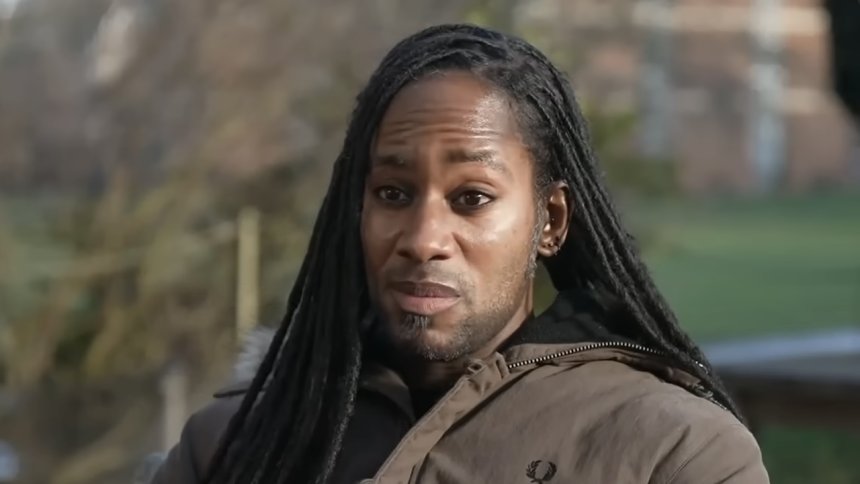

In the aftermath of Jason Arday’s death, Black academics and more are opening up about their own concerns and experiences.
Nathan Cofnas, the academic who first publicly accused former Cambridge professor Jason Arday of plagiarism, which kicked off a firestorm of attacks in the press, has been suspended from Ghent University amid an investigation into allegations of discrimination against Arday.
Cofnas announced the suspension in a post on X on Thursday, Aug. 20, writing, “I was just suspended by Ghent University. They will almost certainly fire me.”
The development comes as the latest twist in the controversy and amid an intensifying debate in Britain following Arday’s death on Aug. 14, weeks after the prominent Black academic faced allegations of plagiarism and scrutiny about his academic record and personal background. In the days since his death, the controversy surrounding him has fueled discourse among Black academics, public figures, writers, and others about where accountability ends and disproportionate scrutiny begins, and whether Black people are afforded the same grace when they stumble.
“What happened to Arday over the past month went far beyond anything the allegations against him could account for,” Khalil Green, aka the “Gen Z Historian,” wrote in his response entitled “The Digital Lynching of Jason Arday.”
“No matter how many cracks have appeared in [Arday’s] CV, it doesn’t change the fact that this is a dedicated, coordinated smear campaign from the right, based on the premise that Black people should not be at Cambridge,” Kehinde Andrews, the United Kingdom’s first Black Studies professor, told the Guardian in a recent interview.
Before his death, Dr. Shola Mos-Shogbamimu said to The Black Current, “The smear campaign against Professor Jason Arday is as transparent as it is disgraceful.”
She continued, “False and baseless allegations are being weaponized to discredit and delegitimize a brilliant, gifted, autistic, young Black British man whose success threatens those invested in deciding who gets to occupy spaces of power, prestige, and intellectual authority.”
Cofnas first raised concerns about Arday’s work in July in a lengthy post alleging that Arday had plagiarized portions of his doctoral thesis and other academic writing, including passages that closely resembled other sources without proper attribution. The allegations came after Liverpool John Moores University had already reviewed concerns about Arday’s thesis and determined the problems were the result of “honest and reasonable error,” but Cofnas’ post launched a much wider examination of Arday’s academic record, Cambridge appointment, and even claims he had made about his own life. Arday, who resigned on Aug. 5, acknowledged errors in his work but denied deliberately plagiarizing—a formal investigation also did not find him guilty of plagiarism, though it did find some errors in citations—and said the scrutiny had become racially motivated.
Given Cofnas’ own well documented views about Black people in academia, many feel his inquiry and the motive should have been subjected to as much interrogation. In April 2024, he lost his affiliation with Cambridge’s Emmanuel College after claiming that under a meritocracy, Black people would largely “disappear” from high-profile positions outside sports and entertainment, Al Jazeera reported. So when he turned his attention to one of Cambridge’s most prominent Black academics, it’s hard for many not to question whether the campaign was ever simply about plagiarism.
The questioning of whether Black people truly earned their accomplishments, are qualified for their positions, or deserve to be in elite spaces is hardly new, and has only grown louder as attacks on DEI have intensified under President Donald Trump. That scrutiny also exists alongside institutions filled with white people whose qualifications are rarely examined with the same suspicion, and it is hardly unique to Arday. Since his death, the names of other prominent Black British figures who faced similar scrutiny have resurfaced in the conversation.
Wayne Brown, the United Kingdom’s first Black fire chief, took his own life in 2024 after he faced harassment following scrutiny into his background and qualifications for the job, including that he was lying about his MBA. Another name that surfaced was that of Miriam Virgo, a former Thames Valley police officer, who was let go in early 2025 after she was convicted of sending anonymous harassing text messages to an ex-partner following their breakup.
“When I heard about the death of Professor Jason Arday, I felt a knot in the pit of my stomach,” Virgo, who survived her ordeal, began in a recent post on Instagram. “I didn’t know him, and I would never presume to know what he was thinking or speculate about the circumstances of his death. But something about it brought everything back.”
She noted how the headlines, humiliation, photographs that become ingrained in public memory, “strangers deciding” who you are, journals hounding your neighbors, it was all triggering of her experience watching as more than two decades of service were being reduced to gossip and media bias.
“I made mistakes. But I am not a headline,” she continued. “And I will no longer allow headlines to be the only version of my life that exists online. There is a human being behind every headline. Sometimes that human being is hanging on by a thread.”
None of this is to suggest that Black people in elite spaces are above investigation or exempt from criticism. But when a man is dead after weeks of public scrutiny over allegations that had already been examined and addressed by his university, the question of proportionality is difficult to ignore. And for some Black academics watching it all unfold, the question goes beyond what happened to Arday.
“I think there’s a real question about whether these spaces are safe for us and whether we just have to start doing this outside universities,” Andrews said.
Share
What's Your Reaction?
 Like
0
Like
0
 Dislike
0
Dislike
0
 Love
0
Love
0
 Funny
0
Funny
0
 Angry
0
Angry
0
 Sad
0
Sad
0
 Wow
0
Wow
0