‘The Devil Wears Prada 2’ leans into the power of the pivot in a changing media landscape
Anne Hathaway and Meryl Streep reflect on reinvention, resilience, and navigating a media landscape that no longer plays by the

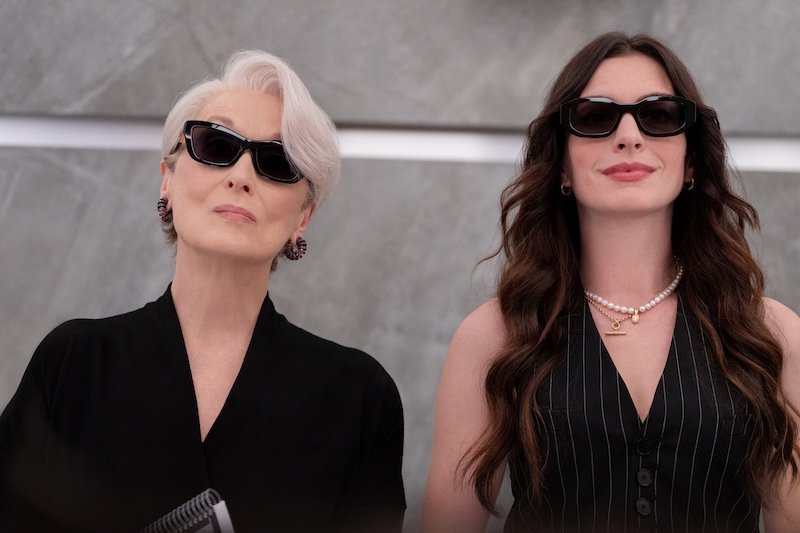
Anne Hathaway and Meryl Streep reflect on reinvention, resilience, and navigating a media landscape that no longer plays by the old rules
Nearly 20 years after ‘The Devil Wears Prada’ first defined a generation of ambitious assistants, impossible bosses, and quotable one-liners, the long-awaited sequel arrives with something more sobering on its mind: change.
This time around, the stakes aren’t just about making it in fashion—they’re about surviving an industry that’s shifting in real time.
Set against a media landscape that has dramatically transformed since the original film’s 2006 debut, ‘The Devil Wears Prada 2’ reunites audiences with Miranda Priestly (Meryl Streep), Andy Sachs (Anne Hathaway), Emily Charlton (Emily Blunt) and Nigel Kipling (Stanley Tucci) as they navigate a world where print has declined, digital dominates and even legacy institutions like ‘Runway’ are feeling the pressure to evolve.
For Streep and Hathaway, that evolution is the heartbeat of the film. When asked what the sequel says about navigating today’s uncertain professional terrain, Hathaway lit up.
“I think… the idea that you get yourself through the door… yes, that’s very important,” Hathaway explained. “But once you’re there, it’s still a minefield… so what you’re saying about the power of the pivot becomes your ability to be resilient… to hold your line, hold your integrity, but be flexible at the same time.”
“But it’s also not to have a goal that’s inflexible,” Streep added. “Because you know what? There’s something over here that might be more interesting, and you’ve just got to be willing to roll with it.”
“My dad worked at one company for 40 years, got the gold watch,” Streep continued, remarking on the generational shift in workplace behavior. “Nobody does that. That’s not the world.”
If the pivot is about movement, the harder question is knowing when to move at all.
For Streep, that answer comes from within.
“I have an inner tuning fork,” she said. “I have an inner voice that says…when.”
It’s a clarity she admits didn’t come easily.
“I try to ignore it sometimes… but I listen to it more than I used to when I was young. I used to fight stuff more,” she added, noting that age brings a certain ease in letting go.
Hathaway, on the other hand, offered a perspective that will feel deeply familiar to anyone who’s ever stayed too long out of loyalty.
“Part of my identity is loyalty,” she said. “If I’ve made a commitment… I will see it through.”
Rather than walking away, she reframes the experience.
“What I do then is I adapt my conditions for my yes,” Hathaway explained. “So the next time I’m in this position… now I know myself better.”
One of the most refreshing shifts in the sequel is what it doesn’t force its characters to do.
This time, Andy and Miranda aren’t navigating a world where success requires sacrificing love. Instead, the film makes space for both.
Streep’s Miranda, famously singular in her focus, now moves through the world with a partner played by Kenneth Branagh, someone whose presence signals balance rather than competition.
“He brings something substantial just walking in the door,” Streep said. “It’s a man who has his own… You understand immediately that she has a partner who is good.”
For Hathaway, Branagh’s casting carries even deeper meaning.
“It’s just kind of one of the ugly truths of Hollywood,” she said, noting that women often take small roles in male-led films—but rarely the other way around.
“So to have someone of Kenneth’s extraordinary stature come in and be a supporter… it says a lot about who he is,” she added.
Fan favorite Tracie Thoms is back as Andy’s best friend Lily, offering a familiar grounding point for longtime viewers, while the story introduces new romantic dynamics that reflect where these characters are now.
That includes Andy’s connection with Peter, played by Patrick Brammall, whose easygoing energy adds a different rhythm to her world.
According to Hathaway, building that chemistry happened fast, thanks to the production schedule.
“We met the day before,” she said. “We shot five scenes together on our first day.”
But it was an unexpected off-camera moment that set the tone.
“We noticed there was a ping pong table… and we just started playing,” she recalled.
What they discovered in that moment became a metaphor for their dynamic—and, in many ways, the film itself.
“We both wanted to play well, but neither one of us was particularly interested in the kill shot,” Hathaway said. “We loved the volley.”
Streep, never missing a beat, connected the dots instantly.
“You focused on the volley in the movie,” she noted.
It’s a truth that also applies to so many of the scene partnerships in ‘The Devil Wears Prada 2,’ particularly Streep and Hathaway – who will undoubtedly have audiences giddy to watch what’s become of Andy Sachs and Miranda Priestly in this modern landscape.
‘The Devil Wears Prada 2’ arrives in theaters May 1.
Share
What's Your Reaction?
 Like
0
Like
0
 Dislike
0
Dislike
0
 Love
0
Love
0
 Funny
0
Funny
0
 Angry
0
Angry
0
 Sad
0
Sad
0
 Wow
0
Wow
0