New report finds more than 70 suspected modern-day lynchings in the deep South since 2000
The “Crimson Record” study highlights patterns in suspected lynching cases often ruled suicides in the South over the last 25

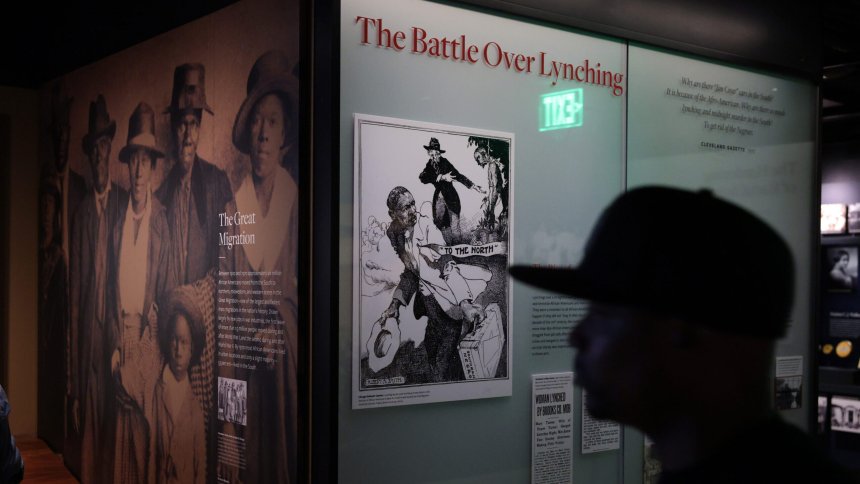
The “Crimson Record” study highlights patterns in suspected lynching cases often ruled suicides in the South over the last 25 years.
In 2025, reports surfaced of two Black men’s bodies, Trey Reed and Tory Medley, being found hanging from trees in Wisconsin and Mississippi. And as the families continue to fight for answers surrounding their loved ones’ deaths, a new report published by JULIAN reveals that the speculations of their deaths being possible lynchings is not that far-fetched.
Inspired by Ida B. Wells’ historic “A Red Record,” which documented lynchings in the 19th century, Julian’s “Crimson Record” offers an in-depth analysis of modern-day lynchings from 2000 to 2025. Challenging reports that the last lynching in the US took place in 1981, the civil rights organization’s analysis “reveals recurring patterns of violence, systemic neglect, and law enforcement misconduct that echo the racial terror of earlier eras.”
“A Crimson Record exposes the long-buried truth about modern-day lynchings, calling these crimes exactly what they are despite systemic attempts to erase and deny them,” said JULIAN founder Jill Collen Jefferson. “Lynching has never disappeared — it has adapted, hidden behind silence and indifference.”
“Today, as in the past, it survives in the shadows. If we are to end this brutality and secure justice for the victims, their families, and the communities left to carry the pain, we must confront it openly and speak its name without fear,” she added.
As the study notes, lynching is “one of the hardest hate crimes to prove,” and is often ruled as a suicide initially. A pattern many of us observed in reports about Reed, the 25-year-old whose body was found hanging from a tree at Delta State University in Mississippi. The study defines a modern-day lynching (MDL) as “a multiple perpetrator homicide, targeting a group or individual, driven by race, gender identity, or other bias with the intent of causing community terror or carrying out an extrajudicial homicide for a perceived threat or wrongdoing.”
Over the last 25 years, the study identified over 70 modern-day lynchings across the seven states, Texas, Mississippi, Georgia, Louisiana, Florida, Tennessee, Alabama—with Mississippi reporting the highest number, 20, a growing trend experts first flagged in 2021. Amongst the growing number of lynchings, the study highlights the cases of people like Trevontae Shubert-Helton, 29, who was found hanging from a tree in a 90% white town in North Georgia in 2024, Willie Andrew Jones Jr., a 21-year-old Black man who was found hanging from a tree in 2018, and more.
“These cases force us to confront an uncomfortable truth: supremacy is still enforced in our communities through terror — not as a relic of the past, but as a living, evolving practice,” Jefferson noted. “Many would rather confine this violence to history books, but that denial is exactly what allows it to continue. The extraordinary effort to obscure modern-day lynchings — more than other acts of hate — reveals a deeper fear: that naming them would expose how deeply this violence is rooted in our present.”
Describing the study as a mix of documentation, defiance, and testimony, JULIAN emphasizes that these modern-day lynchings are not “historical echoes” but rather “living patterns” of one of America’s oldest forms of racial violence.
“[MDLs] thrive in silence—in the gaps between coroner’s reports and truth, between official explanations and the lived experience of grieving families. What was once a public ritual of white supremacy has become a quieter machinery of neglect, operating through misclassification, inadequate investigation, and the failure to see Black, Brown, LGBTQIA+, indigenous, and physically impaired lives as fully grievable,” the study reads. “ This report is both a warning and a demand. It calls for the courage to name what is happening, the rigor to investigate without bias, and the will to reform systems that still protect perpetrators over victims.”
Share
What's Your Reaction?
 Like
0
Like
0
 Dislike
0
Dislike
0
 Love
0
Love
0
 Funny
0
Funny
0
 Angry
0
Angry
0
 Sad
0
Sad
0
 Wow
0
Wow
0