MacKenzie Scott gave more than $1 billion to HBCUs. So why was she left off a top philanthropy list?
The billionaire philanthropist’s quiet, trust-based giving model has made historic investments in Black colleges, but it may have also kept

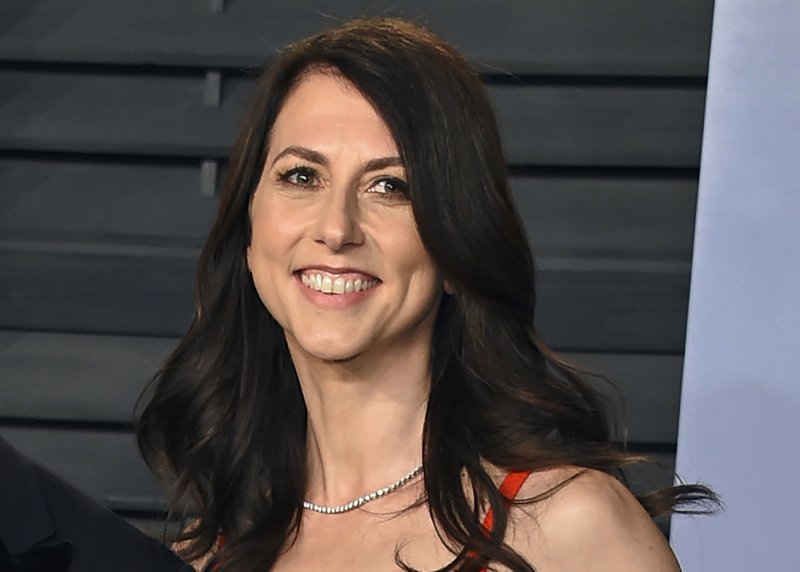
The billionaire philanthropist’s quiet, trust-based giving model has made historic investments in Black colleges, but it may have also kept her off The Chronicle of Philanthropy’s top donor ranking.
MacKenzie Scott has given away billions of dollars, including more than $1 billion to historically Black colleges and universities. Yet somehow, one major philanthropy ranking left her name off the list.
According to AfroTech, Scott was not included in The Chronicle of Philanthropy’s latest Philanthropy 50 list, despite reportedly donating roughly $7.2 billion in 2025 alone. The omission was not because Scott’s giving lacked scale. Instead, The Chronicle said it did not have enough public information about how much money she placed into donor-advised funds to count her for the ranking.
“MacKenzie Scott is among the notable absences on the Philanthropy 50 list,” The Chronicle noted. The publication said Scott and her representatives declined to provide the information needed to determine whether she qualified.
That detail says a lot about the tension around Scott’s philanthropy. On one hand, donor rankings rely on public disclosure, documentation, and clear accounting. On the other hand, Scott has built her giving model around moving quietly, giving large sums with few restrictions, and trusting organizations to know what their communities need.
For HBCUs, that approach has been transformational.
As TheGrio has consistently covered, Scott’s donations to Black colleges have helped reshape what major philanthropic investment can look like in higher education. Our reporting has followed her gifts to schools.
In 2025 alone, TheGrio reported on Scott’s $80 million gift to Howard University and $38 million gift to Spelman College, a $63 million donation to Morgan State University, $50 million to Winston-Salem State University, $38 million to Alabama State University and $38 million to Xavier University of Louisiana. In April, TheGrio also reported that Scott’s HBCU giving had topped $1 billion overall.
The money matters, but so does the way Scott gives it. Many of her donations are unrestricted, meaning the institutions can decide how to use the funds. For HBCUs, which have long been underfunded compared to predominantly white institutions, that kind of trust can be just as important as the dollar amount.
It allows schools to strengthen endowments, support students, invest in faculty, upgrade infrastructure, and plan for the future without having to mold themselves around someone else’s narrow funding priorities.
Scott has also pushed back against the idea that generosity should only be measured by public rankings or dollar totals. In a December 2025 essay published through Yield Giving, she wrote that she had given $7.166 billion to organizations around the world, but said that figure represented only a small part of the care moving through communities.
“This dollar total will likely be reported in the news, but any dollar amount is a vanishingly tiny fraction of the personal expressions of care being shared into communities this year,” Scott wrote.
That perspective helps explain why her absence from the Philanthropy 50 list is both notable and complicated. By traditional measures, Scott is one of the most significant philanthropists in the country. But to her, the work appears to matter more than the recognition.
For Black institutions, the impact is already visible. Scott’s gifts have arrived at a time when HBCUs are seeing increased interest in enrollment, growing cultural influence, and renewed national attention, while still battling historic funding gaps.
Her donations do not erase those inequities, nor do they replace the need for sustained public investment in Black higher education. But they do represent a rare kind of large-scale confidence in HBCUs: money given without treating the institutions as charity cases, rescue projects, or organizations that must prove their worth over and over again.
Scott may have missed one philanthropy ranking, but for the HBCUs receiving her support, the bigger story is not whether she made a list. It is what her giving makes possible.
Share
What's Your Reaction?
 Like
0
Like
0
 Dislike
0
Dislike
0
 Love
0
Love
0
 Funny
0
Funny
0
 Angry
0
Angry
0
 Sad
0
Sad
0
 Wow
0
Wow
0