Was Betty Boop based on a Black jazz singer? The answer is complicated
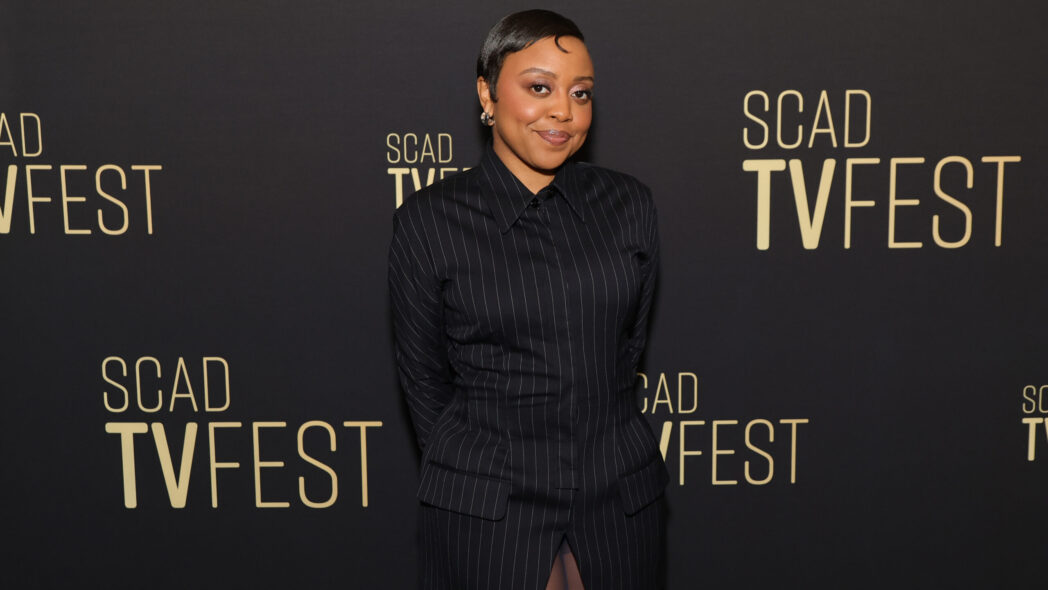
Quinta Brunson is gearing up to play Betty Boop in an upcoming live-action adaptation of the famous cartoon flapper. Dressed


Quinta Brunson is gearing up to play Betty Boop in an upcoming live-action adaptation of the famous cartoon flapper.
Dressed in a black strapless gown, writer and actress Quinta Brunson arrived at the 76th Primetime Emmy Awards at the Peacock Theater in September 2024 in Los Angeles, with the hair and glam of a 1930s flapper—her short hair accented with pincurls and her eye shadow a dark smoky eye.
For many, the look on the endearingly petite, doe-eyed “Abbott Elementary” star immediately brought to mind none other than Betty Boop. It wasn’t long before Brunson kept up the homage in one “Boop-Oop-a-Doop!” slay after another. That’s why when it was announced that she was cast as the beloved character in an upcoming live-action, the news was widely celebrated.
Another reason this casting has been so well received is that an urban legend has been circulating for years claiming that the character, originally created by Max Fleischer and animator Grim Natwick in the 1930s, is based on a Black jazz singer.
Taraji P. Henson even said so in 2021 during the BET Awards, when she dressed like the famed cartoon character while using her hosting duties to pay homage to famous Black female icons.
“In New York during the Harlem Renaissance, Black women like myself dressed up like her [motioning with pointer toward short black skirt and garter belt], ‘Baby Esther’ Jones, aka Betty Boop – she was Black! Y’all didn’t know that, did ya?” Henson gushed during her monologue. “Yes! …and Josephine Baker were recorded shakin’ a little somethin’ somethin’. Later this evolved into the ‘Harlem Shake’.”
For years, many have believed that Betty Boop is based on Esther Jones, known as “Baby Esther,” and that Fleischer and Natwick may have appropriated Black culture while potentially erasing a piece of Black Jazz Age history in the process. However, looking closer at the origins of Betty Boop reveals the answer to the question of who she’s based on and why Brunson is still a more than worthy person to take her on is a bit more complex than that.
When did Betty Boop first make her debut?
Betty Boop first made her grand debut on August 9, 1930, in the Fleischer Studio’s black and white “talkartoon” short “Dizzy Dishes.” It’s a roughly six-minute short cartoon of animals in a jazz lounge, placing complicated orders while Betty Boop performs on stage. All she said at the time was her iconic “Boop-Oop-a-Doop!” scat. However, as most original cartoons, she’s not exactly drawn as the voluptuous petite jazz singer many know her to be, she was a dog and the girlfriend of the main character, Bimbo.
Wait, she was a dog at first?
Yes, Betty Boop started out as a dog, as it turns out, and over time she evolved into a petite woman wearing a mini dress over a garter. By 1932, she was starring in her cartoons, her wide, round puppy dog eyes became slightly smaller and more doe-like as her puppy dog ears were reashioned into hoop earrings. In later iterations, as she continued to evolve, especially after color was introduced, her dress and garter were sometimes red.
Why was she considered controversial for her time?
Betty Boop was initially raunchy, as was much entertainment, until the Hays Code swiftly took effect in the 1930s, setting stricter guidelines for Hollywood. The little jazz singer with some spice to her—who spent the bulk of some of her initial shorts creatively defending herself against unwanted sexual advances—became more demure and more aligned with society’s expectations of a single woman.
She’s a product of the Jazz Age
In 1932, the white vaudeville singer Helen Kane sued Betty Boop’s makers and Paramount Studios for $250,000, claiming her likeness, including her use of a “boop” scat, was being used as an unauthorized caricature of her. However, this brought out multiple Black jazz singers of the day and their managers, including the manager of Baby Esther, who testified that Kane may have been the one appropriating their jazz style. The manager of Baby Esther, who performed at the Cotton Club as a child, explained that he taught his client how to sing in that scat-style years ago. The studio won.
In modern terms, this would be like someone making a generic “baddie” cartoon character and then a Kardashian sister attempting to sue for likeness. Yeah, that would probably go about the same way!
How did Betty Boop become a Black cultural flashpoint?
It seems minor misinformation around the details of this lawsuit has caused some confusion over the years. In 2021, PBS ran a short post claiming Betty Boop had been based on Baby Esther and that Fleischer and Natwick appropriated Betty Boop from her. A year later, they ran a column correcting the claim after Fleischer’s grandson reached out, hoping to correct the narrative. And for good reason.
So, who is Betty Boop actually based on?
It’s most accurate to say Betty Boop is based on Jazz Age era performers, but given that that era was created and launched on the backs of Black musicians and artists and this fact being what her infamous lawsuit rested on, I think we have our answer.
Speaking to PBS in 2022, Fleischer’s grandson Mark said as much as well:
“The concept that Betty Boop grew out of and reflected the Jazz Age culture of her time is absolutely true, yet, as history shows, she was not modeled after any single performer,” he explained. “It’s important to distinguish the collective creativity of the Jazz Age and its style from the many individual Jazz Age artists who contributed to it. And the number of amazing artists and performers who created that great era and who are embodied in Betty Boop is so large that it’s impossible to single out any one great talent as her inspiration.”
Share
What's Your Reaction?
 Like
0
Like
0
 Dislike
0
Dislike
0
 Love
0
Love
0
 Funny
0
Funny
0
 Angry
0
Angry
0
 Sad
0
Sad
0
 Wow
0
Wow
0