Jason Arday’s memoir tells his story after Cambridge professor’s death
The late sociologist’s memoir, “Great and Unfortunate Things,” chronicles his journey from a nonverbal, illiterate child to Cambridge University’s youngest

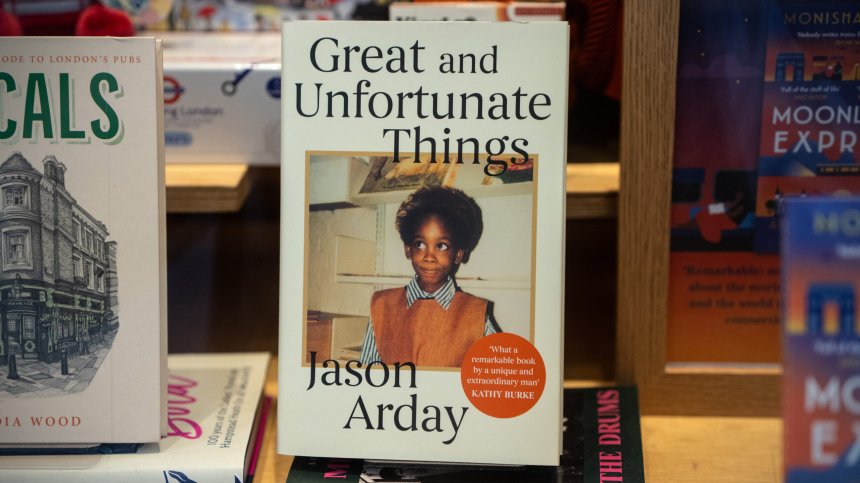

The late sociologist’s memoir, “Great and Unfortunate Things,” chronicles his journey from a nonverbal, illiterate child to Cambridge University’s youngest Black professor.
For years, Jason Arday’s story was one of extraordinary achievement. Born autistic and nonverbal as a child, Arday remained illiterate until his late teens before eventually becoming a sociologist and, in 2023, the youngest Black professor in the history of Cambridge University.
Now, his story is being told in his own words.
Simon & Schuster is publishing Arday’s memoir, “Great and Unfortunate Things,” in the United Kingdom on Thursday, less than two weeks after the 41-year-old professor was found dead at his London apartment. The book was published earlier this month in the United States.
According to the Associated Press, the publisher decided to release the memoir in accordance with Arday’s family’s wishes.
“To the very end, Jason was clear that he wanted his memoir to be published, and it is only right that we honor his wishes,” his family said in a statement.
The publication comes amid intense scrutiny of Arday’s academic career. British media reports raised allegations that his academic work included plagiarism and questioned claims he had made about his athletic and fundraising accomplishments.
Cambridge initially said plagiarism allegations had been investigated and determined to be unfounded. But the university announced Aug. 5 that it had opened an investigation into Arday’s appointment after receiving “new information” about his qualifications and honorary appointments.
Arday addressed some of the controversy in a July interview with the Times of London, acknowledging that he had made mistakes, which he attributed to his autism and a lack of oversight early in his career. He rejected descriptions of himself as “a liar and a fantasist and an academic fraud,” saying such accusations were motivated by “racism and ableism.”
The controversy intensified during the final days of his life, prompting questions about the role of the media and Cambridge in the circumstances surrounding his death.
His family has asked for privacy as they grieve.
“We are happy to allow the book to speak for itself and won’t comment further on its content,” the family said.
For a Black scholar whose life represented an extraordinary journey through barriers of race, disability and education, “Great and Unfortunate Things” now offers readers an opportunity to encounter Arday’s story beyond the headlines that dominated the end of his life.
Share
What's Your Reaction?
 Like
0
Like
0
 Dislike
0
Dislike
0
 Love
0
Love
0
 Funny
0
Funny
0
 Angry
0
Angry
0
 Sad
0
Sad
0
 Wow
0
Wow
0