‘I want to be free’: Alabama man serving life sentence denied new trial despite learning his original attorney defended the Ku Klux Klan
Myers was granted clemency in 2025 after serving more than 30 years on death row. He plans to appeal the

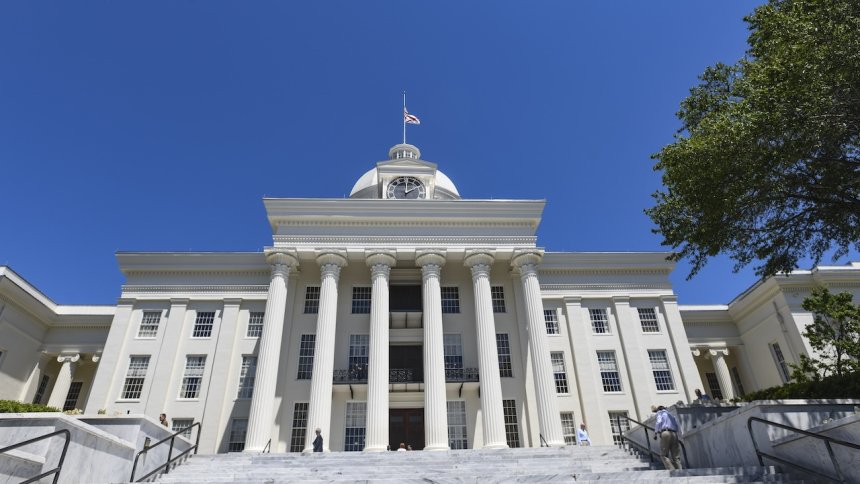

Myers was granted clemency in 2025 after serving more than 30 years on death row. He plans to appeal the decision as his lawyers believe he did not have fair representation during his original trial.
In 31 years, Robin “Rocky” Myers has only known one cell. He gets a few hours of sunlight during rec time at the Alabama prison where he is located. In a phone call with CNN, he doesn’t mince words about his condition or how he wants his case to be fully resolved.
“I’ve been locked up in one cell for 31 years. I don’t want to be inside no more,” he said during a phone call. “When I get out, I don’t want a house. I don’t want an apartment. I want a car where I can drive everywhere,” he said, with the certainty of someone who has spent too long dreaming about something most people take for granted.
“I want to be free.”
Myers has been incarcerated for the 1991 murder of his white neighbor, Ludie Mae Tucker. There was no DNA evidence tying Myers to the crime but his conviction, which placed him on death row, occurred due in large part to circumstantial evidence and witness testimony. Myers’ lawyers argued the testimony was not reliable as one witness recanted their statement. Although a 1994 jury sentenced him to life, the judge overrode that decision and sentenced him to death — a decision later commuted by Alabama Governor Kay Ivey.
On Friday, a judge denied Myers’ request for a new trial, despite Myers citing that his original trial lawyer had previously defended the Ku Klux Klan.
‘“In no event can relief be granted on a claim of ineffective assistance of trial or appellate counsel raised in a successive petition,’” Morgan County Circuit Court Judge Charles Elliott Elliott wrote in his decision. “The only exception to this bright line rule is when a petition is filed to be able to obtain an out-of-time appeal.”
A shocking discovery
John Mays, who represented Myers during his first trial, had previously defended the United Klans of America, a group affiliated with the Ku Klux, in a 1987 case where the organization was ordered to pay $7 million for the 1981 murder of a Black teeanger, Michael Donald, whose body was found hanging from a tree in Mobile, Al. Klansmen kidnapped, beat and killed Donald in response to a trial involving a Black man accused of killing of a white police officer, ending in a mistrial. Donald’s lynching was served as a means to intimidate Black juors for siding with Black defendants. Donald had no connection to the death of the police officer.
Mays argued the UKA should not be held responsible for Donald’s murder.
“No court has ever heard evidence or ruled on the central claim in this petition: that the lawyer appointed to defend Rocky Myers, a Black man on trial for his life, had spent the previous decade as the corporate counsel, public spokesman, and ideological champion for the United Klans of America,” J. Mitchell McGuire, counsel for Myers, said. “That question has never been ‘tested.’ It has been avoided.”
Kacey Keaton, who represented Myers from 2007 to 2025 when he was granted clemency, suggested what occurred to Myers by having Mays as his lawyer something the state of Alabama would do.
“A Black person on trial for their life would not make that choice for that to be their lawyer,” Keeton, who represented Myers from 2007 to 2025, when he was granted clemency, told CNN “When you are poor and Black in Alabama, you get what the state gives you. And that’s what they gave Rocky Myers.”
Mays’ ties to the KKK run deeper than the 1987 civil trial for the United Klans of America. According to newspaper clippings cited by the Alabama Defector, Mays spoke at nine different Klan rallies between 1977 and 1981, defended an imperial wizard in a case against the FBI in 1981 and that same year, “exhorted caucasians to band together in the face of an oncoming race war” during a Klan rally in Tennessee, per The LaFollette Press.
Myers maintains his innocence and plans to appeal.
Share
What's Your Reaction?
 Like
0
Like
0
 Dislike
0
Dislike
0
 Love
0
Love
0
 Funny
0
Funny
0
 Angry
0
Angry
0
 Sad
0
Sad
0
 Wow
0
Wow
0