How social media algorithms are fueling the spread of racist and engagement-driven content
Studies and whistleblower claims have sparked new questions about whether platforms prioritize engagement over safety. For several years now, social


Studies and whistleblower claims have sparked new questions about whether platforms prioritize engagement over safety.
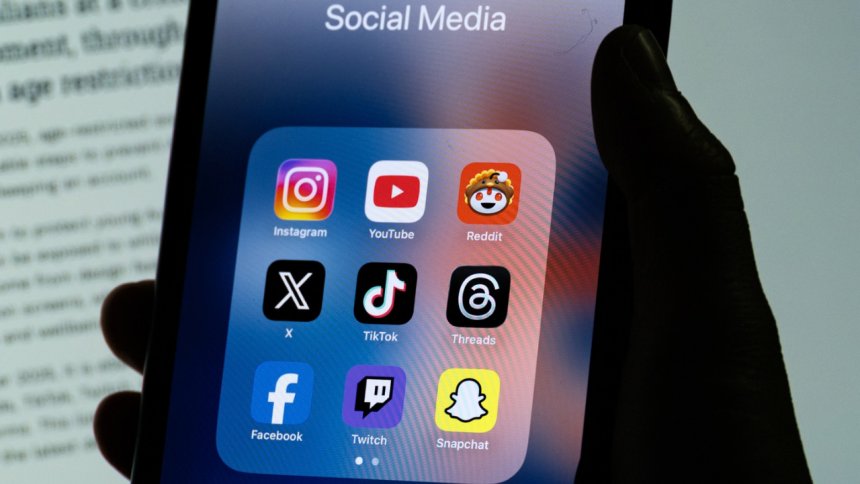
For several years now, social media users have found themselves in a constant battle with hate speech and accounts that amplify racist tropes and more. Regardless of the platform, whether it is Instagram, Facebook, Twitch, TikTok or X, algorithms have been found to reward confrontation and rage-bait-style engagement.
And it is by design.
A study conducted earlier this year by Dr. Naomi Thompson and David Woodger at the University of London revealed that racism was being normalized through social media algorithms, yielding a serious effect on the mental health and real-world experiences of teens and young adults.
“What we are seeing is not occasional exposure to harmful content—it is routine, embedded in young people’s everyday scrolling and social interactions,” Thompson wrote.
According to an engineer at Meta, the parent company of Facebook, he was instructed by senior management to allow more “borderline” harmful content, ranging from misogyny to conspiracy theories, to keep up with TikTok. The vertical video app, which was subject to a potential government ban in the United States until it was sold, has routinely curbed complaints regarding children in favor of protecting political entities, according to the BBC.
Meta and TikTok both disputed the claims, particularly the claim that they amplified hateful content in the name of profit.
“Any suggestion that we deliberately amplify harmful content for financial gain is wrong,” a spokesperson for Meta told the BBC.
Platforms like Twitch and Kick, which allow streamers to showcase “Truman Show” style vlogs, have amplified the likes of Dalton Eatherly, known as “Chud The Builder,” and others who have built followings harassing Black and brown individuals.
Eatherly was arrested earlier this year on attempted murder charges in an incident where he got into a confrontation with a Black man, opening fire. According to multiple reports, the streamer accidentally shot himself in the arm during the incident. Eatherly, who has over 200,000 followers on X, routinely filmed himself yelling racial slurs at Black people, looking to provoke a reaction. He was subsequently banned from Kick for harassment, but later moved on to another platform, Pump.
On a near-daily basis, a typical scroll through Instagram, TikTok or X feeds will lead to the discovery, whether directly or indirectly, of an argument about something racist, sexist or ableist, whether it be a post, someone allegedly recording videos in blackface or numerous faux pas by companies.
Numerous users on X have noticed an algorithmic shift toward amplifying more hate speech since Elon Musk acquired the platform in October 2022. According to the University of California, Berkeley, a 50 percent increase in visible hate speech was discovered on the platform across the first few months after Musk took over. X disputed the claims, saying that hate speech on the platform had decreased. However, another study revealed that hate speech on the site spiked well into 2023.
So what is the endgame? In June, both Meta and Alphabet, the parent company of YouTube, were found liable for intentionally designing platforms that were not only addictive but also harmed children and the mental health of young people. In August, Meta reached an $18 billion settlement over a lawsuit centered on teen social media addiction, promising stronger guardrails such as time limits, disabling features and more.
While the promise of internet safety looms large, others want it to be not a temporary fix but a permanent one.
“We cannot truly protect all children and teens until these protections are required on every platform and are permanent — that’s something Congress can do,” Sacha Haworth, executive director of The Tech Oversight Project, told the Associated Press following the landmark ruling.
Share
What's Your Reaction?
 Like
0
Like
0
 Dislike
0
Dislike
0
 Love
0
Love
0
 Funny
0
Funny
0
 Angry
0
Angry
0
 Sad
0
Sad
0
 Wow
0
Wow
0