From Abdul El-Sayed to Barack Obama, Republicans have a history of weaponizing ethnic names
Experts say emphasizing El-Sayed’s Muslim name is part of a longstanding effort to cast nonwhite candidates as outsiders. After Abdul

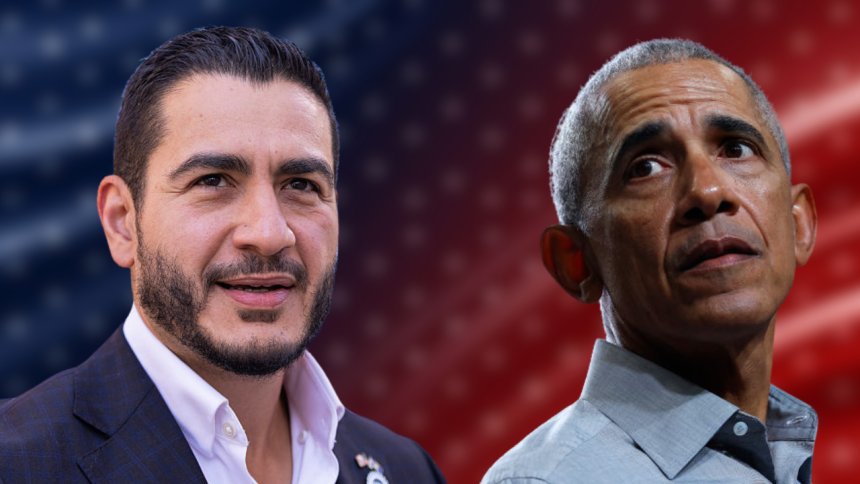

Experts say emphasizing El-Sayed’s Muslim name is part of a longstanding effort to cast nonwhite candidates as outsiders.
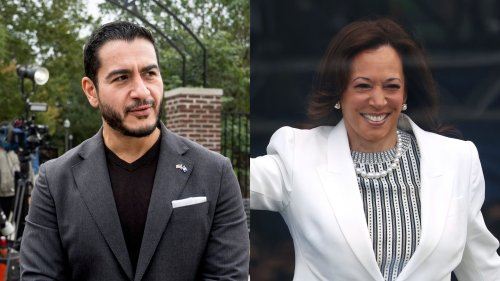
After Abdul El-Sayed won the Democratic nomination for U.S. Senate in Michigan, Republicans turned to a familiar, and what some might say xenophobic and racist tactic to weaken his candidacy ahead of November’s contest against the Republican nominee, former Congressman Mike Rogers.
Attack ads against El-Sayed, a Muslim raised by African immigrants, purposefully emphasize his full name: Abdulrahman Mohamed El-Sayed. One ad slams the Michigan scientist and former Wayne County health official as “the most radical Senate candidate in America” and connected him to the Muslim Brotherhood, some of whose branches were classified as a terrorist group by the Trump State Department.
Republican Senator Tim Scott, the chair of the National Republican Senate Campaign Committee, appeared to dodge questions by CNN’s Manu Raju when asked about the NRSCC’s tactic of using El-Sayed’s full name, despite the Democrat publicly using a shortened version of his name.
“It’s about what he stands for,” said Scott. “He’s the most dangerous candidate you can find.”
But the tactic of spotlighting El-Sayed’s Muslim name is something that has become a pattern for Republicans. When America’s first Black President, Barack Obama, ran for president in 2008 and throughout his two terms, Republicans often accentuated Obama’s middle name, Hussein. President Donald Trump still frequently refers to Obama’s middle name and has frequently mispronounced the name of Congresswoman Ilhan Omar, the first Muslim elected to Congress.
“Republicans have a very strong background and history of using race, culture, and any demo that is not Christian, as something that is an aligning power for white supremacy,” Democratic strategist Ameshia Cross tells theGrio. “For them, this has worked in the past, and they always like to bring back the greatest hits.”
Dr. Christina M. Greer, a political science professor at Fordham University, says Republicans are always trying to “other” Democratic candidates and “make them foreign and scary.” She explained, “To many Republican voters, not having someone who’s white and ‘Christian’ is a frightening proposition.”
That othering marginalizes not just candidates but Black and Muslim communities, says Greer, who notes that there are millions of Black Muslims and immigrants in the United States.
“Why is it that being Muslim is a bad thing? It’s just like being another religion, like Christian or Jewish or Buddhist, you name it,” says Greer. 
Speaking of Abdul El-Sayed, the political scientist points out that he doesn’t emphasize his Muslim faith in campaign ads, but rather his Michigan roots and his policy ideas to improve the lives of Michigan residents.
“It doesn’t matter what [his] name is; it matters that [he’s] actually delivering on affordability and healthcare and all the issues that actually are of consequence, not his name,” said Greer.
Cross said the Trump administration has “gone out of its way” to push anti-immigrant sentiment and policies that “disrupt human and civil rights policies that have actually led to the deaths of American citizens.”
“The dog whistle is not as strong as we have previously seen them be…because people are caring about their personal economies,” she told theGrio. “They’re caring about utility bills, the cost of living, rent, housing, food, [and] gas affordability. They’re seeing the billions of dollars a day that are spent in the war in Iran, and they are not distracted by the culture wars that the White House and the Republicans continue to push out.”
The Democratic strategist added, “Culture wars tend to not matter nearly as much when people cannot afford to keep a roof over their head or food on the table.”
In one recent instance, Republicans’ ostracizing of Muslim-sounding names backfired for them electorally. In Michigan, Trump-endorsed U.S. House candidate Amir Hassan notably lost the Republican nomination to another candidate who had already dropped out of the race but whose name remained on the ballot.
It is not clear if Hassan, who is Black, is Muslim, but many Republicans say they believe his Arabic name played a role in how GOP voters cast their ballots in the race.
“You can’t, on the one hand, choose one person who has a name that is not categorically Eurocentric as problematic, and then choose somebody else who also happens to be Black,” says Cross. “They basically tried to find a Black foil, and this one also happened to have, for lack of a better term, an ethnic name, and it just did not work.”
Dr. Greer says “the contradictions are real,” ultimately adding, “They attack Democratic candidates [over] of their names because, well, they can’t attack them on the message.”
Share
What's Your Reaction?
 Like
0
Like
0
 Dislike
0
Dislike
0
 Love
0
Love
0
 Funny
0
Funny
0
 Angry
0
Angry
0
 Sad
0
Sad
0
 Wow
0
Wow
0



![Watch: 2026 MTV VMAs Performances [Madonna, Bruno Mars, Sabrina Carpenter, RAYE, & More]](https://thatgrapejuice.net/wp-content/uploads/2026/09/MADONNA-VMAS-2026-RAYE-BRUNO-MARS-PERFORMANCES-THATGRAPEJUICE.jpg)