Democrats’ midterm victory puts Supreme Court’s conservative majority under new pressure
Democratic midterm victories have renewed questions about Clarence Thomas and Samuel Alito retiring and the future of the Supreme Court’s

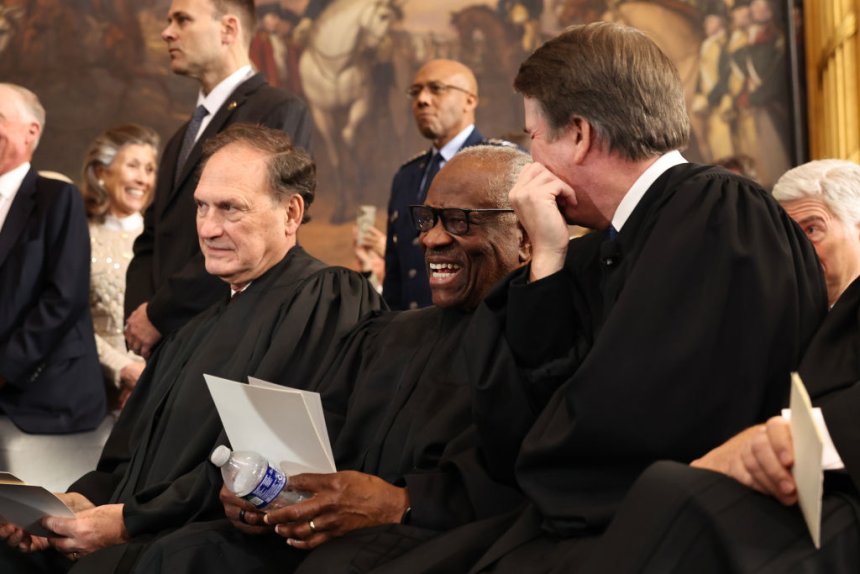

Democratic midterm victories have renewed questions about Clarence Thomas and Samuel Alito retiring and the future of the Supreme Court’s conservative majority.
The political consequences of the 2026 midterm elections may reach beyond Congress and into the Supreme Court, where the future of its conservative majority is becoming a renewed concern for Republicans.
Democrats’ victories have changed the calculations surrounding two of the court’s most senior conservative members, Justices Clarence Thomas and Samuel Alito.
At 78 and 76 respectively, both are approaching an age at which retirement decisions carry significant political implications, particularly because Supreme Court appointments can influence American law for decades.
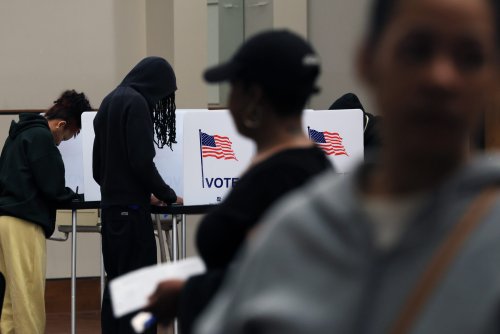
The Associated Press has called Democratic control of both the House and Senate, with the new Congress expected to take office in January 2027. That leaves Republicans with a narrow window to confirm another Supreme Court nominee before the Senate changes hands.
The situation has prompted discussion of what some legal commentators describe as a possible “reverse Ginsburg” scenario. The comparison refers to the decision by the late Justice Ruth Bader Ginsburg to remain on the bench during Barack Obama’s presidency. After her death in September 2020, President Trump nominated Amy Coney Barrett, whose confirmation strengthened the court’s conservative majority.
An opinion piece published by The Hill on November 7 explores the possibility that Thomas and Alito could face a similar legacy question from the opposite ideological direction. If either justice leaves the court during a future Democratic administration, a Democratic president could have the opportunity to appoint a liberal successor, potentially changing the court’s current 6-3 conservative balance.
The timing is central to the argument. Trump remains president until January 2029, but Democrats will control the Senate from the start of the next Congress. That could make confirmation of conservative nominees considerably more difficult if a vacancy occurs before the next presidential election.
The Washington Post reported November 5 that Alito had said he had no plans to retire during the current lame-duck session. He also indicated that he intended to remain on the court through its current term. Thomas, meanwhile, has previously indicated that he has no plans to step down.
There are competing considerations. Supreme Court justices hold lifetime appointments and are not obligated to retire according to party advantage. Pressuring judges to leave simply to preserve an ideological majority could also deepen concerns about political influence over the judiciary.
The possibility of a shift is therefore not an immediate outcome of the election. It would depend on vacancies arising, the presidency and Senate being controlled by Democrats, and the confirmation of replacement justices.
Still, the midterm results have made succession at the Supreme Court a more urgent political question. The conservative majority built through years of Republican appointments could ultimately depend not only on the justices’ judicial records, but also on when they choose to leave the bench.
Share
What's Your Reaction?
 Like
0
 Dislike
0
 Love
0
 Funny
0
 Angry
0
 Sad
0
 Wow
0