Da’Vinchi says overseas Black actors may be ‘more focused’ on the work
The ‘BMF’ star’s remarks about work ethic and the Black diaspora come as Hollywood continues to debate who gets opportunities

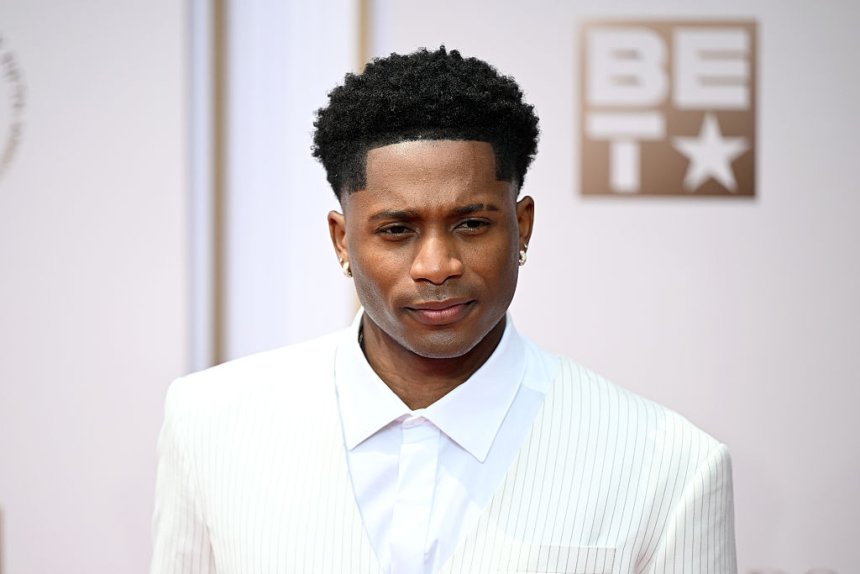

The ‘BMF’ star’s remarks about work ethic and the Black diaspora come as Hollywood continues to debate who gets opportunities to tell Black American stories.
Da’Vinchi is adding his voice to a conversation that has been simmering across Black Hollywood for years: Why do Black actors from outside the United States continue to land prominent American roles, and what does that say about Hollywood’s view of Black American performers?
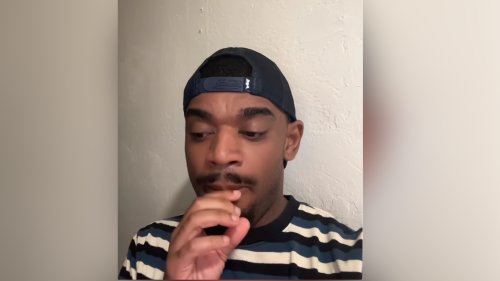
The actor, best known for playing Terry “Southwest T” Flenory on Starz’s “BMF,” discussed the subject during a recent appearance on Cam Newton’s “Funky Friday” podcast. The conversation moved from British actors landing American roles to perceptions about American work ethic and, eventually, tensions within the Black diaspora.
Da’Vinchi suggested that some producers may be drawn to overseas actors because they believe those performers are more focused on the work.
The comments stand out because they come from an actor who is hardly sitting on the sidelines himself.
Da’Vinchi recently appeared in Tyler Perry’s “Why Did I Get Married Again?,” playing Marcus Jr., the son of Marcus and Angela. In July, he was announced as a series regular on NBC’s “Chicago Fire,” where he will play Marcus Burke, a firefighter candidate at Firehouse 51 described as roguish, funny and somewhat defiant. The series returns Oct. 7 as part of NBC’s “One Chicago” lineup.
So no, Da’Vinchi is not making these observations from a place of being overlooked or unemployed. He has gone from “All American” to “BMF” and now to another major network series. His comments instead speak to a larger question about how Black actors perceive the industry and one another as they compete for a finite number of opportunities.
That conversation may sound familiar to Black Americans who have watched the debate unfold online and, for some, experienced versions of it offline.
The conversation did not start with Da’Vinchi
Earlier this year, comedian Druski turned the tension into comedy with a viral sketch about Black British actors coming to America, adopting American accents and landing roles.
Nigerian-British actor David Oyelowo’s response to the sketch. Oyelowo said he found the skit funny but questioned whether it was helpful, arguing that Black people should look for opportunities to collaborate rather than treat one another as competition.
The conversation became even more complicated after Oyelowo faced backlash over separate comments about Southern Black speech. He later apologized, calling his remarks about Southern Black culture “careless and wrong.”
That sequence of events revealed why the subject can be so sensitive.
The issue is not whether Black British, African or Caribbean actors are talented. They plainly are. Actors such as Oyelowo, Daniel Kaluuya, Cynthia Erivo, John Boyega, Idris Elba and Damson Idris have built significant careers in Hollywood.
The harder question is what happens when those actors are cast in stories that are specifically rooted in the Black American experience.
For Black American actors, that distinction can matter.
Hollywood has historically given Black performers a relatively narrow range of opportunities while simultaneously treating Black culture as an enormous commercial asset. So when an actor from another part of the diaspora is cast to portray an African American character, particularly a historical figure or someone whose identity is deeply tied to Black American culture, it can raise questions about who Hollywood believes is most marketable, most professional or most capable of carrying the role.
That does not mean every casting decision involving an overseas actor is an insult to Black Americans. Nor does it mean Black American actors should automatically receive roles simply because they are American.
But it does mean the conversation deserves more nuance than “British actors are taking our jobs.”
Da’Vinchi also agreed when Newton suggested that some people in other parts of the Black diaspora may view themselves as better than Black Americans. He did not elaborate at length, and his comments should not be read as a characterization of Black immigrants or people from Africa, the Caribbean or the United Kingdom as a whole.
Still, the sentiment touches a nerve for some Black Americans who have experienced assumptions that they are arrogant, less ambitious or fail to take advantage of the opportunities available in the U.S. Those perceptions can overlook the economic and institutional barriers Black Americans face, while also minimizing the distinct challenges Black immigrants navigate.
The debate is ultimately bigger than deciding which group is better. It is about how Black people from different backgrounds understand one another, particularly in an industry where limited opportunities can turn those differences into competition.
For Da’Vinchi, the conversation is about who gets the opportunity. For Black audiences, it may also be about who gets to define what that opportunity looks like.
Share
What's Your Reaction?
 Like
0
Like
0
 Dislike
0
Dislike
0
 Love
0
Love
0
 Funny
0
Funny
0
 Angry
0
Angry
0
 Sad
0
Sad
0
 Wow
0
Wow
0