Colin Kaepernick, Natasha Cloud and the enduring demand for Black athletes to ‘shut up and dribble’
OPINION: Kaepernick’s support for Nolan Wells’ family and Cloud’s All-Star tribute are the latest examples of Black athletes using their

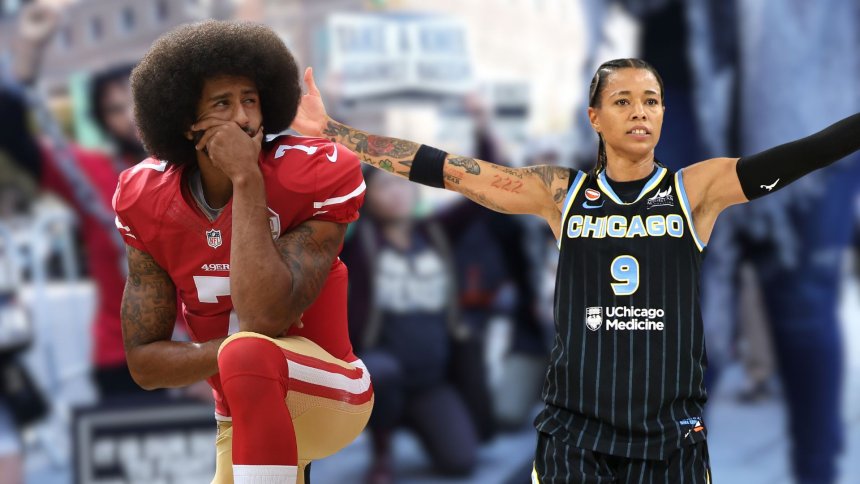

OPINION: Kaepernick’s support for Nolan Wells’ family and Cloud’s All-Star tribute are the latest examples of Black athletes using their platforms to advocate for their communities.
Editor’s note: The following article is an op-ed, and the views expressed are the author’s own. Read more opinions on theGrio.
This week, Colin Kaepernick pledged another $1 million to Know Your Rights Camp campaigns which support increased awareness and protection around safety, healthy living, education, and more. This came weeks after he helped fund the independent autopsy of Nolan Wells.
During that same week, Natasha Cloud, the Chicago Sky guard, wore a Black shirt reading “Nolan Wells” to the WNBA All-Star Game. Her outfit became its own side story. But not everyone was a fan. “Shut up and dribble” appeared in the comments on Cloud’s Instagram and underneath stories about her outfit. Others suggested that if she were less interested in Nolan Wells, Mayor Mamdani, Israel and other political issues, perhaps the Chicago Sky would be winning more games.
Different athletes. Different sports. Same demand: Shut up and dribble.
“Shut up and dribble” is an insult usually hurled at athletes when they speak about race, gender, police violence or even class. But the sentiment doesn’t always come packaged so bluntly. Sometimes it’s, “When did sports get so political?” Or, “I just wish we could focus on the game.” Or simply, “I watch sports to escape politics.” The language may be more polite, but the implication is the same: your job is to entertain, not advocate.
To be sure, “shut up and dribble” isn’t exclusively directed at Black athletes or those who hold progressive views. When Sophie Cunningham, a white basketball player for the Indiana Fever, expressed support for banning transgender athletes from women’s sports, some people responded by telling her to “shut up and dribble,” too.
But for Black athletes, the demand carries a different history. America has a long tradition of consuming Black bodies for entertainment while policing what Black people are allowed to say, do and demand in return.
Black athletes have never been allowed to exist entirely outside of race.
Historically, Black communities have operated with a sense of communal responsibility that runs directly against the rugged individualism that American culture often celebrates. There is even a name for this idea during Kwanzaa: Ujima, meaning collective work and responsibility. The concept is simple: we have a duty and obligation to others in the Black community. That can feel like a direct contradiction to culture that surrounds professional athletes.
Once a Black athlete reaches a certain level of wealth and fame, there is an expectation that they have, somehow, transcended race. And the issues associated with it. They become an individual that happens to be Black. O.J. Simpson once allegedly, famously said he was not Black. He was, just, OJ. Michael Jordan famously said, “Republicans buy sneakers, too.”
Many Black athletes, however, have rejected this expectation. Instead, they have built a legacy of using sports as a vehicle for activism — turning their platforms, visibility and even the money they make from their careers as investments in their communities and drawing attention to issues that matter.
This legacy has roots in the integration of professional sports and the Civil Rights Movement. Before Kaepernick took a knee, John Carlos and Tommie Smith raised their Black Power fists on the winners’ podium at the 1968 Olympics. A year earlier, Muhammad Ali refused to be drafted into the Vietnam War.
In some leagues, speaking up is the expectation .
In a recent podcast episode, WNBA star, Sydney Colson, commented on the league’s legacy which has a reputation for athlete activism. From wearing “Say Her Name Shirts” to honor Breonna Taylor’s death to directly supporting political campaigns, the WNBA takes a stance. It is no coincidence that this is a predominantly Black women’s league.
But that legacy comes with a warning, too. Speaking up can cost you something.
Black WNBA players face constant harassment over their race and sexuality. Muhamad Ali was stripped of his heavyweight title and barred from boxing during his legal battle over refusing the draft. Kaepernick’s blackballing became one of the most visible examples of the professional consequences that can accompany athlete activism after he began kneeling during the national anthem. And many argued that Natasha Cloud was drafted so late this season because of her willingness to speak openly about politics and social issues.
Speaking up will cost something. But silence isn’t free. Six weeks after his death, Nolan Wells’ parents still do not have answers about what happened to their baby. But they benefited immensely from the pressure created by Cloud’s exposure and the findings from Kaepernick’s autopsy.
Honestly, as a fan, I don’t want my athletes to be apolitical. I want to know what my faves care about and if they are paying attention to my reality and the reality of everyday Black people who support them with our dollars and our fandom. Knowing their skill and their heart makes supporting matters that much more.
I hope Natasha Cloud and Colin Kaepernick serve as models for their peers who are otherwise disengaged. Their actions are just two more examples, in a litany, that prove Black athletes’ bodies, and what they do with them, on and off the court, has always been political.
But they should never acquiesce to the idea that their body is only meant to “shut up and dribble.”
To do so, would be a disservice— not just to them, but to all of us.

Julienne Louis-Anderson is a former educator and mother who writes about the intersection of culture and politics with education and human development.
Share
What's Your Reaction?
 Like
0
Like
0
 Dislike
0
Dislike
0
 Love
0
Love
0
 Funny
0
Funny
0
 Angry
0
Angry
0
 Sad
0
Sad
0
 Wow
0
Wow
0