‘A big deal’: As Buttigieg makes South Carolina appearance, appealing to Black voters is front and center
As the former Transportation Secretary mulls a potential 2028 run for the White House, those in the state feel things

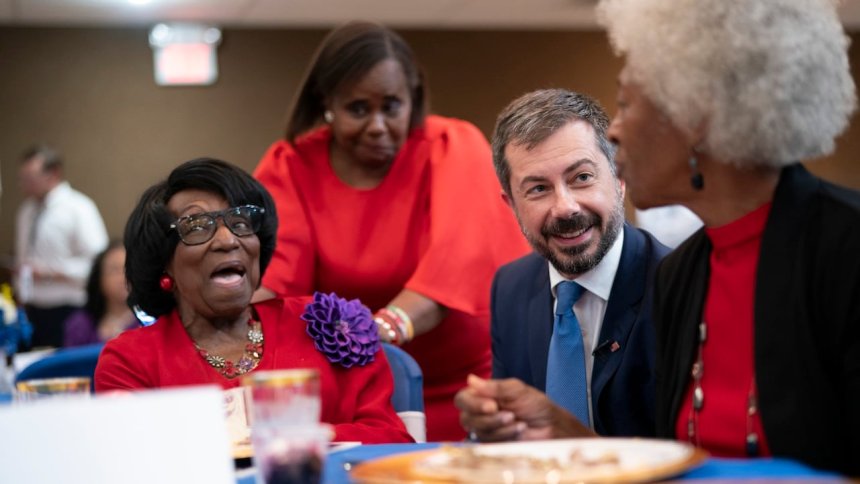

As the former Transportation Secretary mulls a potential 2028 run for the White House, those in the state feel things are different with him than in his 2020 run.
Former Transportation Secretary Pete Buttigieg made his first visit to Orangeburg, South Carolina, since leaving the Biden Administration over the weekend, seeking to appeal to Black voters in a way that did not work during his failed 2020 presidential bid.
Buttigieg was a one-time mayor of South Bend, Indiana, a relative unknown nationally when he first visited in 2020. This time around, some voters feel he’s a household name and has the awareness not to put Black voters, namely those in South Carolina, on the back burner. As the country deals with a nationwide redistricting fight and redrawn primary rules, Buttigieg knows South Carolina is up first in any presidential primary.
And people are taking notice.
“The Pete Buttigieg of 2020 is not the Pete Buttigieg of 2026,” Marlon Kimpson, a Black former state senator who threw his support behind Biden in 2020, told CNN. “He has name recognition, he’s no longer introducing himself. I think people generally like Pete, and that’s a big deal in an open race because he starts out at a plus. But as we look at his economic agenda, just for the average South Carolinian, with emphasis on the African American community … and the political infrastructure he has deployed in our state, there will be questions with respect to those issues.”
Buttigieg made various stops across the state, speaking to potential voters in Florence and individuals at the NAACP branch in Orangeburg, telling those in the room that the current world under Donald Trump’s second administration could feel similar to the Civil Rights era of the 1960s.
“The mid-2020s does not represent our nation’s first experience with corruption and self-dealing, with bigotry and exclusion, with inequality and injustice, with undemocratic behavior or with political violence,” Buttigieg said, noting that previous struggles for America weren’t fought in wars overseas, but “in places like Orangeburg.”
Still, he could be dogged by what transpired in 2020 and by the fact that his failure to connect with Black voters led to a dismal showing in exit polling.
In early 2025, as the second Trump term was taking shape, Buttigieg warned that if the Democratic Party opted to return to the “status quo” post-Trump, it would fail politically.
“The truth is, protoauthoritarian governments do not just come out of nowhere. We would not be here in this situation if the government, the economy, and the politics of our country were healthy. They’ve been unhealthy for a long time,” Buttigieg told MSNBC’s Jen Psaki at the time.
He added, “This is not a question of accommodating things that we don’t agree with or watering down or changing our values. It is a question that we have to make very clear to everybody: how your everyday life is different if we’re in charge compared to if they’re in charge.”
The potential 2028 field for Democratic hopefuls to replace Trump is already packed with names, including former Vice President Kamala Harris, California Governor Gavin Newsom, Sen. Cory Booker and Kentucky Governor Andy Beshear.
Share
What's Your Reaction?
 Like
0
Like
0
 Dislike
0
Dislike
0
 Love
0
Love
0
 Funny
0
Funny
0
 Angry
0
Angry
0
 Sad
0
Sad
0
 Wow
0
Wow
0