Why the Penn State drug bust is reigniting debates about respectability politics
As 13 current and former Penn State students face drug-related charges linked to a cocaine ring, the internet is debating


As 13 current and former Penn State students face drug-related charges linked to a cocaine ring, the internet is debating the fashion of respect.
While a durag could hardly tell you much about a person’s seriousness, character or readiness for professional life, as it turns out, neither do polos and khakis.
After a baker’s dozen of current and former Penn State students were charged in connection with an alleged cocaine trafficking ring that authorities say operated through multiple fraternity houses, the internet is losing its mind.
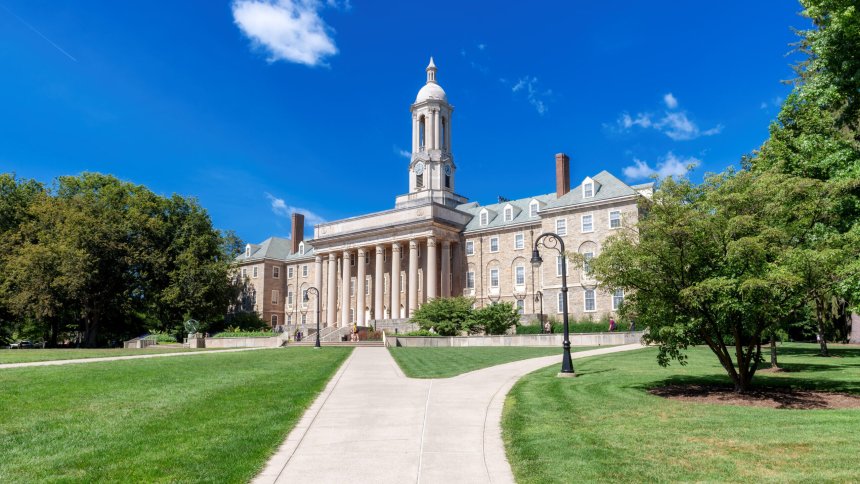
Thirteen current or former mostly white Penn State students are among 14 people facing charges in the alleged operation, which authorities say ran through the Delta Upsilon and Sigma Chi fraternity houses in 2023 and 2024, according to the attorney general’s office. At least four of those charged are current students. According to prosecutors, cocaine was brought in from Philadelphia and New York, cut and packaged primarily inside the fraternity houses, and distributed mostly to Penn State students. Some pledges were allegedly tasked with cutting and packaging cocaine as part of their initiation into the fraternities.
A group of seemingly privileged and elite white youth doing anything even remotely nefarious is always a headline maker, but this scandal has almost arrived like it was on cue. There has been much discussion following Tuskegee University’s update to its dress code, which bans durags, bonnets, pajamas, and bedroom shoes from classrooms and dining facilities, in part to prepare students for professional life beyond campus. So with a fresh crop of mugshots that look like they double as class photos, a potential counterpoint has presented itself.
“I’m always open to being wrong. But I’m not. Every article covering those students selling drugs on campus juxtaposes their suits + dress against their ILLEGAL activity. While Black teenagers are being ripped apart + policed about something tacky. Not harmful, not illegal. Tacky,” Shelby Ivey Christie, a fashion and costume historian who examines fashion through the lens of race, class and culture, wrote in a post on X.
She added, “If you do not understand the correlation, that’s okay but some of us understand the intersection of race, class, culture + dress/fashion.”
“Their mugshots look like intern ID photos,” fellow fashion historian and longtime fashion blogger Cora Harrington said on the same platform.
A meme has also begun circulating with a picture of a group of Black students dressed in durags and bonnets and text that reads, “Despite the bonnets and durags, we are happy to report that no Tuskegee students were arrested for trafficking cocaine.”
Of course, not everyone gets the comparison. Todd Smith, a Houston-based media executive who attended two HBCUs, urged people to resist comparing Black students at HBCUs to those at predominantly white institutions in a video posted on Threads.
“I don’t care what happens to them boys at Penn State. I care what happens to them boys at Howard, those boys at Southern, those boys at Grambling, and those boys at TSU and Prairie View,” he said. “We shouldn’t be comparing ourselves to anybody. We just shouldn’t demand excellence from our own people.”
For him, knowing when to “turn on and turn off” professionalism remains an important skill.
“So I salute Tuskegee, and I hope other people get on board,” Smith said, adding, “Stop comparing us to Penn State. Them boys are criminals. We just want the best for our children, and attire has something to do with that.”
It’s also not like these Penn State snowmen are the first well-dressed college kids to find themselves at the center of an explosive drug scandal. In 2014, authorities busted the so-called “Main Line Takeover Project” outside Philadelphia, an operation allegedly led by two graduates of the prestigious Haverford School who recruited students from five high schools and three colleges to distribute marijuana, cocaine, ecstasy and hash oil. The schools included some of the most elite institutions in Philadelphia’s affluent Main Line suburbs.
Four years earlier, five Columbia University students were arrested in “Operation Ivy League” after authorities said they sold cocaine, marijuana, MDMA, Adderall and LSD from fraternity houses and other campus residences.
Then there was San Diego State University’s massive 2008 “Operation Sudden Fall,” one of the largest college drug busts in US history that led to the arrest of nearly 100 people, including 75 students, after an undercover investigation into drug sales on and around campus. Authorities infiltrated student drug distribution networks, including fraternities, and seized cocaine, marijuana, ecstasy, guns, and tens of thousands of dollars in cash.
When you step back and look at it all, it just begs the question, why have we been measuring our standards against them for so long? For generations, Black people have been told that earning respect and even safety in some instances requires conforming to standards rooted in Eurocentric ideals, governing everything from our hair to our clothes to the way we speak.
Meanwhile, we have no shortage of examples demonstrating that those superficial markers tell us remarkably little about a person’s character or behavior. So while preserving a sense of decorum, why not reevaluate what that should even mean or look like? Because it doesn’t matter whether Black youth wear hoodies or boat shoes — the outcome is often the same.
Share
What's Your Reaction?
 Like
0
Like
0
 Dislike
0
Dislike
0
 Love
0
Love
0
 Funny
0
Funny
0
 Angry
0
Angry
0
 Sad
0
Sad
0
 Wow
0
Wow
0