U.S. school closures surge as enrollment declines and districts face budget cuts
U.S. school closures are accelerating as public school districts across the country grapple with fewer students and tighter budgets. More

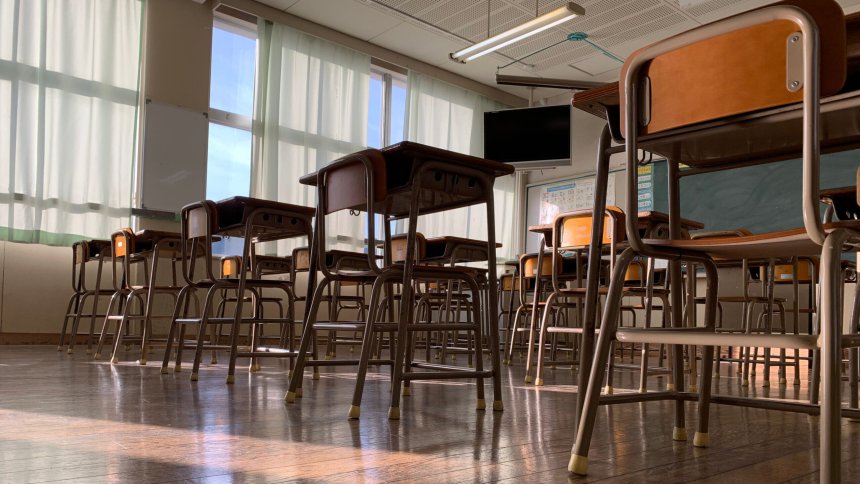
U.S. school closures are accelerating as public school districts across the country grapple with fewer students and tighter budgets.
More than 1,000 public schools closed across the United States during the 2025-26 school year. Education experts say declining enrollment, shrinking budgets and the end of federal pandemic aid are forcing districts to make difficult decisions.
According to new data from the National Center for Education Statistics, more than 1,000 public schools closed during the 2025-26 school year. That marks a sharp increase from the 755 schools that closed in 2021-22. It is also the fourth consecutive year that closures have risen.
Education finance experts say the trend reflects a long-term decline in student enrollment. “We call it the big shrink,” Marguerite Roza, director of Georgetown University’s Edunomics Lab, told The Washington Post. The end of federal COVID-19 relief funding has also intensified financial pressures. During the pandemic, many districts used emergency aid to keep schools operating despite enrollment losses. With that money now exhausted, many administrators say they have little choice but to consolidate campuses.
Federal projections estimate public school enrollment will continue to fall through 2031, with schools expected to lose nearly 4 million students compared with 2019 levels. Experts note those projections were made before the Trump administration’s immigration restrictions, which could further reduce enrollment in some communities.
Several major school districts have already approved significant school closures. Philadelphia voted in May to close 17 schools over the next decade while creating a transition office to support affected families. Superintendent Tony B. Watlington Sr. acknowledged the emotional impact, calling public schools “anchors of communities.”
Population shifts are also reshaping public education. Some families are moving to suburban communities or other states. Researchers say another concern is the growing number of students who cannot be tracked. “The unaccounted-for student is the most worrisome,” Sofoklis Goulas, a senior researcher at education nonprofit Foundry10, told The Washington Post.
Teacher advocates argue that declining enrollment is only part of the story. Expanded private school voucher programs have also strained district budgets. Supporters of school choice programs argue that vouchers provide families with more educational options. Critics contend they reduce funding available for traditional public schools.
As enrollment continues to decline nationwide, education researchers expect U.S. school closures to remain a growing challenge
Share
What's Your Reaction?
 Like
0
Like
0
 Dislike
0
Dislike
0
 Love
0
Love
0
 Funny
0
Funny
0
 Angry
0
Angry
0
 Sad
0
Sad
0
 Wow
0
Wow
0











![Jennifer Hudson Wows with ‘I Will Always Love You’ Tribute to Dolly Parton at Variety’s ‘Power of Women’ Event [Video]](https://thatgrapejuice.net/wp-content/uploads/2026/09/thatgrapejuice-jennifer-hudson-tribute-dolly-parton-2026-variety-power-women-2.jpg)