Trump says ‘I Guess’ Americans should be worried about Iran retaliation: ‘Like I said, some people will die’
“When you go to war, some people will die,” the president reiterated when asked whether Americans should be concerned about

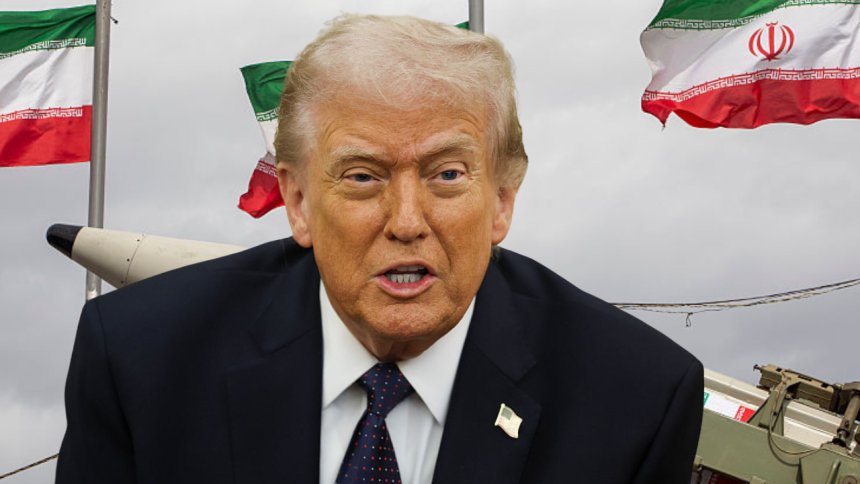
“When you go to war, some people will die,” the president reiterated when asked whether Americans should be concerned about attacks on U.S. soil.
There are many lingering questions as it relates to the U.S.’s deadly war with Iran, including whether Americans are safe on home soil.
During a recent interview with Time, the president said U.S. citizens should be concerned about potential Iranian retaliation.
“I guess,” said Trump when asked about the chance of retaliatory attacks at home. “But I think they’re worried about that all the time. We think about it all the time. We plan for it. But yeah, you know, we expect some things.”
On Feb. 28, when President Donald Trump first announced that the United States had joined Israel to launch joint strikes in Iran, setting off a widening war in the Middle East, he made clear there would be casualties as it relates to the U.S. military.
“The lives of courageous American heroes may be lost, and we may have casualties,” said Trump.
Days later, on March 1, after several military service members were killed in a retaliatory drone attack in Iran, Trump said, “And sadly, there will likely be more before it ends. That’s the way it is.”
But his latest remarks, as they relate to the safety of American civilians, will likely cause great concern. Trump told Time, “Like I said, some people will die. When you go to war, some people will die.”
Asha Castleberry-Hernandez, a U.S. Army veteran and national security expert, told theGrio that when the U.S. is engaged in military operations overseas, it always “connects here at home.”
“Perfect example of that is the uptick of ISIS attacks on our own soil, like, for instance, what happened in San Bernardino, California, also the LGBTQIA club in Orlando, Florida, and then we also saw attacks in New York City along the West Side Highway,” said Castleberry-Hernandez.
On the same day that Trump announced the U.S.’s war on Iran, a gunman wearing Iranian paraphernalia opened fire on civilians in Austin, Texas, with an AR-15 rifle. The naturalized U.S. citizen, who was born in Senegal, was fatally shot by police. The incident is being investigated as a potential act of terrorism.
“All this happens when we’re engaged with wars overseas, and we definitely need to be more on alert, invest more in protective measures,” said Castleberry-Hernandez.
The founder of the Diversity In National Security Network explained that attacks may not be limited to physical attacks, but may also be cyber.
“It’s like a hybrid situation, where it’s the physical, indirect attacks that you’ll see for those who are sympathizers, and then that also engages online through cybersecurity and just a whole lot of artificial intelligence that helps produce misinformation, disinformation about this war right now,” she explained.
The war in Iran has no end in sight, and the White House has not yet indicated a plan to off-ramp for the United States. Though Democrats and a handful of Republicans in Congress tried to rein in President Trump’s war powers, legislative measures in both the U.S. House and the Senate failed because the Republican majority voted against them.
“We’ve already tragically lost six heroic servicemen and women, and we mourn for them, and we pray for their families, and we don’t want to see any more American lives lost in Trump’s war of choice,” said U.S. Rep. Hakeem Jeffries, the Democratic leader of the U.S. House. “At the moment, the administration can’t even provide a justification for why we’re in this massive conflict and war in the Middle East right now. They have not bothered to make that case to the American people.”
Share
What's Your Reaction?
 Like
0
Like
0
 Dislike
0
Dislike
0
 Love
0
Love
0
 Funny
0
Funny
0
 Angry
0
Angry
0
 Sad
0
Sad
0
 Wow
0
Wow
0