Trump calls Democratic candidates ‘jihadists’ as GOP attacks on Muslim politicians intensify
The president’s remarks come as Michigan Senate nominee Abdul El-Sayed faces Republican attacks focused on his name, faith and associations.


The president’s remarks come as Michigan Senate nominee Abdul El-Sayed faces Republican attacks focused on his name, faith and associations.
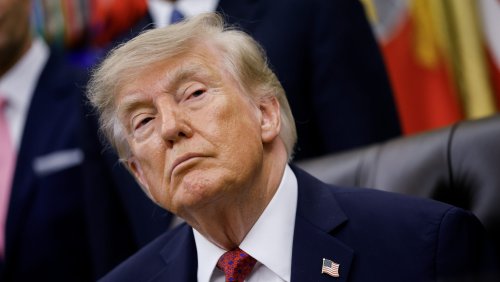
President Donald Trump is facing criticism after describing Democratic candidates as “jihadists” while also making disparaging remarks about Somali Americans. His comments come amid increasingly aggressive Republican attacks on Muslim candidates, including Michigan Senate nominee Abdul El-Sayed.
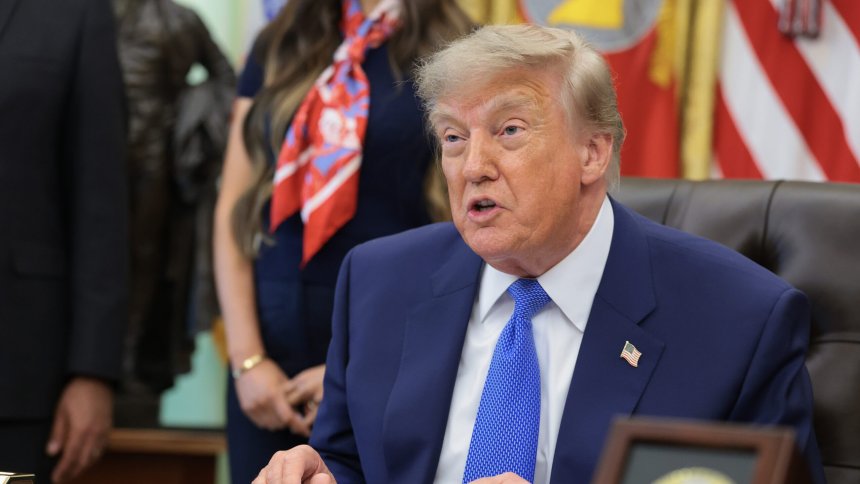
As reported by New York Times, president Donald Trump’s latest comments about Muslim politicians and Somali Americans have intensified an already heated political debate ahead of the 2026 midterm elections. Speaking to reporters in the Oval Office on Monday, Trump said, “we have jihadists being elected all over the place,” while discussing Democratic candidates. Although Trump did not initially name specific Muslim candidates, his comments came days after Abdul El-Sayed won the Democratic nomination for Michigan’s open U.S. Senate seat.
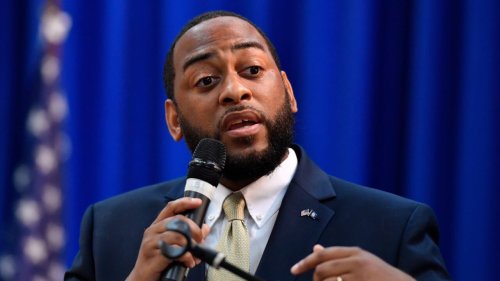
El-Sayed, a former Wayne County health official, narrowly defeated U.S. Rep. Haley Stevens in the Democratic primary. His victory has made him a prominent target for Republican criticism, because he would become one of the country’s most prominent Muslim elected officials if he wins in November. Trump later appeared to target El-Sayed directly on social media, sharing an image of the Democratic candidate and his wife alongside a photo of Trump and first lady Melania Trump. The post contrasted what Trump described as two “VERY DIFFERENT” Americas. 
Republican attacks on El-Sayed have also focused on his name, faith and political associations. The National Republican Senatorial Committee released an advertisement using his full name and attempted to associate him with Hamas. Sen. Tim Scott, who chairs the Republican Senate campaign committee, said Republicans were highlighting what they characterized as El-Sayed’s political associations rather than his religion.
Other Republican lawmakers have used more direct language. Sen. Tommy Tuberville called El-Sayed a “RADICAL ISLAMIST” and a “TERRORIST” in a social media post. Rep. Nancy Mace separately wrote that Muslim Americans holding public office were a threat to national security. Mace’s remarks also became the subject of a tense CNN interview with host Omar Jimenez, who challenged her suggestion that Muslim elected officials represented a threat to the country.
The comments have drawn condemnation from Muslim civil rights advocates. Edward Ahmed Mitchell is the National Deputy Director of the Council on American-Islamic Relations. He said Muslim Americans have the same right as other Americans to participate in public service. Some Republicans have also pushed back. Sen. Bill Cassidy of Louisiana condemned statements targeting Muslim candidates.
Share
What's Your Reaction?
 Like
0
Like
0
 Dislike
0
Dislike
0
 Love
0
Love
0
 Funny
0
Funny
0
 Angry
0
Angry
0
 Sad
0
Sad
0
 Wow
0
Wow
0