Trump admin called out for ‘NO’ vote against UN slavery resolution: ‘Slap in the face to Black Americans’
Reparative justice leaders who spoke to theGrio make sense of the Trump administraition’s “bizarre” defense of its reparations vote. While

Reparative justice leaders who spoke to theGrio make sense of the Trump administraition’s “bizarre” defense of its reparations vote.
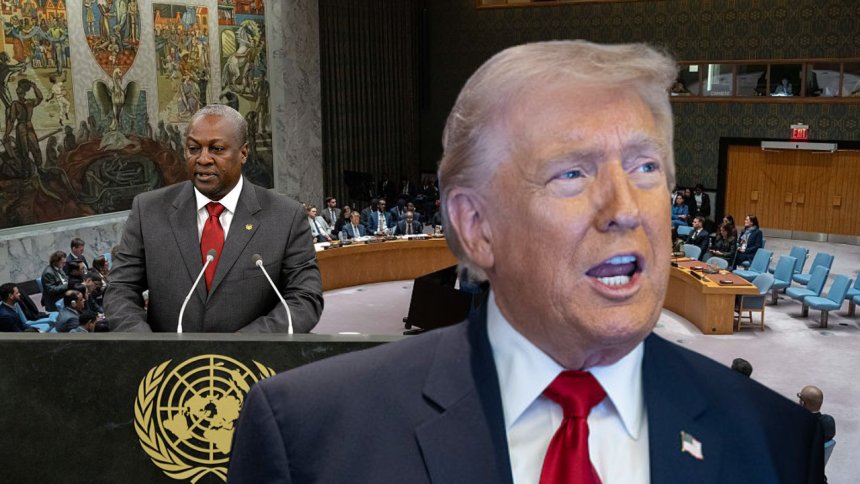
While the successful passage of a United Nations resolution that declared the Transatlantic Slave Trade the “gravest crime against humanity” is being praised by Africans, people of African descent, and countries around the world, Black leaders in the United States are grappling with the Trump administration‘s “no” vote and its justification.
Reparative justice advocates who have worked with and within the U.S. government tell theGrio that they were not surprised by the U.S.’s vote against the UN resolution spearheaded by Ghana, which explicitly calls for member states to enact reparations for the descendants of the millions of Africans trafficked from the continent across the western hemisphere between the 15th and 19th centuries.
“This is a continuous U.S. position, because our country depends on the continued exploitation of Black people, and so only a country that doesn’t want enslavement to end and doesn’t want to let go of the capital benefits of exploiting Black people will vote against this resolution,” says Dreisen Heath, a reparations researcher and founder and convener of the Why We Can’t Wait Reparations Coalition.
Heath, who has co-authored and advised on reparations legislation, noted that enslavement is still “enshrined” in the U.S. Constitution through the 13th Amendment, which has resulted in the “continued disproportionate incarceration” of Black Americans.
However, the Trump administration’s vote was still seen as a “slap in the face to Black Americans,” says Desirée Cormier Smith, a former State Department official who served as the diplomatic agency’s first Special Representative for Racial Equity and Justice.
The Biden Administration alum tells theGrio, “12 million Africans were stolen from the African continent; that does not include their descendants, who were also subject to enslavement. We know that in places like the United States, there was rape and forced sexual encounters to produce more human property, more people to be enslaved, which was a very common tool. And then let’s not forget about the countless number of Africans who died during the Middle Passage.”
Bishop Joseph Tolton, a Pan-African activist and executive director of Interconnected Justice, says the Trump Administration’s rejection of the resolution is consistent with Trump’s “anti-Blackness at large and his intent to destroy Black political power in America and globally.”
“Ultimately, this is a strong statement that Trump has no tolerance for the idea of reparatory justice. He has been clear about his animosity toward reparations, which is the ultimate payout of the promise of the civil rights movement,” Tolton theGrio.
U.S. defends President Trump and his “support” for the Black community
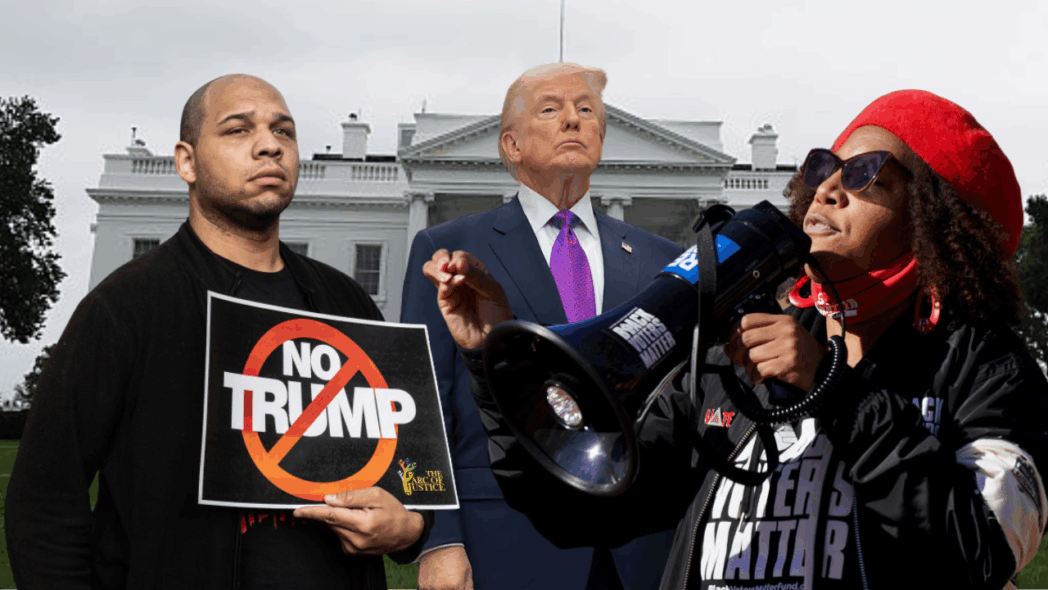
In an unusual move, U.S. Ambassador Dan Negrea issued a statement at Wednesday’s UN plenary meeting, defending the vote and President Trump as “the greatest president for Black Americans” and falsely stating his “historic” support from Black voters in the 2024 election.
“He is working around the clock to deliver for them and make our country greater than ever,” said Negrea, who joined Israel and Argentina as the only three countries to vote “no” as 123 countries voted in favor of the resolution; 52 others voted to abstain. The resolution also had a strong backing from the African Union and the Caribbean Community, also known as CARICOM.
Bishop Tolton says by pointing to his perceived accomplishments for Black Americans and having their support (83% of Black Americans voted against Trump), President Trump was “manipulating a perceived divide between Africans and African Americans.”
Cormier Smith found the boastful defense of Trump to be “laughable,” telling theGrio, “It’s not inconsistent with this administration’s practice of making these ridiculous, superfluous claims that are never based on facts. But it’s like, if I say it, then it’s true, and that seems to be how this administration operates.”
The former State Department official continued, “It was extremely bizarre to see that included in a formal explanation of a vote, because, again, it’s not based on facts. And this is not a campaign trail. This is not a Dear Leader session where members of the government or the Cabinet are forced to prove their loyalty and fidelity to Dear Leader, Mr. Trump, which is what all of the recent cabinet meetings have turned into.”
Heath says the “material conditions of Black people” do not back up the Trump administration’s claims. The policy strategist said Black Americans, who are seeing the highest unemployment rates of any racial group, have seen cuts to health care, attempts to “erase” their history and are being disproportionately impacted by the economic impacts of Trump’s war in Iran.
“The lived experience of Black people and the evidence and actions of this administration speak otherwise,” said Heath.
Making sense of the U.S. voting “NO”
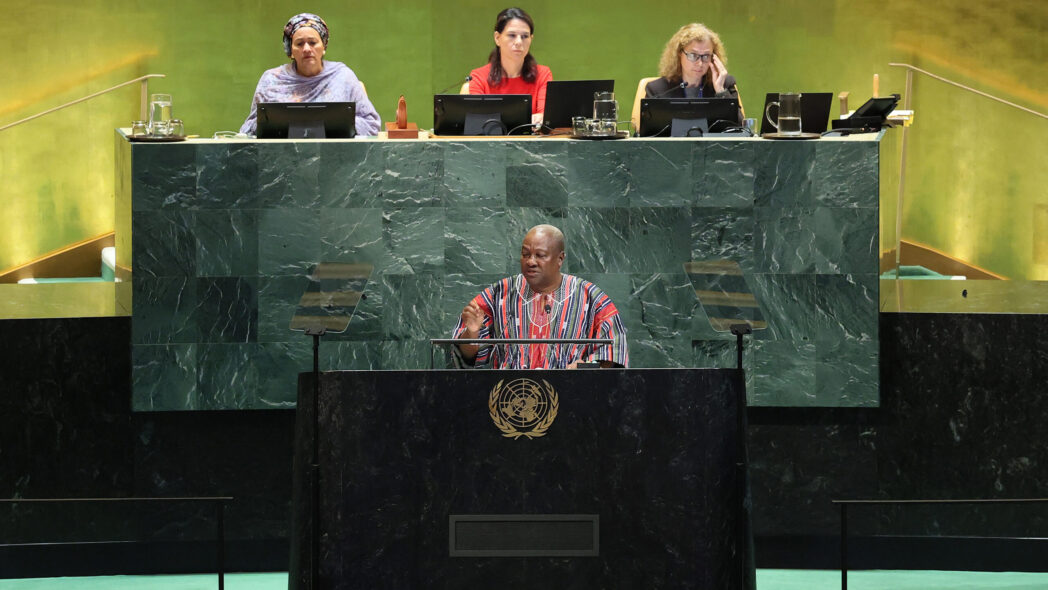
The Trump Administration made several other arguments against the UN resolution, claiming that the text creates a “hierarchy” of crimes against humanity. Other countries that abstained from the resolution made a similar argument.
“The assertion that some crimes against humanity are less severe than others objectively diminishes the suffering of countless victims and survivors of other atrocities throughout history. This is not a competition. This attempted ranking is also simply incorrect as a matter of law,” said Ambassador Negrea.
“I had to roll my eyes,” said Cormier Smith, who said no such arguments were made when adopting definitions of antisemitism. “Somehow, saying that the centuries-long practice of human trafficking of a specific race of people, and the enslavement of these people and their descendants for generations, could not be considered the gravest crime against humanity. Why not? I mean, look at the duration of this and the sheer number of people impacted. It’s countless.”
Health tells theGrio, “The only hierarchy that exists is the forced social and political order we’re in around race, around a made-up concept of race.”
The U.S. also said it voted against the UN resolution because it is “unclear” who would be the recipients of reparatory justice. Ambassador Negrea asserted, “The United States strongly objects to the cynical usage of historical wrongs as a leverage point in an attempt to reallocate modern resources to people and nations who are distantly related to the historical victims.”
Cormier Smith dismissed the U.S.’s argument, telling theGrio, “There are absolutely ways to determine who are the descendants of enslaved people and how best to compensate them for that generational harm and trauma. To say that it is impossible is disingenuous and lazy.”
Heath points out that the U.S. has engaged in similar “tracing” for victims of 9/11, as well as Afghans and Ukrainians impacted by wars in their home countries.
The reparations expert also noted that establishing reparations for Black Americans isn’t just about the crimes of chattel slavery, but also the crimes committed against Black Americans during post-Reconstruction and Jim Crow.
Regardless of attempts by the U.S. to evade accountability for the traumas and material harms caused to the enslaved and their descendants, Heath said forcefully, “Even though the U.S. voted no, the reckoning is here, and there is no choice to opt out.”
Bishop Tolton said this moment calls for Black Americans to “stand up and design a strategy to influence U.S.-Africa relations.” He noted the significance of Rev. Al Sharpton and civil rights attorney Ben Crump being present at the United Nations in support of the resolution.
Tolton also praised the resolution’s sponsor, Ghana, saying he was “proud” of the West African country; however, he noted that he remains “deeply concerned” about Ghana President John Mahama’s commitment to signing an anti-gay bill moving through Ghana’s Parliament. Anti-LGBTQ sentiment, he said, has been a “core strategy of white nationalism and its global intentions of destabilizing African democracies, which makes Africa’s resources pliable.”
He added, “It is most ironic that the key voices of dissent were the U.S. and Israel, who are also in the midst of undermining the global world order and asserting dangerously imperial foreign policy postures.”
Share
What's Your Reaction?
 Like
0
Like
0
 Dislike
0
Dislike
0
 Love
0
Love
0
 Funny
0
Funny
0
 Angry
0
Angry
0
 Sad
0
Sad
0
 Wow
0
Wow
0




![Extended Movie Trailer: ‘Animals’ [Starring Kerry Washington & Ben Affleck]](https://thatgrapejuice.net/wp-content/uploads/2026/09/extended-movie-trailer-animals-starring-kerry-washington-and-ben-affleck-tgj.jpg)