U.N. passes resolution declaring transatlantic slave trade ‘the gravest crime against humanity,’ but what does this mean for reparations?
Ghanaian President John Dramani Mahama proposes resolution to the United Nations that could formalize global recognition of slavery’s legacy. From

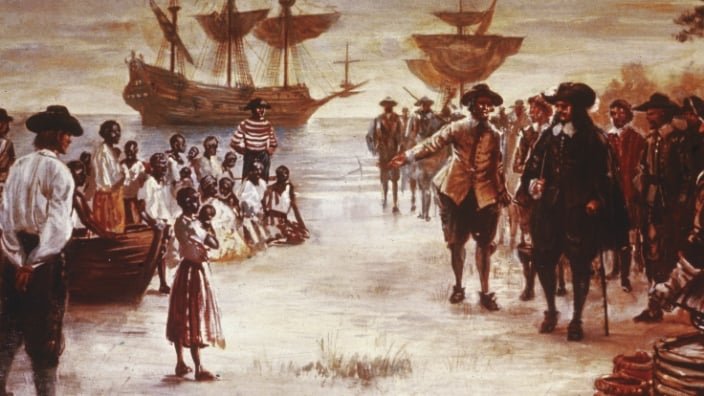
Ghanaian President John Dramani Mahama proposes resolution to the United Nations that could formalize global recognition of slavery’s legacy.
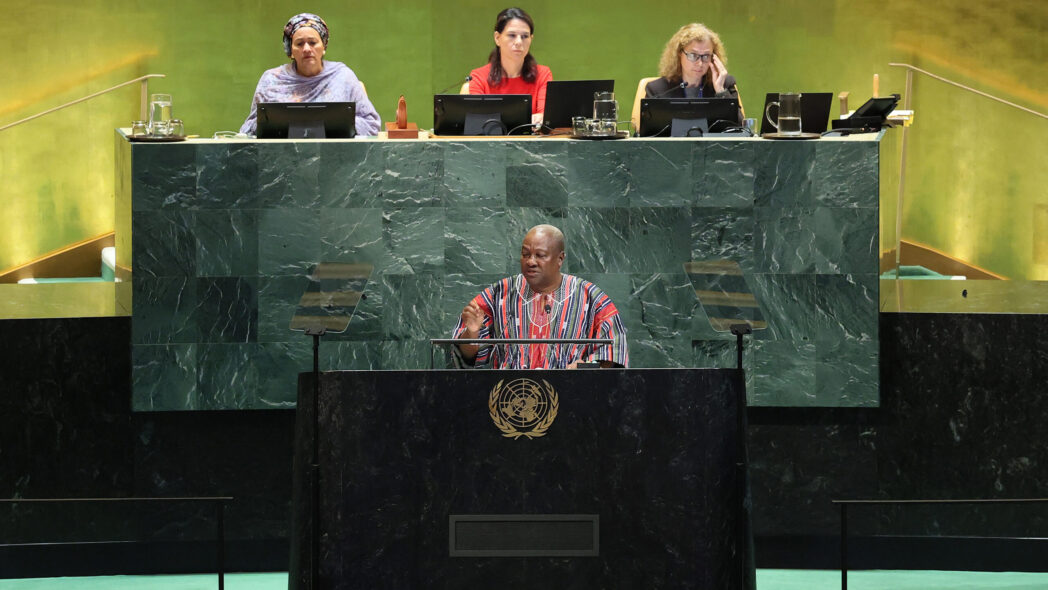
From the 1500s through the 1800s, millions of Africans were violently captured from the lush coastal kingdoms of West and Central Africa, traded through slave forts, and packed into ships bound for the Americas. Those who survived the brutal Middle Passage, a journey defined by disease, starvation, torture, and death, were sold into a system of cruel slavery whose profits would help build global industries and financial systems that still shape much of modern life, impacting everything from Wall Street to the lopsided and looming racial wealth gap today.
In the centuries since, many have pushed for meaningful restitution for the descendants of those shut out of the wealth and prosperity their ancestors helped create around the world, largely to no avail. But the world could now be one step closer to formally recognizing that the transatlantic slave trade stands among the greatest atrocities in human history.
On Wednesday, March 25, the U.N. General Assembly in New York City will vote on a resolution proposed by Ghanaian President John Dramani Mahama that would formally recognize the slave trade as “the gravest crime against humanity.”
“Many generations continue to suffer the exclusion, the racism because of the transatlantic slave trade, which has left millions separated from the continent and impoverished,” Ghana’s Foreign Minister Samuel Okudzeto Ablakwa told BBC News in an interview ahead of Wednesday’s vote.
Mahama, who has been vocal about the need for global accountability around slavery and its lasting economic consequences, hopes the resolution will move discussions about reparations into formal international policy spaces. Studies attempting to quantify what is owed to Black descendants of the enslaved often place the figure between roughly $12 trillion and $14 trillion, largely based on the racial wealth gap and the value of unpaid labor.
Echoing that figure, media mogul and BET founder Robert Johnson has also previously argued that payments of roughly $350,000 per eligible descendant would be a realistic starting point to address the wealth disparity created by slavery and segregation. This amount was also arrived at in a study from University of Connecticut researcher Thomas Craemer, who was involved in a study published June 19, 2015, and also suggested an amount of up to $14.2 trillion then, but has since confirmed that doesn’t begin to include inflation.
Other research has produced even larger figures depending on how lost wages, the cost and value of the enslaved at the time, denied land, such as the broken promise of “40 acres and a mule,” and generations of discrimination are calculated. Proponents, including Craemer, have also highlighted how other countries seeking to make amends with communities they harmed have issued reparations. Germany did so for victims of the Holocaust, and believe it or not, the U.S. did so for survivors of Japanese internment camps.
If adopted, the resolution proposed this week would not necessarily mandate reparations but would call on member states to begin formal conversations about what accountability could look like. The draft resolution, per Reuters, urges countries to engage in dialogue around reparative justice, including issuing formal apologies, returning stolen artifacts, providing financial compensation, and ensuring guarantees of non-repetition.
The resolution has already received backing from nations within the African Union and the Caribbean Community, along with Brazil, all nations whose populations were directly impacted by the slave trade.
Still, efforts like this have historically stalled due to political resistance. Many countries that benefited from systems and industries built on the backs of enslaved labor have argued that present-day governments should not be held financially responsible for historical crimes, despite the lasting structural advantages for some and disadvantages for others those systems created.
While some leaders, including former President Joe Biden, who previously expressed openness to H.R. 40—a 2020 bill that sought to establish a federal commission to examine the lasting impacts of slavery and potential remedies—have shown some receptiveness, Ablakwa acknowledged that both the European Union and the United States, two of the largest beneficiaries of the transatlantic slave economy and its enduring aftermath, have already indicated they do not plan to support the resolution.
That resistance from others, advocates argue, reflects a broader lack of global consensus around both the scale of slavery’s impact today and what meaningful accountability should look like. Mahama also connected the push to what he described as a growing global effort to downplay or erase the historical realities of slavery and racism, including recent political debates in the United States around how Black history is taught and discussed.
“These policies are becoming a template for other governments as well as some private institutions,” Mahama said while speaking at a United Nations event on slavery reparations. “At the very least, they are slowly normalizing the erasure.”
In response, a White House spokesperson said former President Donald Trump has done more than any other president to provide economic opportunity for Black Americans—while stopping just short of supporting any formal apology or restitution for slavery, the greatest foundational component of our continued disenfranchisement in this country.
Update Wednesday, March 25: On Wednesday, March 25, per a release, the U.N. voted to pass the resolution, with those gathered in the U.N. General Assembly Hall erupting into applause when it officially passed. The resolution received 123 votes in favor, while three countries – Argentina, Israel, and the United States – voted against, and 52 abstained.
Share
What's Your Reaction?
 Like
0
Like
0
 Dislike
0
Dislike
0
 Love
0
Love
0
 Funny
0
Funny
0
 Angry
0
Angry
0
 Sad
0
Sad
0
 Wow
0
Wow
0