‘The Queens Tour’ is more than nostalgia. It’s a reminder that Black women built the blueprint for live R&B
With Patti LaBelle, Chaka Khan, Gladys Knight, and Stephanie Mills sharing one bill, the Houston stop of “The Queens: 4

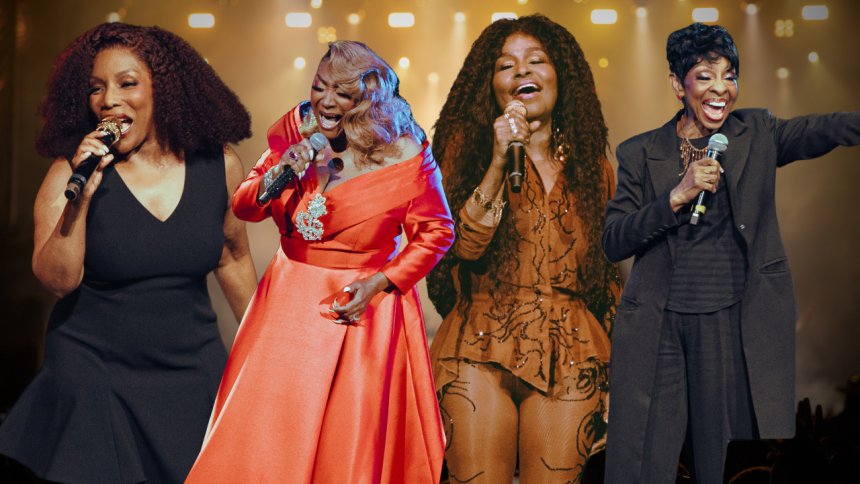
With Patti LaBelle, Chaka Khan, Gladys Knight, and Stephanie Mills sharing one bill, the Houston stop of “The Queens: 4 Legends. 1 Stage” tour offered more than hits. It was a celebration of Black women, longevity, and the kind of live performance that can’t be manufactured.
There are concerts people attend for the playlist, and then there are concerts people attend for the testimony.
“The Queens: 4 Legends. 1 Stage Tour” falls into the latter category.
When Patti LaBelle, Chaka Khan, Gladys Knight, and Stephanie Mills brought their joint tour to Houston’s Toyota Center last week (May 28), the night was not simply about nostalgia. However, there was certainly plenty of it in the room. With four catalogs that have soundtracked weddings, cookouts, heartbreaks, church-adjacent Sunday cleaning sessions, and multigenerational family memories, the inevitability of feel-good memories is felt.
But reducing a lineup like this to nostalgia misses the point.
These women are not museum pieces. They are blueprints.
Together, LaBelle, Khan, Knight, and Mills represent a generation of Black women performers who helped shape what audiences still expect from live R&B: real vocals, emotional command, glamour, grit, humor, testimony, and the ability to make an arena feel like a living room, a sanctuary, and a family reunion all at once.
The Houston show stretched nearly four hours, with each queen bringing a different kind of power to the stage. Knight opened the show on her 82nd birthday, offering the kind of warmth and vocal grace that has made her one of soul music’s most beloved storytellers. Mills followed with the Broadway-honed precision and fire that have long made “Home” feel less like a song and more like a personal declaration. LaBelle delivered the theatrical flair and churchy emotional abandon fans have come to expect from a woman who can turn a ballad into a revival. Khan closed the night with the funk, edge, and vocal force that made her not only every woman, but one of one.
That range is what makes the tour feel culturally significant.
For decades, Black women have been asked to be everything in music. They must be technically flawless but emotionally raw, glamorous but relatable and timeless yet constantly new. They have carried genres, raised singers, influenced rappers, taught audiences how to feel, and, too often, watched the industry repackage their innovations through younger, safer, or more commercially convenient faces.
The Queens Tour pushes back against that erasure without saying a word.
It places four elder stateswomen of Black music at the center of the arena and lets their catalogs do the talking.
That matters in a music culture often obsessed with youth, virality, and reinvention. For Black women especially, aging in public can be treated as a liability rather than a privilege. But LaBelle, Khan, Knight and Mills have turned longevity into its own form of resistance. Their presence on stage says that survival is not the same thing as being past one’s prime. Sometimes, survival is the performance.
The tour also arrives at a time when R&B is constantly questioned. Is the genre dead? Has it lost its soul? Are younger artists still singing, or just vibing? Those conversations can be reductive, but a night like this offers a useful reminder. R&B was never just about vocal runs or slow jams. At its best, it has always been about feeling; the kind that travels from the diaphragm to the back row.
These women helped define that standard.
Knight gave generations a language for heartbreak and devotion. Mills brought theater, power, and innocence into soul music without ever losing her bite. LaBelle made drama feel sacred, turning every performance into an event. Khan fused funk, jazz, soul, pop, and rock attitude into a voice that still sounds like it arrived from another planet.
The fact that they can share one stage is historic. The fact that audiences are still showing up for them is instructive.
This is not just about honoring the past. It is about recognizing how much of the present is still built on their labor.
Every singer who understands that a live show requires more than a backing track owes something to women like these. Every artist who knows how to turn pain into spectacle, joy into release, and a note into a communal experience is walking a road Black women paved.
That may be why the Queens Tour feels less like a farewell lap and more like a correction.
It reminds audiences that legacy is not passive. Legacy moves. Legacy sweats. Legacy travels city to city, changes gowns, hits marks, tells stories and sings through whatever the body is carrying that night.
In a recent interview with PEOPLE, Khan was candid about the physical demands of the tour, noting that the schedule was tough and the work was real. That honesty only makes the accomplishment more impressive. There is no illusion here that performing at this level, after decades in the business, is easy. The point is that they are still doing it.
And doing it together.
That image alone is powerful: four Black women, each with her own history, fan base, sound, and signature, standing as peers in a business that has not always made enough room for even one woman at a time.
For Houston fans, the night offered a chance to sing along to songs that have been part of families for decades. For the larger culture, it offered something bigger: a reminder that Black women did not just contribute to R&B; they built its emotional architecture.
The Queens Tour may trade in classics, but it is not stuck in the past.
It is a living argument for why real singing still matters, why stagecraft still matters, why elders still matter, and why Black women’s artistry deserves to be celebrated while they are still here to receive the flowers.
Because Patti, Chaka, Gladys, and Stephanie are not simply reminding audiences of what R&B used to be.
They are reminding us of who taught us how to live.
Share
What's Your Reaction?
 Like
0
Like
0
 Dislike
0
Dislike
0
 Love
0
Love
0
 Funny
0
Funny
0
 Angry
0
Angry
0
 Sad
0
Sad
0
 Wow
0
Wow
0