Supreme Court ‘betrayed Black voters’ in ruling that lands another blow to Voting Rights Act
“This is a decision that can eliminate Black representation and take our country back centuries,” says Nadine Smith, president and

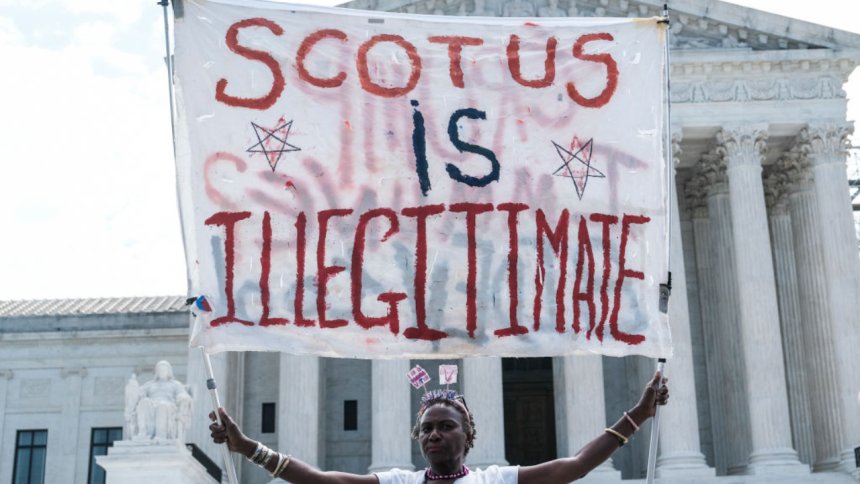
“This is a decision that can eliminate Black representation and take our country back centuries,” says Nadine Smith, president and CEO of Color of Change.
The civil rights community and elected leaders are reeling after the Supreme Court ruled on Wednesday against Louisiana’s congressional map that included a second majority-Black district based on the state’s population of Black voters.
NAACP President Derrick Johnson said the court’s conservative majority “betrayed Black voters” in a statement reacting to the ruling, which determined that Louisiana’s map amounted to racial discrimination against white voters, who said the drawing of two majority-Black districts violated their 14th Amendment rights under the Equal Protection Clause.
“Today’s decision is a devastating blow to what remains of the Voting Rights Act, and a license for corrupt politicians who want to rig the system by silencing entire communities. The Supreme Court betrayed Black voters, they betrayed America, and they betrayed our democracy,” said Johnson.
In a 40-plus page decision, the Supreme Court’s conservative justices ruled 6-3 in favor of a group of white voters, arguing that the Voting Rights Act of 1965, which prohibits racial discrimination in voting, did not require Louisiana to draw a second majority-Black district.
“No compelling interest justified the State’s use of race…That map is an unconstitutional gerrymander, and its use would violate the plaintiffs’ constitutional rights,” the court concluded.
“This ruling is a major setback for our nation and threatens to erode the hard-won victories we’ve fought, bled, and died for,” said Johnson. “But the people still can fight back. Our best defense and offense is the ballot box, and we’re going to turn out voters in the midterm elections to make sure we can elect representatives who look out for us. Our democracy is crying for help.” 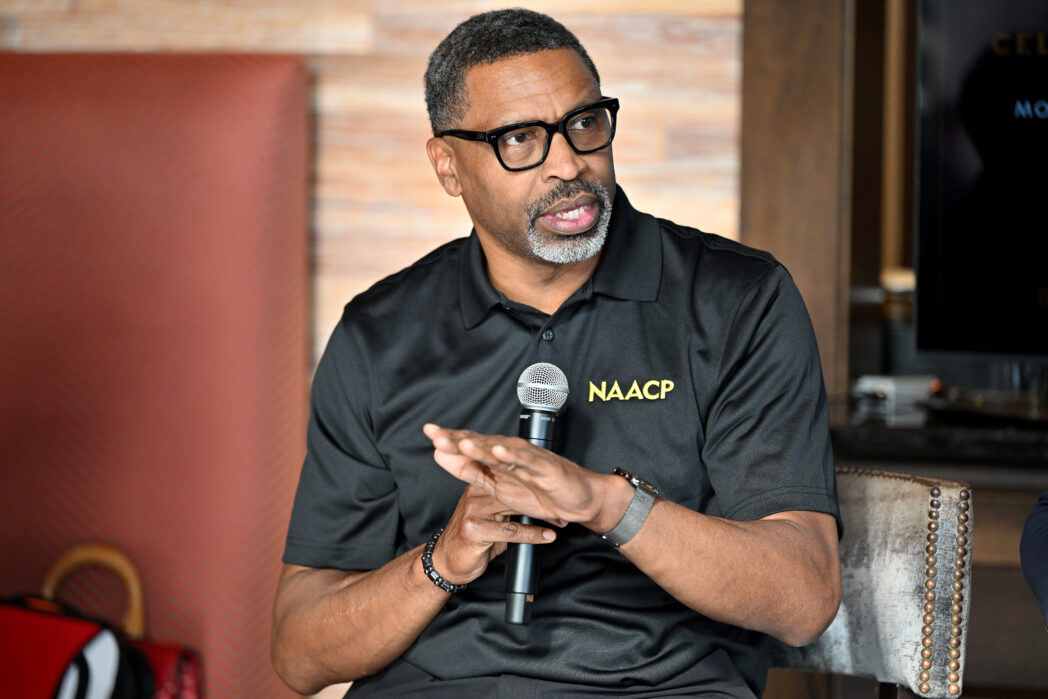
The implications of the Supreme Court’s ruling could be consequential, threatening the elimination of other majority-Black districts and, as a result, reducing the number of elected members of Congress representing Black communities and their interests.
Nadine Smith, president and CEO of Color Of Change, said the Supreme Court’s decision has “gutted” the Voting Rights Act.
“Today’s ruling is the latest attack by the Supreme Court on the most basic pillars of democracy. The Act exists because of the long and documented history of states using violence, intimidation, and the passage of laws that served one purpose: to stop Black people from casting a ballot,” said Smith. “Stripping these hard-won protections is an open invitation to states already pushing the limits of voter suppression. The consequence will be devastating: Black Americans will lose seats in Congress that took generations to win.”
Wednesday’s ruling follows earlier rulings that weakened the legal authority of the VRA, including the 2013 Shelby County v. Holder decision, which ended Section 5, a requirement that former Confederate states in the South seek federal approval before enacting new voting laws or maps. In 2021, the court’s decision in Brnovich v. Democratic National Committee changed the applicability of Section 2’s general provision barring discrimination against minorities in state and local election laws.
In her dissenting opinion on behalf of the liberal justices, Justice Elena Kagan delivered a forceful condemnation of the conservative majority’s decision.
“What if the districts in which minority citizens exercise voting power are sliced up, and the pieces appended to districts in which they can play no meaningful role? The majority tells us that the inability to make out a Section 2 claim will just be a mark of the Nation’s progress, and therefore ’cause for celebration,'” wrote Kagan, who noted that the Voting Rights Act was “born of the literal blood of Union soldiers and civil rights marchers.”
Justice Kagan said the consequences of Wednesday’s ruling will likely be “far-reaching and grave,” explaining, “In the States where that law continues to matter—the States still marked by residential segregation and racially polarized voting—minority voters can now be cracked out of the
electoral process.”
Reflecting on the Louisiana v. Callais ruling, Smith of Color of Change notes that America has “seen this before.” 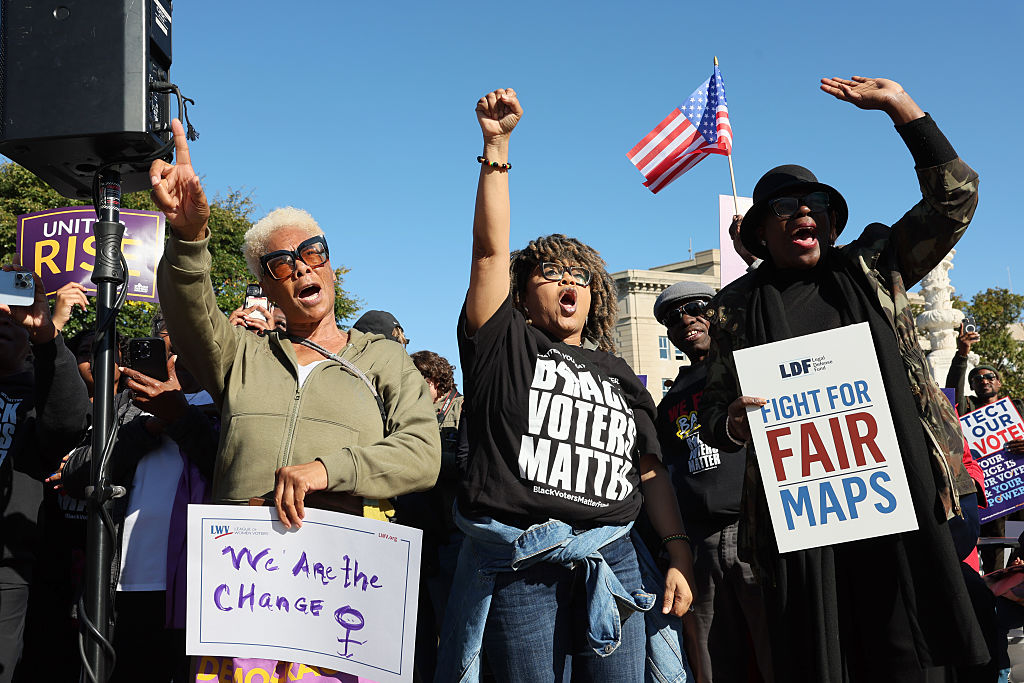
“After Reconstruction, it took 100 years to get that representation back,” she noted. “This is a decision that can eliminate Black representation and take our country back centuries, even if we do not see its immediate impact in the 2026 midterm elections.”
She added, “The Court has now confirmed that rights generations bled for can be stripped away. But rights are defended by organized people, not passive hope…we will not stop until Black voters can cast a ballot in a system that is not rigged to deny us representation.”
Martin Luther King III, the son of Dr. Martin Luther King Jr., and King III’s wife, Arndrea Waters King, said the ruling “silences the voices of millions of voters of color by undermining the purpose of the VRA – securing and protecting the political rights of Black and Brown communities across the country.”
“Dr. Martin Luther King Jr. understood that voting rights are the foundation of our entire democratic system. Without them, we are a democracy in name only,” said the Kings.
The Congressional Black Caucus, which stands to be most deeply impacted by the SCOTUS decision, said the “legitimacy” of the Supreme Court has been “deeply undermined by this decision.”
“It is beyond dismay that the Court once led by Thurgood Marshall, which helped define the meaning of constitutional liberty through decisions like Brown v. Board of Education, which dismantled “separate but equal”…has now laid to rest the foundation on which our representative democracy stands: the promise that the power to choose one’s representatives lies with the people,” said the CBC, led by chairwoman U.S. Rep. Yvette D. Clarke.
The CBC called for the immediate passing of the John R. Lewis Voting Rights Advancement Act, which would legislatively restore protections gutted by the Supreme Court. The group of Black lawmakers also called for reform to the high court, arguing that it has been “compromised.”
“We will work to establish term limits for justices to help restore independence, neutrality, and legitimacy to the Court,” said the group. “We must do all in our power to protect voters from race-based discrimination and set minimum standards that ensure all Americans can participate in free and fair elections.”
Share
What's Your Reaction?
 Like
0
Like
0
 Dislike
0
Dislike
0
 Love
0
Love
0
 Funny
0
Funny
0
 Angry
0
Angry
0
 Sad
0
Sad
0
 Wow
0
Wow
0