Softball is still a mostly white sport. UCLA standout Jordan Woolery wants to inspire change on and off the field.
OKLAHOMA CITY — Jordan Woolery still kneels as “The Star-Spangled Banner” plays before her softball games. She has done so since her freshman season at UCLA. Her reasoning goes back to her high school days. She was a dominant prep player at Clayton Valley Charter High School in Concord, California, and a national champion and [...]


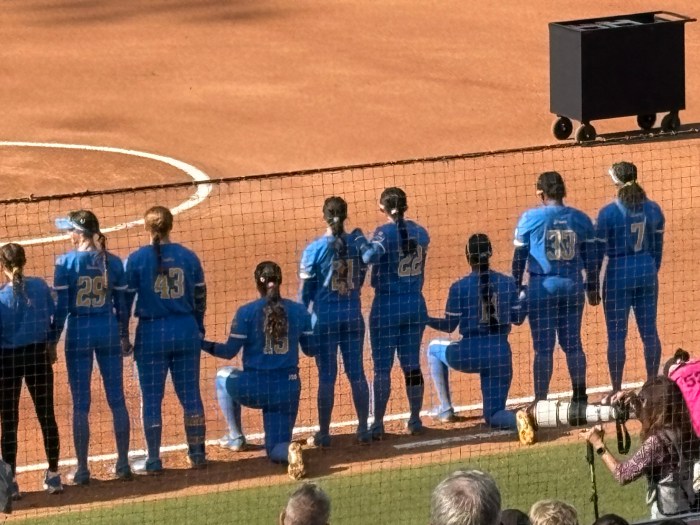
OKLAHOMA CITY — Jordan Woolery still kneels as “The Star-Spangled Banner” plays before her softball games. She has done so since her freshman season at UCLA.
Her reasoning goes back to her high school days. She was a dominant prep player at Clayton Valley Charter High School in Concord, California, and a national champion and All-American for her Athletics Mercado travel team. Off the field, she was an officer for the Black Student Union at the predominantly white high school.
Despite her accomplishments, she felt something was missing. It wasn’t immediately clear to her, but it came into focus as she coped with sadness after watching the video of George Floyd being killed by Minneapolis police in May 2020. The aftermath and national conversation it sparked helped Woolery, a daughter of a white mother and Black father, realize she needed teammates who could help her exist comfortably while navigating a mostly white sport.
“I remember my junior year of high school, my travel team, I was the only one [Black player],” she said. “And I didn’t really notice it at first. But when I became more conscious and my stance on social justice and things like that became more on the forefront of my mind, I feel like it became more prevalent to me.”
Greg Fiore / Icon Sportswire via Getty Images
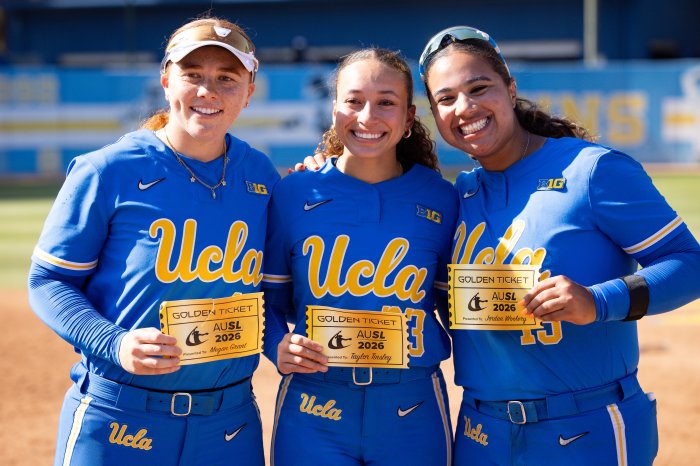
The diverse environment UCLA head softball coach Kelly Inouye-Perez has created within her program is helping Woolery thrive personally as she puts the final touches on one of the best offensive seasons in college softball history. The senior has a .497 batting average with 34 home runs, both among the nation’s leaders. She was named the Big Ten Player of the Year and the Softball America National Player of the Year, and she is a National Fastpitch Coaches Association first-team All-American for the second straight season.
Her 112 RBIs are the second-most ever for a Division I player, and she entered this week’s Women’s College World Series with an outside chance of setting the record. The eighth-seeded Bruins opened their slate Thursday with a 6-3 loss to No. 1 seed Alabama. Woolery still could reach the record of 128 RBIs Arizona’s Laura Espinoza posted in 1995, but the Bruins likely would need to win out in the double-elimination format and reach the best-of-three championship series to give her a chance. UCLA will play an elimination game Friday against No. 5 Arkansas.
Still, Woolery is an anomaly. NCAA statistics show just 8% of Division I players were Black in 2025, and that is still much higher than what Woolery saw during her high school and travel ball days.
Those details are among the reasons she doesn’t stand for the national anthem.
“Me kneeling is doing what I can to try and stand up for people who may not be able to stand up for themselves,” she said. “And I feel like I take that role very seriously, and I wear it with a lot of pride because I know how it feels to be unheard or unseen. And I never want anyone to feel that way either.”
Cliff Brunt
Woolery vividly remembers when she first truly felt represented while watching college softball — the 2017 Women’s College World Series. Oklahoma’s Shay Knighten hit a game-winning, three-run homer in the 17th inning of Game 1 of the championship series against Florida, then hit a three-run double in the title-clinching Game 2.
Knighten was named Most Outstanding Player of the WCWS. Watching a Black player dominate in clutch situations meant everything to Woolery.
“I think it was really cool seeing her on such a big stage and doing such cool things,” Woolery said. “And I feel like she really inspired me. She had a huge impact on me and my journey. And just seeing her on TV and seeing her being in positions that I wanted to be in was really special.”
Now, Woolery embraces carrying that torch.
“I feel like I became the person that I wanted to see when I was younger,” she said. “So I feel like that’s a cool experience. I’ve been growing into that role and embracing that side of myself as well.”
Greg Fiore / Icon Sportswire via Getty Images
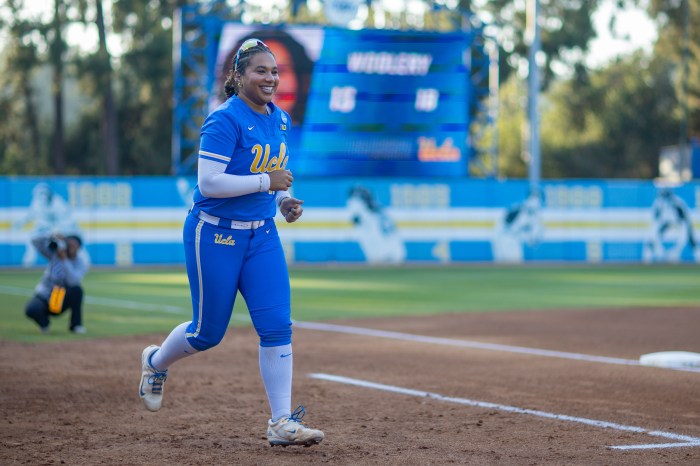
Woolery is half of arguably the best power duo in Division I softball history. Her teammate Megan Grant set the Division I record with 41 home runs this season, breaking Espinoza’s previous mark of 37 set in 1995.
Grant’s on-base percentage of .646 is buoyed by walks, because teams don’t want to pitch to her. That leaves Woolery with opportunities she repeatedly has taken advantage of.
“If people want to walk Megan, that’s OK with me,” Woolery said. “They can choose that. … And, I mean, she is Megan Grant. She’s going to get walked. But credit to myself — I am Jordan Woolery. So I feel like taking credit where credit is due and knowing that I’m going to come through in those big situations as well.”
Grant is one of Woolery’s biggest fans, saying she loves her front-row seat to witnessing greatness.
“What she’s done this year is simply incredible,” Grant said. “I mean, honestly, she’s just going out there and she’s being herself, and she’s being everything that we always knew that she could be. To me, she’s my Player of the Year.”
Nebraska’s Jordy Frahm, the USA Softball Collegiate Player of the Year, said Woolery has no weaknesses as a hitter.
“She’s definitely one of the most feared hitters in the country,” Frahm said. “Every time we play them, I just think, ‘She’s going to hit the ball hard, just try to keep it in the park.’ Insane numbers for the power, for the average, everything. She’s such a tough player to pitch to because she can hit so many pitches. There’s no holes in her swing. She can get to anything.”
Greg Fiore / Icon Sportswire via Getty Images
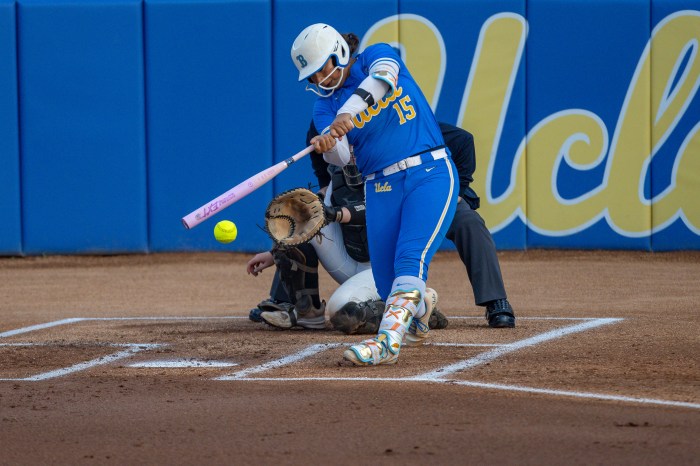
Woolery said achieving so much with Grant — who is Black, white and Samoan — has been special, in part because they have faced similar challenges while finding their identities in the sport.
“I feel like there’s been a lot of times where she stood with me and I stood with her in this journey beyond softball,” Woolery said. “And I feel like it just makes our relationship stronger. And then also we can inspire others.”
The duo will separate after this season. The Portland Cascade selected Grant with the fourth pick of the Athletes Unlimited Softball League draft, and Woolery went two picks later to the Utah Talons.
Seven of the 17 players drafted by the AUSL this season are Black: Texas Tech’s NiJaree Canady; Grant; Oregon’s Amari Harper; Arkansas’ Dakota Kennedy; Arizona’s Sydney Stewart; UCLA’s Taylor Tinsley; and Woolery.
That gives Woolery hope that in the future, Black players who follow her will be more comfortable playing the sport.
“I want everyone to be able to play softball who wants to play softball,” she said. “And I feel like your race or your identity shouldn’t change your ability to be able to go to UCLA, to go to the schools that you want to go to. So I think it’s really cool to give people the opportunity to just see themselves and have more representation within the sport.”
The post Softball is still a mostly white sport. UCLA standout Jordan Woolery wants to inspire change on and off the field. appeared first on Andscape.
Share
What's Your Reaction?
 Like
0
Like
0
 Dislike
0
Dislike
0
 Love
0
Love
0
 Funny
0
Funny
0
 Angry
0
Angry
0
 Sad
0
Sad
0
 Wow
0
Wow
0