Lamar Jackson and the other side of a revolution
Listen to this story Loading the Elevenlabs Text to Speech AudioNative Player… Baltimore mayor Brandon Scott won’t be donning a helmet and pads when the Ravens open training camp today. Yet, as the point of contact — a young Black man, at that — for one of America’s most beautiful and often misunderstood cities, calling [...]


Listen to this story
Baltimore mayor Brandon Scott won’t be donning a helmet and pads when the Ravens open training camp today. Yet, as the point of contact — a young Black man, at that — for one of America’s most beautiful and often misunderstood cities, calling the right play at the right time is critical. Decisions now impact history.
When the topic of Lamar Jackson, Baltimore’s enigmatic and revolutionary quarterback, arises, it’s personal. Chronicling the city’s evolution without Jackson — and without Scott, too — is equal parts disingenuous and impossible.
“There are sports teams and players in cities. And there are those that are of cities,” Scott tells Andscape. “Lamar is the latter.”
Scott laughs sarcastically at Jackson’s recent plummet on the NFL’s Top 100 players list. Ranked No. 2 last season, Jackson fell to No. 69 this year.
“That’s crazy, man,” he says. “Really crazy. You can’t tell the history of this country without telling the stories of Baltimoreans, specifically Black Baltimoreans. Yet, time after time, folks try to pass us over. The very exact thing is true for our quarterback. [The] 69th best player in the league. Can’t be serious.”
Ask any Ravens fan. In particular, ask any Ravens fan from Baltimore. It’s not about Lamar coming through on a draft night promise to deliver Charm City a Super Bowl. It’s about wanting to see him win.
He’s been doubted, much like the city itself. Falling an unfathomable 67 spots means he still very much is. They want him to win quite simply because he’s theirs. If he wins, everyone wins.
Nonetheless, whether it’s doubt, a tinge of racial angst, or something else altogether, there is an interesting question that follows the two-time league MVP and former Heisman Trophy winner into the 2026 season.
What comes on the other side of a revolution?
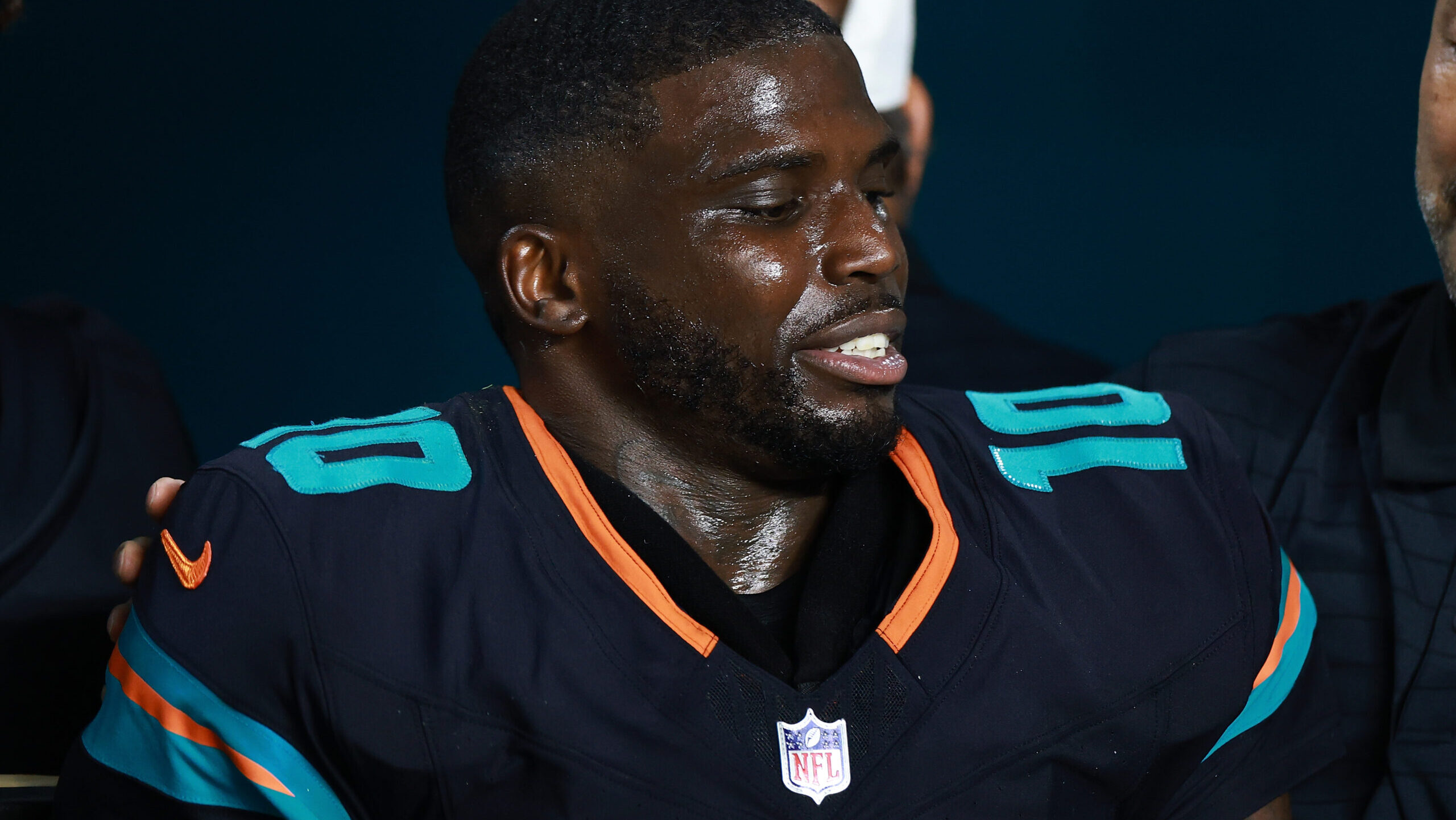
Joe Sargent/Getty Images

Some people inherit trust funds. Jackson, upon entering the NFL as the last pick in the first round of the 2018 draft, inherited an overbearing distrust Black quarterbacks knew all too well.
It was never about whether Jackson could play in the NFL. Rather, the ultimate debate was whether the game could adjust to a tour de force like Jackson, who rewrote, in real time, the rules to America’s most beloved sports position. Every critique surfaced with more questions. Could his style of play transfer to the NFL? Could he read defenses to be an elite quarterback? Could he throw from the pocket?
Simply put, Jackson not only won the argument, he buried it. Every game-winning drive, every miraculous pass or escape from certain pass-rush fate. Each MVP. Every accomplishment became vindication for a player many doubted, having seen how he looked and played and determining he would prove to be the antithesis of game-changing talent.
“Though some of the ‘questions’ have evolved over the years,” Scott said, “the tone and the ridiculousness of them haven’t.”
Answering critiques and generational stereotypes doesn’t eliminate burdens. In a lot of ways, it creates more.
Jackson isn’t above reproach. The demons of playoffs past hover in July. Their footsteps grow louder as the season plows along. And come January, it’s the mirror Jackson can’t avoid. The disappointments. The upsets. The fumbles. The dropped passes.
Last season, by Jackson’s own standards, was subpar. Injuries piled up. He finished 25th in the league in passing yards per game. Even on the cusp of a season that looms in dire importance for Jackson and the Ravens — with new head coach Jesse Minter — Jackson’s greatness has long been cemented. But standards, like goalposts, proverbially move.
Jackson is the NFL’s all-time leading rusher among quarterbacks. A two-time MVP with a career TD-to-INT ratio of 3.3-to-1. And he’s tied with Aaron Rodgers as the all-time leader in passer rating at 102.2. Jackson could retire right now and be a surefire Pro Football Hall of Famer.
“The coded questions are still there,” Scott said.
No reasonable fan, critic or analyst is suggesting, as former Indianapolis Colts general manager Bill Polian did in 2018, that Jackson move to wide receiver anymore. The questions around Jackson don different cloaks. Can his body hold up? Can he be trusted to make the right decision in January? Is he worth another massive contract? (The short answer is yes.)
The scrutiny never disappeared. It just shifted shape.
G Fiume/Getty Images

The ghost of the future matters now. It’s not fair. But being a football revolutionary isn’t either.
Revolutions live forever, but they are judged twice. What they change is the first metric. The second is what lives after them. Scars and all, Jackson definitively won the first debate. The second has already begun. Through it all, his biggest supporter has been a city that has long understood the melding of creativity and storytelling.
Baltimore doesn’t need another reminder of Lamar’s greatness. Two MVPs — and let some tell it, a third that lives in Buffalo — already ended that debate. The moments matter more than the margins. What Charm City craves now is forever — that “maybe next year” is finally this year. Football in Baltimore, much like life, comes with short years and long days. Nearing 30 and with seven full seasons as a starter under his belt, Jackson now lives in a neighborhood reserved for the greatest athletes. One where statistics are the bills. The mortgage, however, is a championship.
What’s most jarring, as is the case for so many athletes, is just how close Jackson has come to putting the conversation to bed already. History is truly reliant on timing.
If Zay Flowers doesn’t fumble on the goal line in the AFC title game in 2024 against the Chiefs, or if Mark Andrews doesn’t drop a game-tying two-point conversion in 2025 vs. the Bills, perhaps the only question remaining is what image of Lamar is used for his statue outside M&T Bank Stadium.
Football is a game of inches. Memory, however, is not. The only line that matters is the finish line.
“There are legitimate conversations about his legacy that will be defined by this next chapter of his career,” Scott acknowledged.
In sports history, very few have ever been asked to lead a revolution. Every revolutionary comes to the same realization that changing the game was only part of the mission. How the game remembers you is the hardest part. A Super Bowl is the loudest goal, but it’s not the only one. It’s about proving the revolution you brought wasn’t just euphoric in the moment, but lasting.
Each passing July carries a different meaning than the previous. Jackson having to prove he belongs is an argument dead on arrival. Those ungodly sweltering middle-of-the-summer practices are building blocks for frigid January evenings in Baltimore or elsewhere — if he’s lucky. It’s about how adults now tell the stories of Jackson’s performances when they’re grandparents in their golden years.
Mayor Scott said countless athletes in countless cities are the norm. A select few become the soundtrack to their city’s resonance. Jackson is this close to becoming as synonymous with Baltimore as Old Bay Seasoning.
The truth is, though, Jackson scribed his chapter in Baltimore history long ago.
“Much like our stars of old, Eddie Murray, Ed Reed, Ray Lewis and Adam Jones, he will be out amongst the people as just another Baltimorean,” Scott says. “As mayor, it can drive me a little crazy, but as a Baltimorean, I love it.”
Mitch Stringer-Imagn Images
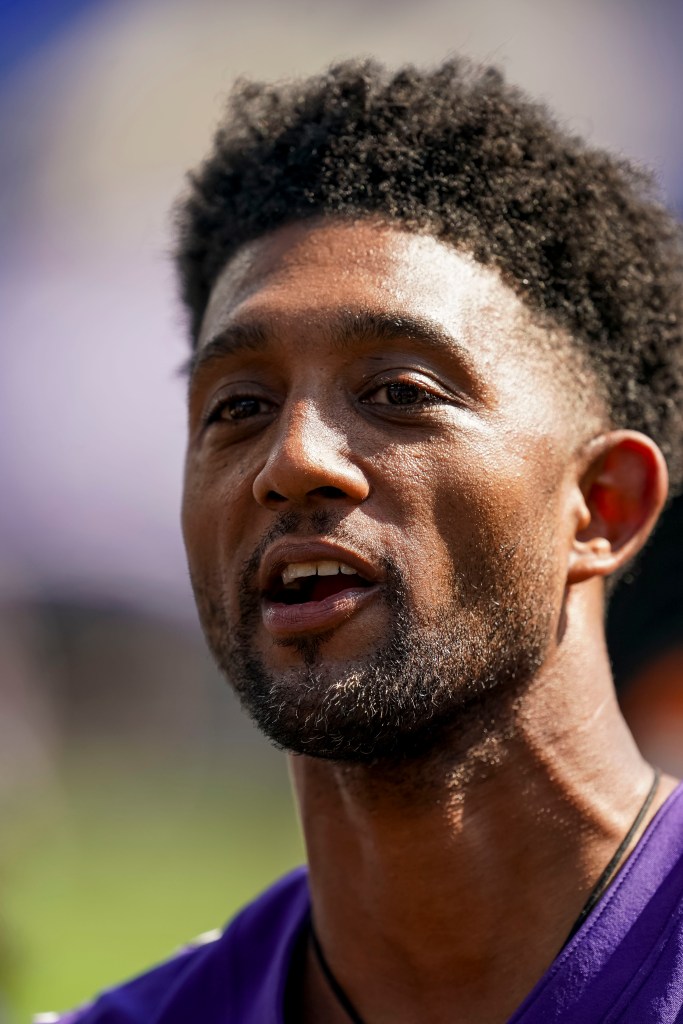
Revolutions adhere to the same blueprint: disdain, resistance, awe and inevitability. Jackson reached the final stage years ago. The question of where the game goes after Jackson is beyond his control. Even much of the game that happens around him is more of the same. The line between a magnificent chapter and a historical landmark often comes down to a play there and a play here.
The question of what the view from the other side of the revolution looks like isn’t singular to Jackson. He’s not the first Black athlete to grapple with it, nor will he be the last. Yet, in a sport like football and certainly with a position like quarterback, your public persona documents lives and creates soundtracks to them, involuntarily or not.
“Whenever folks count this city and its people out, we bounce back with a swagger you won’t find anywhere else. There wouldn’t be a ‘Star-Spangled Banner’ without Baltimore grit,” Scott says.
“What would education in this country look like if not for a Black boy from West Baltimore named Thurgood Marshall? Lamar will show the world why you never bet against Baltimore again this year.”
It sounds like campaign rhetoric, but for Scott — a child of the city — it’s not. It’s pride, charisma, and confidence. How else could one survive in Baltimore?
Revolutions aren’t completed without armies. In Baltimore, Jackson has one. To live forever, though, it takes a man, a city, and a little bit of luck at the most opportune time.
History remembers those who changed it. Revolutions aren’t necessarily cherished because they simply happened. But history immortalizes those revolutionaries who forced the domain they operated in to forge a new glimpse of itself. Jackson changed football seasons ago. Now comes a task far more difficult than a December battle in Pittsburgh with the season on the line: dictating how history remembers the other side of the revolution.
The post Lamar Jackson and the other side of a revolution appeared first on Andscape.
Share
What's Your Reaction?
 Like
0
Like
0
 Dislike
0
Dislike
0
 Love
0
Love
0
 Funny
0
Funny
0
 Angry
0
Angry
0
 Sad
0
Sad
0
 Wow
0
Wow
0