Justice Ketanji Brown Jackson takes agency as sole Black woman on Supreme Court
A rare rebuke by Jackson during a lecture at Yale Law School illuminates a minority voice choosing to exercise her

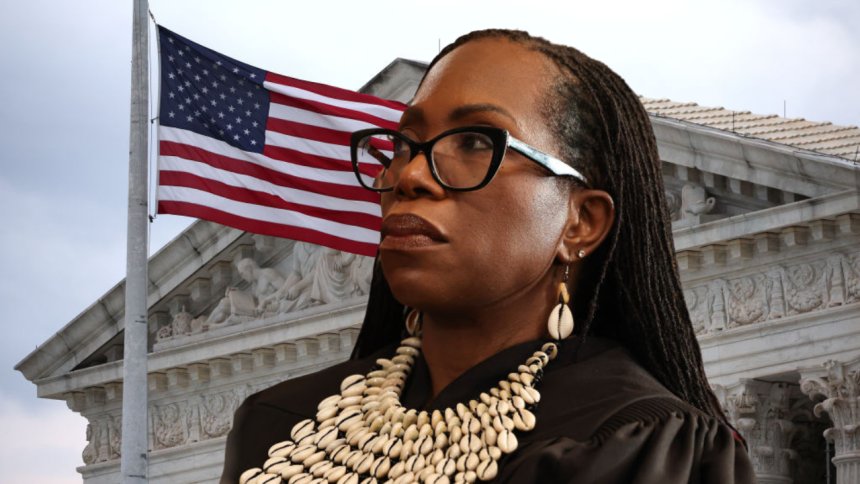
A rare rebuke by Jackson during a lecture at Yale Law School illuminates a minority voice choosing to exercise her power outside of the institution of the nation’s highest court.
When Ketanji Brown Jackson first entered the U.S. Supreme Court in 2022 as the most junior liberal justice and the first Black woman, she undoubtedly knew she would often find herself in the dissenting minority on any given issue before the 6-3 conservative majority. However, after nearly four years on the bench and under a new presidency, it appears Jackson has grown frustrated and is reclaiming some sense of agency and power.
As previously reported by theGrio, Jackson delivered a rare rebuke of her conservative colleagues during a lecture at Yale Law School this past week. The newest justice called out what she sees as a “problematic” shift in the Supreme Court’s use of emergency shadow dockets, which has allowed President Donald Trump to implement many of his controversial policies, including mass firings of federal workers, canceled federal grants, and aggressive immigration enforcement.
Justice Jackson, a Harvard Law graduate and former federal District judge, explained that emergency relief is intended to maintain a “status quo bias” and to minimize harm to those impacted. Instead, she bemoaned, the court has prioritized the stated harm to President Trump over the impact of his policies on “real people.”
“The president of the United States, although he may be in this hypothetical that you posed, harmed in an abstract way by not doing what he wants to do, he certainly isn’t harmed if what he wants to do is illegal, right? He doesn’t have the ability to do something unlawful. And the point of the merits proceeding is to determine whether the thing he wants to do is unlawful,” said Jackson.
She continued, “Are we going to allow him to do this thing, this thing that is being challenged in the interim, while we are evaluating whether or not that thing is lawful? The only way to make that determination without having it just completely collapse into forecasting the merits is to focus on what is going to happen if he does this thing concretely in the real world, versus not.”
Robert Weiner, an attorney at the Lawyers’ Committee for Civil Rights Under Law, tells theGrio, “Supreme Court justices don’t typically give speeches where they self-criticize their colleagues.” He said the move “reflects, I think, a strong depth of feeling on the issue.” 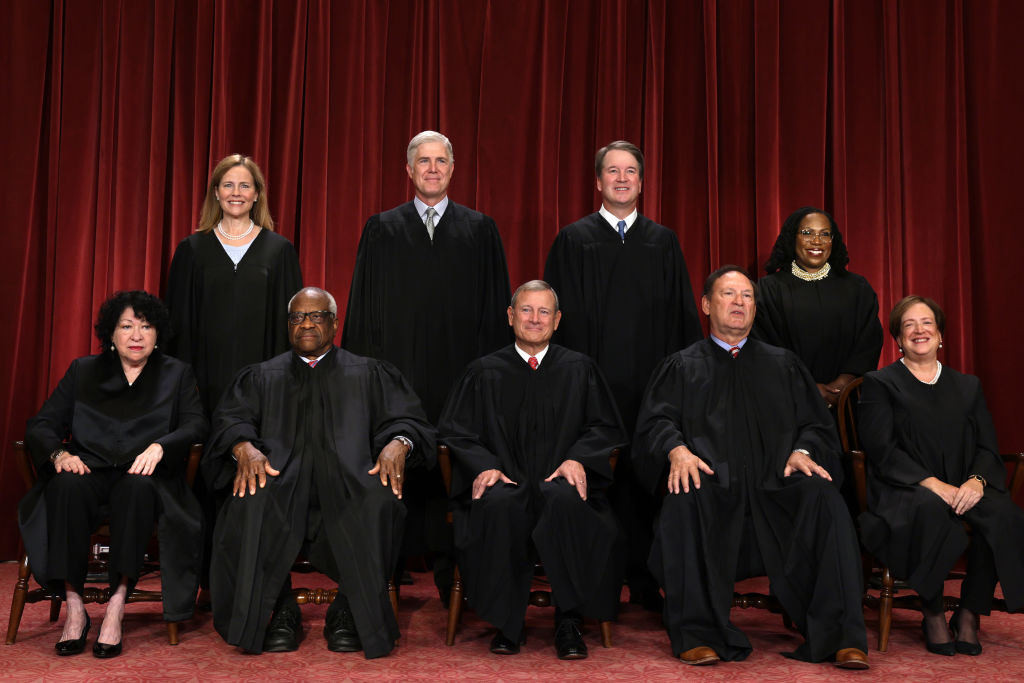
Among the 29 emergency orders Trump requested, the Supreme Court has denied only five, according to an analysis of data compiled by Ballotpedia.
The consequences have been felt, from federal employees not being able to work and critical services, including medical research, being defunded, to Black and brown immigrants with legal status being deported.
Weiner said the Court’s latest rulings of shadow dockets, which are “generally rendered without there being full briefing and oral argument,” have resulted in “the court stepping in far more than a court is supposed to do.” He explains the court has bypassed judicial processes that are fundamentally “supposed to be long and deliberate and slow.”
Justice Jackson’s calling out the court’s perceived inability to weigh the real-life consequences of these emergency orders follows her many judicial dissents and questioning at the bench, which have been lauded by legal experts.
When the Supreme Court struck down race-based affirmative action in college admissions in 2023, it was Jackson’s line of questioning during oral arguments in the case that led the court to narrow its ruling, allowing applicants to still highlight their disadvantaged backgrounds. Still, Jackson described the ruling as a “five-alarm fire,” famously writing, “deeming race irrelevant in law does not make it so in life.”
Jackson was notably the sole justice to dissent from consequential cases, including the ending of universal injunctions, which she characterized as an “existential threat to the rule of law,” warning against “executive lawlessness,” and lifting of a ban on conversion therapy, which Jackson said would usher in “unsafe medical care” for LGBTQ+ youth.
“She does not shy away from asking the tough questions and making her voice heard. And I think that is something she is good at doing, and she serves a very useful function in doing that,” Weiner tells theGrio. “Justice Jackson has spoken up from the very beginning and has been a really innovative and forceful advocate for her views.”
Tiffany Royster, Esq., associate counsel at the National Council of Negro Women, tells theGrio that Justice Jackson’s very public rebuke is notable given that she is the court’s newest justice and its lone Black woman. 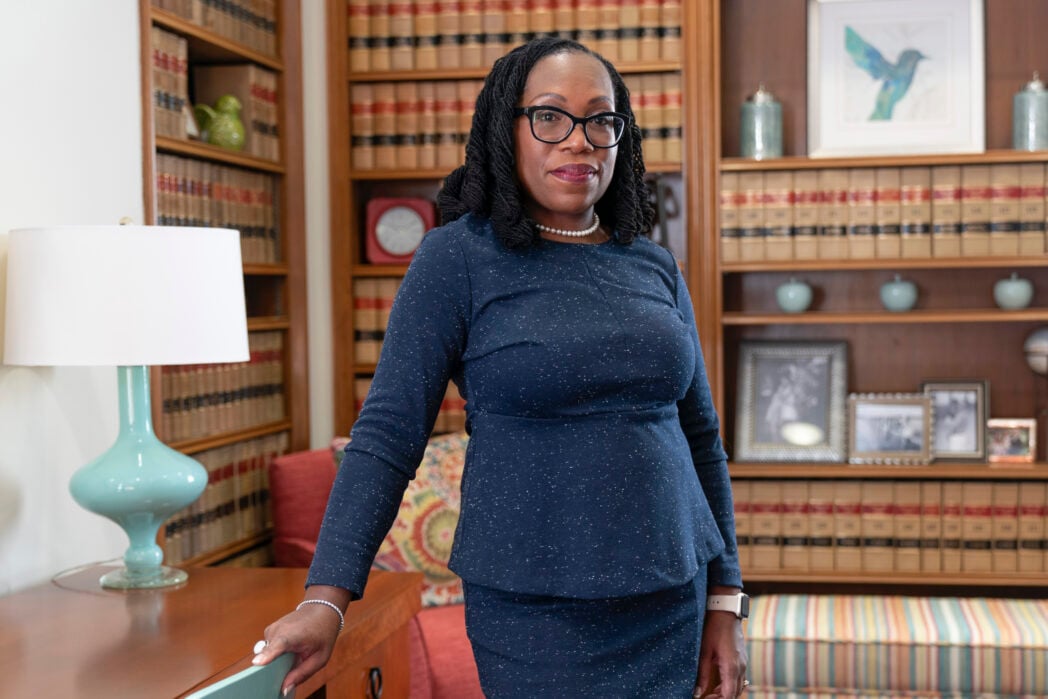
“I think she’s in a really interesting, but honestly not uncommon position as a Black woman…a lot of times, Black women are admitted to spaces of power, whether it’s a board room or the government, or, in her case, the judiciary, just to find out that their voices are just completely silenced once they’re inside,” explains Royster.
Jackson, taking her judicial stance from the pages of the Supreme Court’s dense written rulings to the halls of Yale Law School, knowing it would be disseminated to national media, also shows forethought, says Royster.
“She’s talking very future forward…she’s talking to the future scholars, the future lawyers, the public that will hopefully shape policy in a way that, if you vote for someone, they get to decide who sits on the Supreme Court,” she tells theGrio. “She’s not letting her role in the minority stop her from speaking out and advocating for equal justice under the law, which is really what the shadow docket kind of takes away from people.”
“These are important legal issues that have serious implications for millions of people and communities, and most of them are vulnerable individuals and vulnerable communities,” said Royster of Jackson, who is the first former federal public defender to ever serve on the Supreme Court.
She continued, “I think Justice Jackson has a particular kind of perspective as the only Black woman on the court, the only Black woman to ever be on the court, and her background and where she comes from, and the things that she’s done in her life. She has a very different perspective than everyone else on the court.”
By applying pressure and “building consensus outside the institution,” Justice Jackson is “taking her power back,” says Royster, “almost to kind of say, this is not okay, and I’m not going to be silenced, even though I can’t change things.”
Share
What's Your Reaction?
 Like
0
Like
0
 Dislike
0
Dislike
0
 Love
0
Love
0
 Funny
0
Funny
0
 Angry
0
Angry
0
 Sad
0
Sad
0
 Wow
0
Wow
0








![Movie Trailer: ‘Search Party: Where’s PawPaw?’ [Starring Tichina Arnold & Tommy Davidson]](https://thatgrapejuice.net/wp-content/uploads/2026/09/search-party-wheres-paw-paw-tgj.jpg)