How reliance on a credit reporting agency led to Mississippi’s voting mess in the midterms
Nearly a week after Election Day, Scott Colom leads Cindy Hyde-Smith as questions mount over the state’s use of unverified


Nearly a week after Election Day, Scott Colom leads Cindy Hyde-Smith as questions mount over the state’s use of unverified Experian data that contributed to thousands of voters being designated inactive.
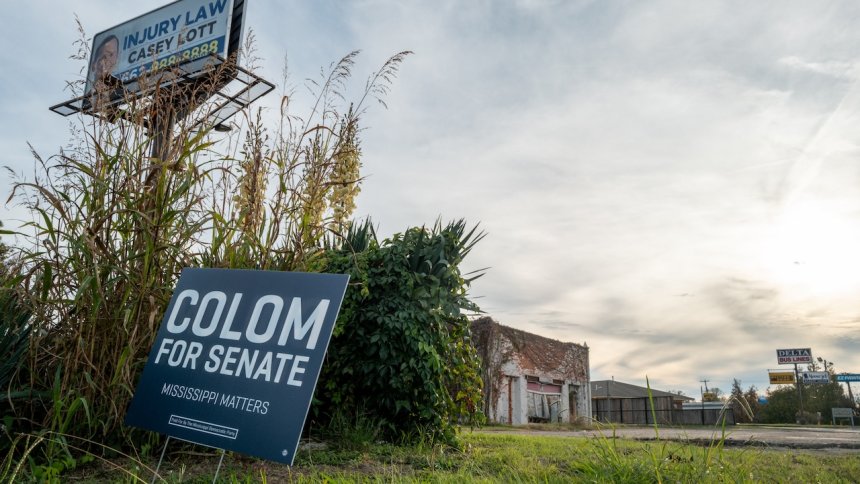
Almost hourly, citizens across the country have refreshed the voting results of Mississippi’s Senate race, awaiting the final call nearly one week after Election Day.
Democrat Scott Colom currently leads Republican incumbent Cindy Hyde-Smith by more than 2,500 votes, with Hinds County, the state’s most populous county, set to finalize counting ballots by late Monday or early Tuesday. As TheGrio previously reported, the state has until Tuesday to finish counting provisional ballots and receive absentee ballots postmarked by Election Day.
But onlookers outside the state with the largest population of Black residents in the country have been wondering one simple question: why is it taking so long to count the votes?
In 2024, Mississippi Secretary of State Michael Watson struck a $50,000 deal with Experian, one of the “big three” credit bureaus, to help “strengthen the integrity” of statewide elections by using unverified company address data to determine active and inactive voters who may have changed addresses. It was the first time, according to Mississippi Today, that the state used data not from the U.S. Postal Service to clean up voter rolls.
The use of unverified data from Experian has caused a nightmare at ballot boxes across the state. Thousands of registered voters were deemed inactive, prompting them to file an affidavit ballot. It has thrown chaos into an already unusual Senate race, one where the independent on the ballot, Ty Pinkins, previously ran for another Senate seat in 2024 and has conducted interviews stating that he was pulling votes from Hyde-Smith, not Colom.
According to The Atlantic, Experian says its data was not intended to be used to purge voter rolls in the state, and Watson was warned about the unverified data heading into Election Day. It’s something former Mississippi Attorney General Jim Hood sued Experian over in 2014.
Scott Anderson, Experian’s vice president for corporate communications, told The Atlantic, “The solution provided at that time consisted of supplemental address information and was not designed or intended to validate voter records.”
The outlet also reports that Experian has not provided services to Mississippi since 2025. From July 2025 to March 2026, nearly 50,000 voters had been deemed inactive due to address issues. By Election Day, that number had ballooned to 230,000.
Watson, however, defended Mississippi’s voting integrity while highlighting its improved ranking in election policy. In a post on X on November 6, he wrote, “The affidavit ballot process is a safety net for errors election commissioners may make as they conduct mandatory voter roll maintenance.”
He added, “It may take voters a little longer for final results to come in, but it will result in more accurate voter rolls which will speed up the process in the future and decrease opportunities for voter fraud in MS. In the end, accuracy and integrity will be maintained.”
Still, as new Senators are going through orientation during a lame duck session in Congress, one Senate race has all eyes on it. The most contested Senate race in decades in the Magnolia State is now becoming a cautionary tale about why depending on third-party systems could create issues on one of the most important days of the year.
Share
What's Your Reaction?
 Like
0
 Dislike
0
 Love
0
 Funny
0
 Angry
0
 Sad
0
 Wow
0