HBCUs are sitting on Black history we haven’t even discovered yet — and Getty is helping to uncover it
Cassandra Illidge shares how Getty’s HBCU archival project has been going five years in and what’s next for the collaboration.


Cassandra Illidge shares how Getty’s HBCU archival project has been going five years in and what’s next for the collaboration.
When archivists working with Getty Images to digitize images from Florida A&M’s history stumbled upon a crowd photo from a 1980 football game, they were shocked to find Muhammad Ali among the group.
“[It was] a Chrome negative that some photographer took, you know, one of the school photographers took that photo, and the school didn’t even know they had the photos,” Cassandra Illidge, vice president of partnerships for Getty, told theGrio over the phone last week.
Another group working on archives from Lincoln University in Pennsylvania couldn’t believe it when they found images of a young Langston Hughes as a student in the 1920s, long before his literary legacy ever took hold, reveling with friends like an average college student. Meanwhile, at Claflin University in South Carolina, when they found rare images dating back to the 1860s, around the time the school was founded, that’s when it hit Illidge: Historically Black Colleges and Universities are sitting on so much Black history waiting to be discovered and unearthed, more than they may even realize.
“There’s so much for us to see,” she said. “There’s so many more archives out there that can unleash a different or expand the narrative around history.”
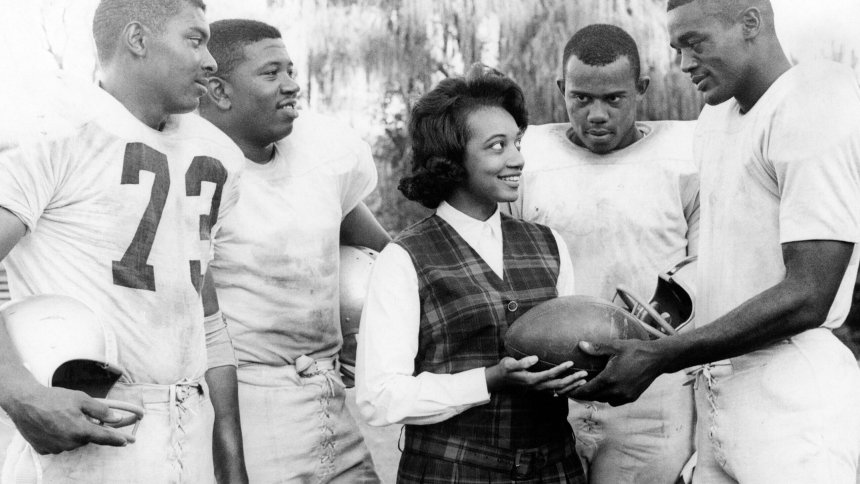
Since 2021, Illidge has been working with HBCUs around the country to archive their photos and digitize their rare collections through a partnership with Getty in the hopes of preserving the collections and the Black history they are unearthing.
“There’s too many boxes of amazing imagery that just are sitting and deteriorating with time,” she noted.

The project—which launched in 2021 after the social unrest of 2020 inspired many institutions to consider how they could more tangibly support the Black community—provides HBCUs with the resources and technology needed to digitize their archives through a first-of-its-kind grant program, while the schools retain ownership of their images. Once digitized and reviewed by the institutions, the photos are made available for licensing through Getty Images, with 50% of the royalties going back to the school, 30% supporting scholarships and the remaining 20% reinvested into the grant to help fund future digitization.
In the five years since it began, the project has expanded from four initial schools —Claflin University, North Carolina Central University, Jackson State University, and Prairie View A&M University—to 11, including Southern University A&M College, Lincoln University, Delaware State University, Stillman College, Bennet College, Florida A&M, and Alcorn State University. They have uncovered hundreds upon hundreds of images, some dating as far back as the 1800s, depicting rarely seen moments of Black collegiate life and beyond.
“It’s the ability to actually see a print become digital and now accessible,” Illidge said. “Homecoming, Campus Queens, all of that material is fundamental and vital for the schools to tell their story.”
What’s being found isn’t just integral to the stories of these institutions; the images are becoming integral to the larger record of American history. For instance, Lincoln University’s archives include rare images connected to Albert Einstein’s 1946 visit to the campus, when he delivered a lecture and received an honorary degree. Meanwhile, in North Carolina, Illidge discovered there was a Black Wall Street that thrived in Durham. When most people think of “Black Wall Street,” Tulsa comes to mind, but as collections like these reveal, thriving Black business districts existed in other places, too.
“I didn’t know about that until I was at North Carolina Central University and saw an entire collection of prints with business owners for the Black Wall Street in Durham,” she explained.

The photos, which depict renowned political figures like Rev. Jesse Jackson (who has been found in every archive so far) to civilian students of the 40s and 50s, what they’ve been able to find and digitize are nothing short of rare. In many cases, they’ve survived for more than a century through natural disasters, fires, schools growing and evolving, generations of students and so much more.
“We learned a lot being on campus, talking to the archivists, talking to the comms and athletics and other departments, and seeing that the photos are just the start of it,” Illidge said, adding, “There’s historical records and vital documents that also need to be preserved and protected.”
In addition to working to digitize these extensive photo archives, Getty has also been working with other partners, including Ancestry, to preserve those vital physical archives and make them accessible for research, including genealogy research.
“That in itself was an incredible opportunity,” Illidge gushed.

There’s also an urgency around the work that may not have existed when the project first began, or at least was difficult to anticipate at the time. With the development of artificial intelligence threatening the authenticity of the images we see, particularly those depicting Black life, and at a time when the Trump administration has been attacking diversity, equity and inclusion initiatives and programs that support historically Black colleges and universities, Illidge understands the power of what they’re doing with this project.
“I believe AI should be used for good,” she admitted.
“It can be used for enhancing the searchability of content to verify material. But we believe that obviously editorial content should not be ever enhanced in any way, shape, or form that takes away from the integrity of the time period, the image itself,” she continued. “So, AI enhancements not for editorial, not for historical material. And this is again why this work is very vital to this day because, again, so many things are being manipulated, and the authenticity of imagery and history that still should remain sacred.”
Earlier this summer, amid the backlash its new dress code was receiving, some students at Tuskegee University called out when several outlets began using AI-generated photos of generic Black students wearing bonnets and durags. The students found it bizarre and offensive when real imagery of student life already existed.

“We’re not just investing into the historical material. We’re also working with the institutions on making sure that the photography today, the contemporary material is online, because again, you are the ones to tell the story, not us,” Illidge explained. “So it can’t be just the historical material. It has to be what happens on campus today when you are there on the move-in day. It’s an important day. You’re documenting it. Put it on the website so that people can license it and use it to tell stories.”
Overall, Illidge explained that the project is about giving these HBCUs “respect for the work that the institutions have been doing for years before we even started talking to any of them.”
She added, “The fact that you know we’re respectful of their time, their energy, and we just want to be a resource. We want to be a true partner with them, and we want to help them continue to do the work that they’re doing and scale it to a level that they couldn’t even imagine.”
Share
What's Your Reaction?
 Like
0
Like
0
 Dislike
0
Dislike
0
 Love
0
Love
0
 Funny
0
Funny
0
 Angry
0
Angry
0
 Sad
0
Sad
0
 Wow
0
Wow
0