GED Section: People Have a Disdain for Pedophiles
Source: Reach Media / Reach Media D.L. Hughley’s Notes from the GED Section, tackles the reported attempted assassination involving Donald Trump with a sharp focus on motive. Hughley argued that, based on the alleged manifesto, the attack was not tied to the usual hot-button issues like tariffs, war, immigration, or party politics. Instead, he said the [...]


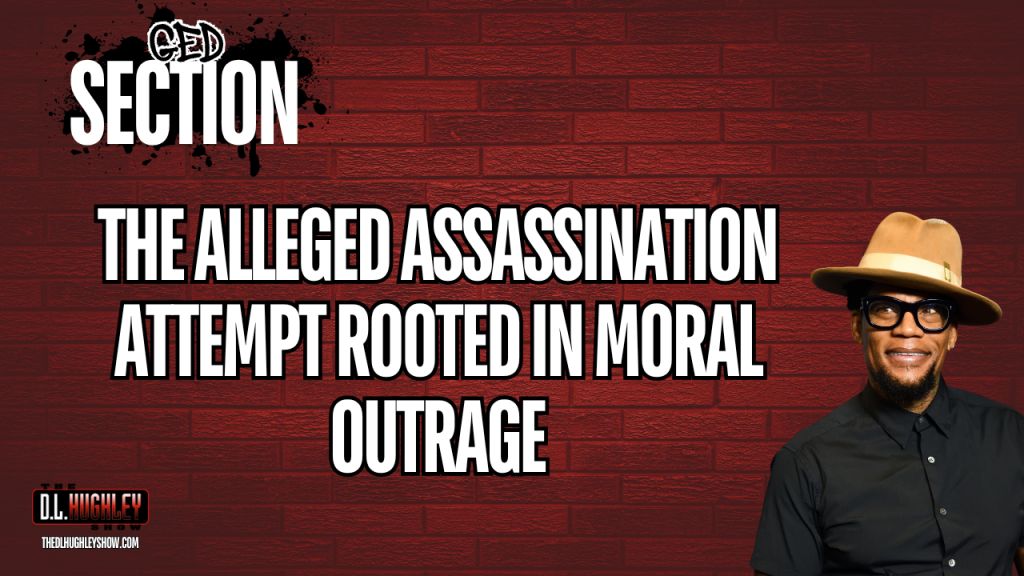
D.L. Hughley’s Notes from the GED Section, tackles the reported attempted assassination involving Donald Trump with a sharp focus on motive. Hughley argued that, based on the alleged manifesto, the attack was not tied to the usual hot-button issues like tariffs, war, immigration, or party politics. Instead, he said the suspect’s anger appeared to center on accusations involving rape and pedophilia, as well as what he described as a broader moral failure among public figures and their defenders. By drawing that distinction, Hughley pushed listeners to look beyond easy political talking points and deal with the deeper social outrage that can fuel public fury.
Hughley then widened the lens, placing the alleged motive in the context of a long American history of vigilante-style anger against people accused of harming children. He pointed to well-known stories in which men who attacked alleged abusers were met with public sympathy or light punishment. His point was not to excuse violence, but to show that this kind of rage did not come out of nowhere. In his telling, America has often looked the other way when people acted against those seen as predators. That history, he suggested, makes today’s political reactions feel selective, especially when partisanship changes how people talk about right and wrong.
TRENDING STORY: Hypocrisy Hero Trump Claims Comey “8647” Post A Threat, X Users Disagree
TRENDING STORY: GED Section: The Real Threats to Our Communities
Politics, Loyalty, and Moral Contortion
Hughley’s commentary was what he sees as moral inconsistency in modern politics. He argued that some voters bend their values to protect political allies, even when serious accusations are involved. For many listeners, especially those who follow both politics and culture closely, that message lands hard. It speaks to a growing frustration in Black communities and beyond: too often, party loyalty seems to matter more than truth, accountability, or protection for the vulnerable. Hughley used the segment to call out that double standard and question what people are willing to ignore for power.
Trump’s Rhetoric Under the Spotlight
Hughley also turned his attention to Trump’s own public behavior, saying the former president has repeatedly used inflammatory language and imagery that falls far outside the conduct expected of a national leader. He listed recent examples he sees as reckless, offensive, and divisive, arguing that this moment should prompt real reflection about political rhetoric in America. For an audience already weary of chaos in public life, Hughley’s critique connected personality, power, and consequences. His larger message was that leaders help shape the emotional temperature of the country, and they should be judged by that standard.
Hughley questioned Trump’s response after the alleged incident, saying he did not use the moment to call for unity, prayer, or calm. Instead, Hughley mocked what he described as Trump’s immediate focus on fundraising and personal grievances, including demands tied to a ballroom project and a comedian’s job. He ended with a biting joke about Melania Trump and American jobs, mixing humor with political criticism.
READ MORE DL HUGHLEY STORIES:
- GED Section: People Have a Disdain for Pedophiles
- GED Section: The Real Threats to Our Communities
- Journalist Mimi Brown Documents Devastation and Resilience in “To Altadena with Love”
Share
What's Your Reaction?
 Like
0
Like
0
 Dislike
0
Dislike
0
 Love
0
Love
0
 Funny
0
Funny
0
 Angry
0
Angry
0
 Sad
0
Sad
0
 Wow
0
Wow
0