FAMU students protest campus police cooperation with ICE
Florida A&M University students are renewing calls for administrators to end an immigration enforcement agreement, raising concerns about campus safety,

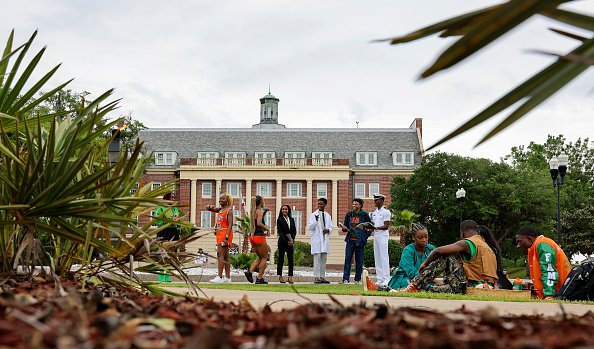

Florida A&M University students are renewing calls for administrators to end an immigration enforcement agreement, raising concerns about campus safety, transparency, and trust in university police.
Students at Florida A&M University are continuing to challenge the school’s partnership with federal immigration authorities, using the historically Black university’s homecoming festivities to renew calls for campus police to end their cooperation with U.S. Immigration and Customs Enforcement (ICE).
Members of FAMU Students for a Democratic Society (SDS) gathered on campus Friday (Oct. 23) to protest the university police department’s participation in the federal government’s 287(g) program. The agreement allows designated local and state law enforcement officers to perform certain immigration enforcement functions under ICE’s authority.
The demonstration comes months after students first organized against the agreement, arguing that the partnership could undermine trust in campus police and put immigrant and international students at risk. Organizers want university officials to revoke the agreement and address concerns about how the arrangement could affect the campus community.
The protest took place during FAMU’s homecoming, when students, alumni, and visitors gathered for celebrations on the Tallahassee campus. According to the Florida Phoenix, approximately eight students participated in Friday’s demonstration, which was led by the university’s SDS chapter.
Jayla Jones, a fourth-year political science student, told the outlet that the agreement was part of broader concerns about the direction of the university under President Marva Johnson, who took office in 2025.
View on Threads
The dispute centers on the scope of the 287(g) program and what it means for a university police department to take on immigration enforcement responsibilities. Under the program, participating officers can receive federal training and authorization to carry out specific immigration-related duties. The precise authority granted depends on the agreement and program model.
Florida’s partnership with ICE expanded in 2025 as Gov. Ron DeSantis pushed state law enforcement agencies and public institutions to cooperate with federal immigration authorities. FAMU’s agreement was signed in spring 2025, according to reporting by Capital B News.
Students have argued that the agreement could make some members of the university community reluctant to approach campus police, even when they need help. That concern extends to international students and other members of immigrant communities who may worry about how encounters with law enforcement could affect their immigration status.
In March, students staged an earlier protest at FAMU’s Eternal Flame, calling on the university to withdraw from the agreement. At the time, organizers also requested more information from administrators about the partnership and guidance for students seeking to understand its potential consequences.
The university has defended its relationships with law enforcement agencies as part of its broader campus safety efforts. In a statement previously provided to Capital B News, FAMU said it maintains longstanding partnerships with local, state and federal law enforcement agencies to support public safety. The university also said its officers do not contact, detain, question or arrest people solely because of suspected undocumented immigration status.
That distinction is central to the disagreement. University officials have emphasized their commitment to safety, while student organizers contend that formal cooperation with federal immigration authorities could discourage students from seeking assistance or feeling secure on campus.
FAMU is not alone in facing student opposition to such partnerships. Across Florida, students at multiple public colleges and universities have questioned agreements that authorize campus or local police to assist with federal immigration enforcement. The agreements have drawn scrutiny as immigration enforcement has become a growing source of anxiety for students, educators, and immigrant communities nationwide.
For historically Black colleges and universities, the debate also raises questions about institutional accountability and how campus policies affect students whose backgrounds and circumstances may make them particularly concerned about government scrutiny. At FAMU, the protest reflects an ongoing disagreement over whether the police partnership strengthens public safety or creates additional concerns for the people campus officers are expected to protect.
Student organizers have called on administrators to revoke the agreement and provide greater transparency about the university’s cooperation with ICE. Whether university leaders will reconsider the partnership remains an open question.
As students continue to press their demands, the dispute puts the university’s stated commitment to campus safety alongside concerns about immigration enforcement, student trust and the role of campus police.
Share
What's Your Reaction?
 Like
0
 Dislike
0
 Love
0
 Funny
0
 Angry
0
 Sad
0
 Wow
0