Damario Solomon-Simmons talks new book ‘Redeem a Nation’ on Tulsa reparations, and his connection to ‘cousin’ Kamala Harris
In a conversation with theGrio, Solomon-Simmons says now is the time to know the true story of Tulsa and how

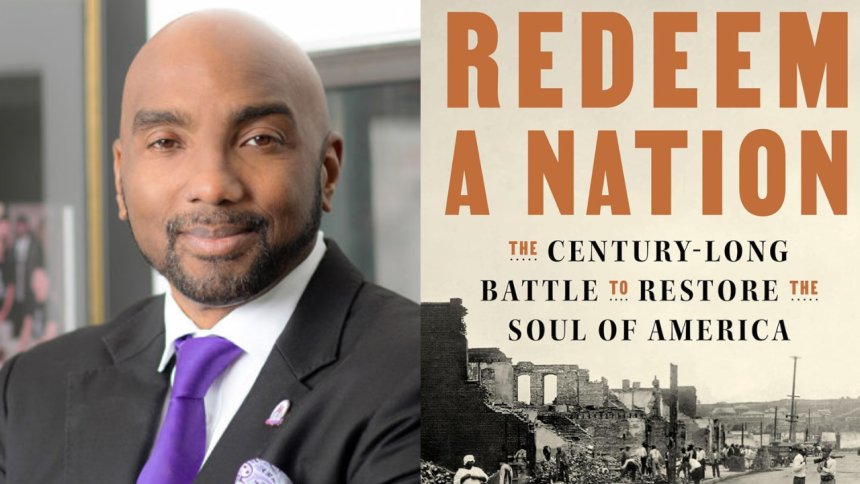
In a conversation with theGrio, Solomon-Simmons says now is the time to know the true story of Tulsa and how it can aid the Black community in its fight for reparations.
For more than 20 years, Damario Solomon-Simmons has used his legal career to seek justice for the survivors of the 1921 Tulsa Race Massacre. The horrific historical event that took place in his hometown decades before he was born left hundreds killed, thousands missing, businesses and homes destroyed, and no true repair for the state-sponsored white mob attack on the thriving Greenwood District, also known as Black Wall Street.
In his new book, “Redeem a Nation: The Century-Long Battle to Restore the Soul of America,” Solomon-Simmons chronciles the often unknown or misrepresented history of Tulsa and how he came to learn more about his own family history–including finding out his connection to his “cousin” Vice President Kamala Harris.
In a conversation with theGrio, Solomon-Simmons explains why writing this book was so timely and shares his thoughts about what Black communities can learn from the historic residents of Greenwood, a thriving, self-sufficient Black community. At a time when Black communities nationwide are grappling with the rolling back of voting rights, civil rights protections and suffering disproportionately during a national affordability crisis, the author says now is the time to know the true story of Tulsa and how it can aid the community more broadly in its fight for reparations.
This interview was edited for brevity and clarity.
TheGrio: You’ve worked for years to secure justice for Tulsa survivors in the courts. At what point during that journey did you think about or start writing this book, and why was it important for you to write it now?
Damario Solomon-Simmons: “I’ve actually been wanting to write this book for over 20 years. I actually started first trying to write the book on this issue back in 2003-2004. I couldn’t finish it out. And then I came back to wanting to write a book around 2013-2014 and didn’t finish it out. This iteration really started in 2021. I started the process of finding the agency and all that stuff, and then actually started the process of writing in 2022. So it’s been a four-and-a-half, five-year process, and it’s definitely been a very difficult process for a couple of reasons. I’m very busy, like actually doing the work. But then also writing a book like this and the way we’ve tried to present this information is so much different than writing for courts. …[I had to] put it in a digestible manner that can be relatable and personable for people to actually sit down and read…that took a lot of work. My first manuscript that I turned in last April was supposed to have 85 to 95,000 words. I had almost 200,000 words. Paring that down was difficult because, in my mind, everybody needs this context. That was a real journey for me, man, but I think we landed the plane on it.”
TheGrio: Thinking about the timeline of writing this book, this was during the Presidency of Joe Biden, the Vice Presidency of Kamala Harris. Part of the title is “Restore the Soul of America.” President Biden often talked about wanting to restore the soul of the nation, and he took steps like making Juneteenth a federal holiday, doubling down on DEI, and appointing more Black leaders in the federal government in history to sort of create some type of repair. How meaningful was that, having seen some of that up close, and what does President Trump’s sort of undoing or undermining of that progress say about the soul of the nation today?
Damario Solomon-Simmons: “An excellent question. I would definitely say the actions by former President Biden had meaning, but I think we’re seeing now that it was not substantial enough. Appointing individuals, even the very brilliant Supreme Court Justice Ketanji Brown Jackson] tremendous, historic, but what we really needed was systematic, substantial reparatory justice. And that’s something that they just did not deliver. You needed real reparatory justice of a Supreme Court that was already broken. President Biden resisted the call to expand the Supreme Court. He resisted the call to get rid of the discriminatory filibuster. He resisted the call for reparations, and we got holidays and those things. In and of itself, [those] are not bad things, but when they’re not actually coupled with real systemic change, we see what President Trump is doing, which is scary. It’s dangerous and just breathtaking, how quickly it’s happening. They’re actually doing substantial, systematic change. They’re not just putting some few people into different positions. They’re changing how voting will happen. They’re changing voting districts. They’re changing things that are going to impact us for generations to come. We must make a stand to say we don’t want to go back to the way it was, the status quo. We want to go back to something that’s never actually existed here. We want to really repair the systems of harm that started from the beginning of this country, and look at every system, the healthcare system, the economic system, the banking system, the justice system, and say, what do we need to do differently to actually repair the harm that’s going on? And that’s what this book is really about.” 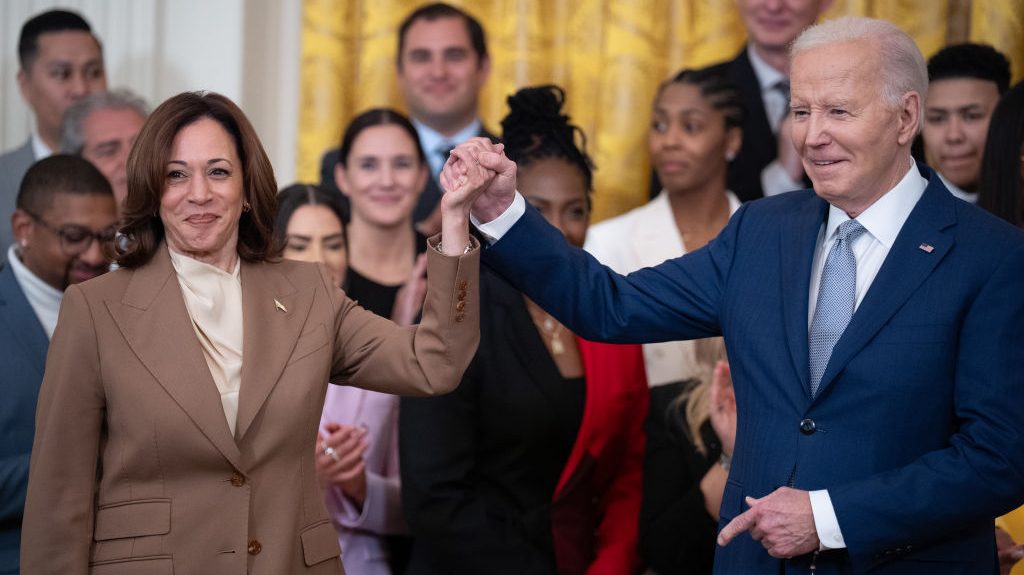
TheGrio: In the book, you lay out the “ThinkGreenwood Principles.” Tell us more about developing this framework and how and why Black communities across the country should be implementing it.
Demario Solomon-Simmons: “The Greenwood principles are something that I had been thinking about for a very long time. When I first started doing my presentations and discussions around the massacre, we always started at the massacre, which seems like that’s the way you should start. But as I continued to study, I said, no, we really need to start at why is the massacre is so devastating. Well, first you got to back up and say what was the community of Greenwood? What was so special about this community? How were these Black people able to build this literal Black Promised Land in a place where I grew up, Oklahoma, which is a racist, discriminatory place. Before Oklahoma was Oklahoma, Oklahoma was Indian Territory, and Indian territories was bringing these folks in all the Black towns. And then that made me have this deep dive into what I think is the attitude and the culture of the people of Greenwood. They have such a love for themselves and their community–community love. And I say that Greenwood and even a Tulsa Race Massacre is really a love story. When you think about these great, Black, wealthy, powerful men like J.B. Stradford and A.J. Smitherman, O.B. Mann, they put everything on the line to protect the life of a 19-year-old shoe shine boy named Dick Rowland, risking everything. These people came to Oklahoma from everywhere, looking for freedom. Once they got the community love, and then they had the Freedom Minds. They wanted to own, not just like individual ownership, but own themselves; to be able to go and come as you please, be able to own your culture. Then they circulated their wealth. It wasn’t just about monetary wealth…it’s circulating our culture, circulating the health, the wisdom. They were also willfully resilient. They continued to overcome: out of slavery, out of Jim Crow, out of the massacre, and even out of urban renewal. My goal with the ThinkGreenwood Principles and the book is to give people a blueprint, a state of mind, that wherever they are, they can create Greenwoods in their community.”
TheGrio: In the book, you warn about how white supremacy and anti-Blackness can masquerade as opinion and have a resurgence in the political climate that we find ourselves in. Thinking about the ThinkGreenwood principle of Willful Resilience, how can that and the historical endurance of Greenwood guide Black people navigating this current political reality?
Damario Solomon-Simmons: “I’ll give you a good example. Kevin Hart just had a roast. I didn’t watch it, but I heard about the white supremacist comedian who was on there and made the joke about George Floyd. That person shouldn’t even be involved in Black spaces. As Black people, we should resist that. If you look at the other communities, they will not tolerate that, right? They’re not going to tolerate jokes about tragedies. It’s not the time to joke with those who are looking to re-enslave us. I think about some of the nightly shows. I won’t use any names, but there’s one particular nightly show that comes on and they have a bunch of hosts around [the table], and it’s just complete nonsense. You have white supremacists on there, just spouting out all types of BS. These brilliant Black folks who are well-credentialed and very educated have to sit across and argue with these straight-up white supremacists as if this is opinion. This is bigotry. Racism and bigotry are violence. It creates violence, and it spawns not only physical violence, but policy violence. Both of those things kill people.”
TheGrio: Touching on the Tulsa reparations lawsuit that you led on behalf of the survivors of the massacre, you talked about your legal strategy of it being a “public nuisance.” Can you explain why framing the massacre and its ongoing aftermath that way was a strategic breakthrough in the case?
Damario Solomon-Simmons: “We knew that to bring a lawsuit and have it taken seriously, we had to find a hook for a credible lawsuit. The understanding in Oklahoma and 17 other states is that if there is a nuisance, it is ongoing. There is no statute of limitations, and the statute of limitations was our biggest impediment. People say it has been too long. There’s a limitation. So how do I explain it in the courts? As I explain in the book, when they had that big BP explosion down in Mexico, they had a camera showing millions of gallons of oil spilling out each and every day. That’s the nuisance. That’s what I call the triggering act. That’s the massacre. That’s when they’re dropping bombs. They’re killing people. That’s a triggering act. At some point, a month or two later, they plug that hole, so it no longer spills out. Yet, did pollution automatically leave the ocean? No. Did it automatically stop killing the wildlife that was impacted by that disaster? No. Did it help the fishermen who had lost all their livelihood, because all the shrimp were dead because of all the oil? No. It’s the same analysis. Yes, they may have stopped dropping the bombs and burning homes, but you never repaired the damage. It’s still ongoing. You never paid for the compensation. You never returned the land. You never held those that was responsible accountable. This wasn’t just my belief. Our mayor, at the time, Mayor G.T. Bynum in 2019, said that the racial and economic disparities we have in Tulsa were the direct result of the 1921 Tulsa Race Massacre. That’s why we were able to move forward with our case. We felt like we met the statute, chapter, and verse. And upon the Supreme Court, as we lay out in the book, we believe that they actually changed the law just to stop our litigation.“ 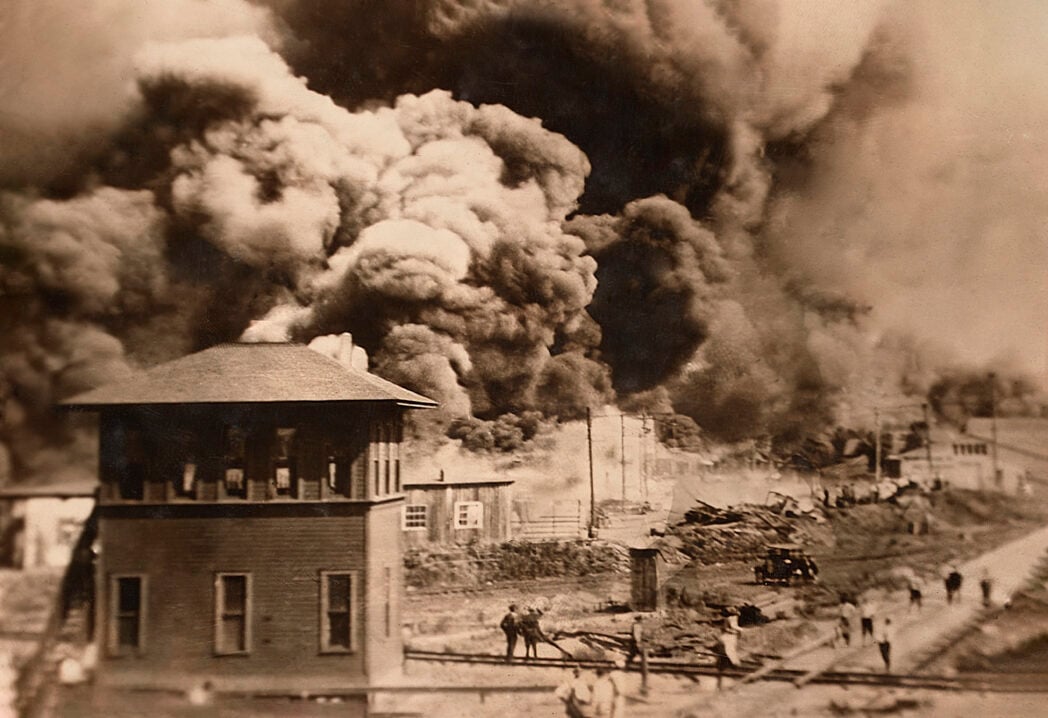
TheGrio: This is also timely in light of the Supreme Court’s ruling on the Voting Rights Act and the Virginia Supreme Court’s undoing of Virginia voters’ will in redistricting. What do you make of that parallel and what? What do we do in this moment when it seems like the systems that you’re fighting against are winning?
Damario Solomon-Simmons: “Well, the systems are winning. And that is just a very troubling reality. I don’t have all the answers. I think we are in a position that is unparalleled in our lifetimes. This is the worst, systematically and substantially, as far as the legal system, particularly at the federal level. As I lay out in the book, the number one thing we have to do in this moment is to remember who we are, remember where we come from, what we’ve experienced before. I talk about the nadir time period that our people lived in, post-Reconstruction, up to the 1950s. What we were dealing with — Jim Crow, redlining and lynching and sharecropping and convict leasing — all those things were happening at the same time. We were somehow able, through community love, to build HBCUs, some of our best HBCUs…our biggest and best fraternities and sororities that are around today. Some of our top leaders at the time were molded during this time period. Some of our best institutions, like Greenwood. While we are still trying to figure out exactly what we do, the number one thing we have to do is get back into community and remember that we are willfully resilient, and that we will suffer a lot of harm, but we can survive, we can thrive, and we have to believe that first and foremost. That’s how we redeem ourselves and redeem this nation if it’s ever going to have a soul.”
TheGrio: Even though the Oklahoma Supreme Court dismissed the lawsuit, how did those years of litigation successfully force the city of Tulsa to take some tangible action?
Damario Solomon-Simmons: “This is not just a story of defeat, obstacles, and disappointment, because we did do some things. When I first started on this work, 20-something years ago, everybody called this the Tulsa Race Riot. We changed the paradigm, or the nomenclature, from race riot to massacre for what it really is. When I started this work, it was right after a 75-year conspiracy of silence. I went to school on Greenwood Avenue at George Washington Carver Middle School. I never heard about the massacre. I never heard about Greenwood until I went to college. I made it a mission to never allow someone not to know about this, particularly if you’re from Tulsa, and now we have the Tulsa Race Massacre Commemoration Day, which is a citywide holiday. The Department of Justice under President Biden, they didn’t do what we wanted them to do, as far as criminal accountability, but they did do a report, and that means something that the federal government did an actual report and actually said from the federal government, yes, this was state-sponsored terrorism, yes, this was something that was planned. This was not just some spontaneous act of a few people, but this was a state-sponsored plan by thousands of whites. That’s in the historical record. We created enough pressure, enough advocacy, enough momentum that our new Black mayor was elected…that comes from our work, and…we’re still pushing him to do more. That came with the Greenwood Trust, where he has committed to raising $105 million to benefit survivors and descendants in the Greenwood community. It’s supposed to be operational about by next month. Now, is that going to happen? We don’t know yet, but we’re still pushing for it. When I started this work, they denied the mass graves even existed. Now they have found the mass graves. They’ve excavated over 50 victims, many gunshot wound victims, and we’re advocating for those families to be compensated, because they’re just now finding out for the first time that their loved one was killed during a massacre and put into a mass grave. We’re making that progress, and that’s why this book is a blueprint of what it takes to organize and galvanize a community, work together, be very specific about your demands, withstand and absorb all the losses and the disappointment and still move forward with a very clear goal.” 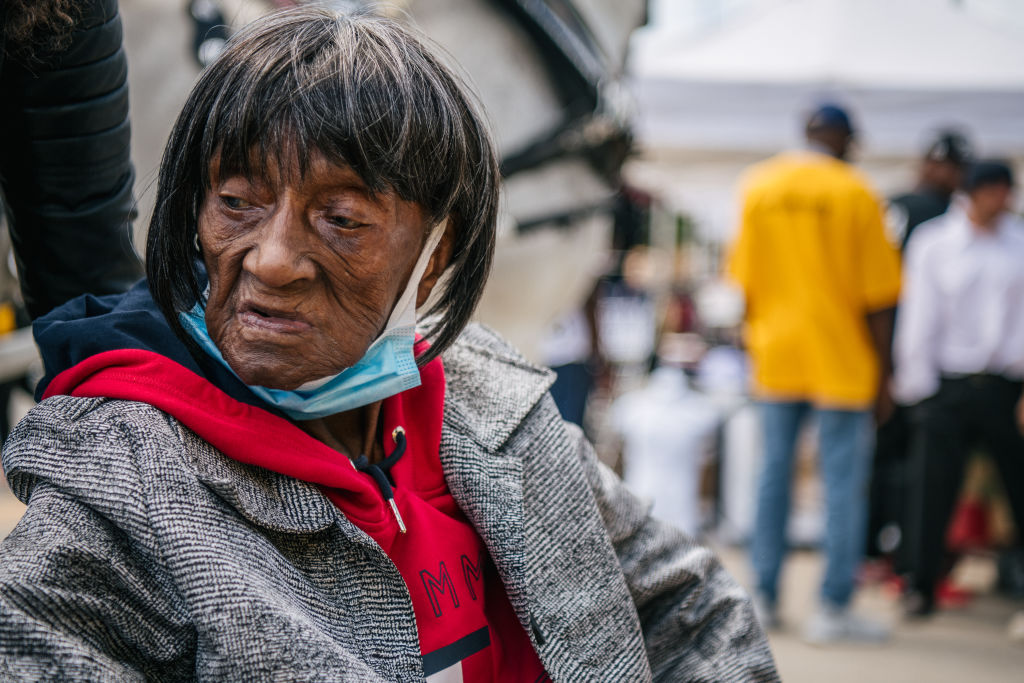
TheGrio: How hopeful are you about the future of reparations for Tulsa survivors and their descendants and would it help the psuh for broad reparations for the descendants of U.S. chattel slavery?
Damario Solomon-Simmons: “The reparations fight for Tulsa is key and in tandem to the reparations fight nationally. On a national level, they say it’s too long ago. No one’s still alive to suffer. We don’t know what they lost. All those things go out the window in Tulsa. We have one living survivor: Mother Lessie Benningfield Randle. She’s 111 years old. No one disputes that she suffered the massacre. No one disputes that her family’s home was damaged during the massacre. No one disputes that the massacre happened anymore. We have maybe thousands of photos. You have hundreds of insurance claims that were placed and never paid. I don’t think people really realize there is actual video of the Tulsa Race Massacre. If we cannot as a Black people have enough organization and power, if the actual survivors of the massacre cannot receive reparative justice, it makes it that much more difficult. I think people understand that instinctively. This is one of the reasons why people are drawn to Mother Randle, and were drawn to Mother Viola Fletcher and Hughes “Uncle Redd” Van Ellis and other survivors. Tulsa is just a microcosm of the Black experience.”
TheGrio: There was one tidbit of your family story that was fascinating and interesting. Your great uncle, Don Simmons, advised you to add Simmons to your last name, telling you that it would open doors globally. Can you share the story of how honoring that family legacy led to Vice President Kamala Harris recognizing you as a “cousin”?
Damario Solomon-Simmons: “It’s a crazy story, true story. I didn’t grow up knowing my Simmons side of the family, my father’s side. When I was in grad school, and I met this woman. She looks at me and says, ‘You’re a Simmons.’ Then I call my grandmother, and she’s like, Yeah, she’s right. A couple weeks later, my mom says, ‘Your grandma’s trying to get in touch with you. You have an uncle that wants to meet you.’ That was Uncle Don. He gives me the family book, which is called “Staking the Claim: The Jake Simmons Jr. Story.” That was [Uncle Don’s] father, who was a very famous, international black oil man. My family had been over in Africa doing business, went to Tuskegee…went to school with all these African heads of states and African secretary of states. He told me, ‘Who the hell is Solomon? Nobody knows the Solomon name. He said, ‘If you take the Simmons name, this is going to help you worldwide. I was like man, I’ve been Solomon all my life. I’m good, you know. When he got ill and passed, I just wanted to honor him. That’s why I added the Simmons. And man, it paid dividends immediately. I went to D.C. during law school…and I got connected with Ed Perkins, who was the first Black Ambassador to South Africa, and he was very close to the Simmons Family, so he got me the externship with his son in law at the State Department.
My Uncle Don’s brother Ken Simmons was a professor at Berkeley, and he was involved in the anti-apartheid movement in South Africa. [He and his family] lived in Oakland. I’m at this law firm in Tulsa called Riggs Abney, and we had a partner there named Drew Edmondson. He comes back from a conference and says, ‘I met your relative. She’s the [attorney general] for state of California, and she’s about to run for Senate: Kamala Harris. I looked her up and I was like, I don’t think she’s my cousin. He said…she knew the Simmons. I kind of forgot about it. Then she runs for gets in the Senate and she runs was president, the first time. When she got elected Vice President, my cousin Ken Simmons II posted on Facebook, congratulations to my cousin Kamala Harris for being elected the first Black Vice President. I’m like, what? Because I know Ken is my blood cousin. He [later] tells me the story of how his father, Ken Sr., introduced her parents, and walked her mother down the aisle when her parents got married. Ken II [and Kamala] were like brother and sister. He was more like a godfather to her. In 2021, my friend Angela Rye connected me to the Vice President’s office because the survivors wanted to meet the vice president. Her people got back to me and said, ‘She would love to meet the survivors, but she wanted me to ask are you related to the Simmons out of Oakland? And I said, Yes, I am. But that’s the story.”
Share
What's Your Reaction?
 Like
0
Like
0
 Dislike
0
Dislike
0
 Love
0
Love
0
 Funny
0
Funny
0
 Angry
0
Angry
0
 Sad
0
Sad
0
 Wow
0
Wow
0