Why Obama looms over Trump’s reported deal to end the war in Iran
Despite the president’s constant references to President Obama’s 2015 Iran nuclear agreement, critics say Trump’s deal is unlikely to differ

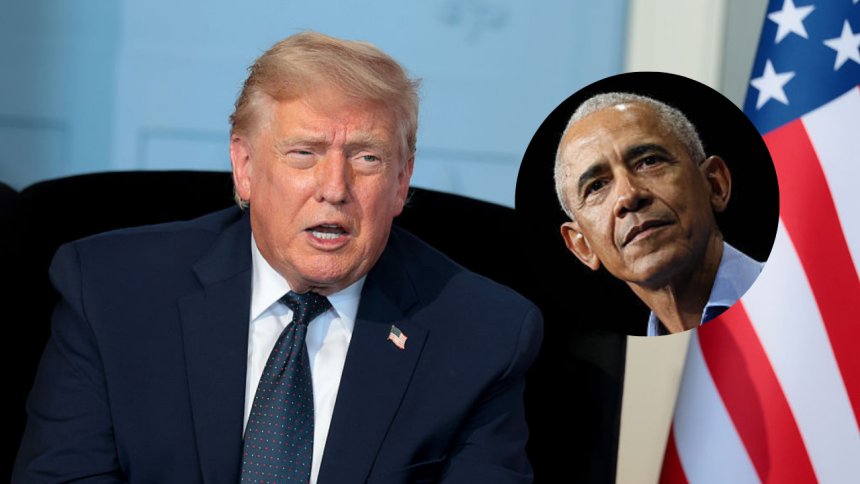
Despite the president’s constant references to President Obama’s 2015 Iran nuclear agreement, critics say Trump’s deal is unlikely to differ from it.
As the White House touts a deal reached between the United States and Iran, President Barack Obama still looms large over President Donald Trump‘s consequential work to end the more than 100-day-long war in the Middle East that is wreaking havoc on the economy.
On Monday, the Trump administration signed a preliminary agreement with Iranian leaders to resume traffic through the Strait of Hormuz, where more than 25% of the world’s oil travels by sea but has been largely blocked for months. The New York Times reports that American and Iranian officials “put off discussions of their most serious disagreements until a later round of talks.” In other words, the issues at the very heart of Trump’s war, including the complete end to Iran’s nuclear production, remain unresolved, signaling no true end in sight to the conflict between the U.S. and Iran.
What’s more, many of Trump’s critics say that, despite the president’s touting of his handling of the Iran war, he is unlikely to come out of the conflict with a different or better deal than the one President Obama secured in 2015.
The Joint Comprehensive Plan of Action (JCPOA) allowed Iran to produce low levels of nuclear energy, namely Uranium, under the agreement that the U.S. would be allowed to surveil and monitor Iran’s nuclear production. Trump, who pulled out of the deal in 2018, has repeatedly referenced the Obama deal since launching offensive strikes in Iran on Feb. 28. After reaching the reported memorandum of understanding, Trump “repeatedly compared” his agreement to Obama’s, telling the Times that his would assure that Iran “cannot develop or purchase a nuclear weapon.”
Trump has teased apparent provisions and internal discussions about his Iran deal, saying he wants Iran to suspend its nuclear enrichment for up to 20 years, but is also willing to allow Iran a limited amount of nuclear energy production. The president told the New York Times, “They can never go beyond a certain amount,” and when asked whether his agreement was the same as Obama’s, he added, “They can only enrich for nonmilitary purposes. Forever.”
During a sit-down interview on “Good Morning America,” which is airing in full on Wednesday, President Obama told Robin Roberts that he is
“doubtful” that a Trump deal with Iran will be “significantly different or a significant improvement from the deal that we had in the first place,” defending his 2015 deal for working “for a long stretch of time before we, the United States, pulled out of it.”
As theGrio previously reported, foreign policy and national security experts say the Obama deal was effective because it began with diplomacy, bringing Iran to the negotiating table without resorting to armed conflict. The Obama administration also secured buy-in from neighboring Arab nations, unlike the Trump administration, which has largely only worked alongside Pakistan in its negotiations. Experts also note that Iranians are less trusting of the U.S., given Trump’s decision to withdraw from the 2015 deal just three years after its adoption. The president’s critics say that Trump is essentially working to fix a problem he created. 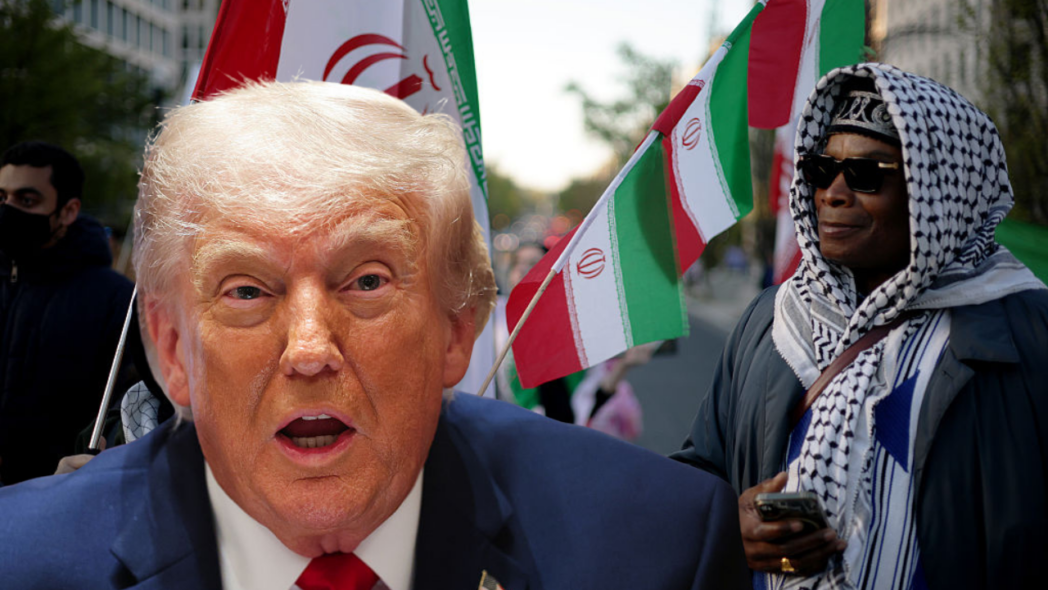
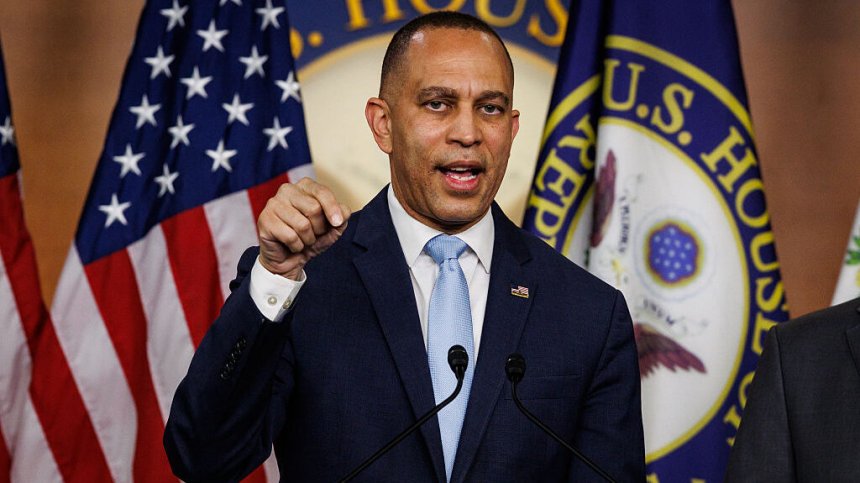
“It was Donald Trump who made the decision to actually rip that agreement up because, apparently, he suffers from Obama derangement syndrome,” U.S. Rep. Hakeem Jeffries, the Democratic leader of the U.S. House of Representatives, told Kristen Welker, host of NBC’s “Meet the Press.”
Jeffries explained, “That agreement that had been reached by President Obama actually resulted in Great Britain, France, Germany, South Korea, India, Japan, and, thanks to the leadership from President Obama and his administration, China and Russia all engaged with Iran to limit their nuclear aspirations.”
Obama told GMA of any potential deal, “I’m hopeful that bombing stops, and ordinary people are no longer suffering as a consequence of the war.”
He continued, “Then, in retrospect, it’s a reminder that on a lot of difficult foreign policy problems, the notion that we can just bully our way or bomb our way to solutions may sometimes seem appealing, but the fact of the matter is, is that taking the time to explore diplomacy and exhaust the possibilities of coming up with deals that don’t solve 100% of the problem, but solve 80 90% of the problem, all avoiding the necessity of going to war.”
The 44th President of the United States added, “You’d think we would have learned that lesson by now, but it seems like every so often we have to relearn that lesson again.”
Political analyst Reecie Colbert said Trump’s yet-to-be-published MOU with Iran will “absolutely not” be different or better than the deal struck by Obama.
“If there is a deal, it would have as much credibility as the so-called ceasefire that Israel has with Hamas, yet people are getting bombed every day in Gaza,” Colbert told theGrio. “I don’t think that any deal has credibility; any deal that Trump has is rebranding the conflict.”
She added, “There’s still going to be hostilities, and there’s still going to be issues that are unresolved for a very long time.”
Share
What's Your Reaction?
 Like
0
Like
0
 Dislike
0
Dislike
0
 Love
0
Love
0
 Funny
0
Funny
0
 Angry
0
Angry
0
 Sad
0
Sad
0
 Wow
0
Wow
0