Why Black women everywhere should pay close attention to the Alexia Moore case
Alexia Moore was arrested in Georgia on March 4 and charged with murder on suspicion of inducing her own medical

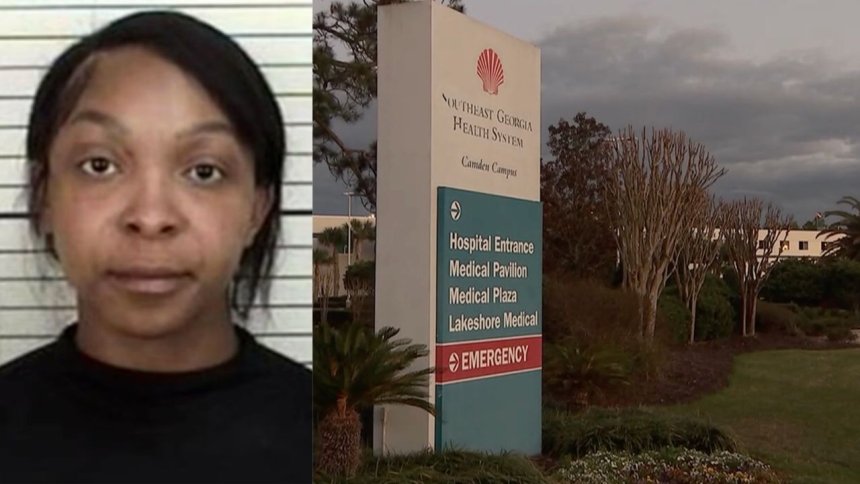
Alexia Moore was arrested in Georgia on March 4 and charged with murder on suspicion of inducing her own medical abortion.
Reproductive justice advocates are speaking out after a woman in Georgia was arrested and charged with murder under suspicion of using pills to end a pregnancy.
On March 23, 31-year-old Alexia Moore was released from jail in Camden County, Georgia, on $2,001 bond. The added dollar was symbolic for the murder charge the judge feels would be very difficult to move forward with, given the lack of evidence in her case. Moore was first arrested on March 4, two months after she arrived at a local emergency room pregnant and suffering from severe abdominal pain, multiple outlets, including The Current and WTVC, reported.
Doctors later delivered a premature baby estimated to be between 22 and 24 weeks who survived for several hours, though the age of the fetus was not in the initial police report.
Prosecutors have since alleged that in late December, Moore used the drug Misoprostol, a medication commonly used in medical abortions, to induce her own abortion. According to court documents, she was brought to the emergency room by a friend on Dec. 30 after developing extreme abdominal pain after taking the medication along with pain pills. According to The Current, a hospital security guard who is also a retired law enforcement officer filed the report with authorities.
Moore, a mother of two sons ages 7 and 9 and a military veteran, is facing a charge of malice murder, one felony count of possession of a controlled substance, and one misdemeanor count of possession of a controlled substance. If indicted, she could become the first woman charged with murder under Georgia’s six-week abortion ban since the state passed the law in 2019.
However, as previously stated, judges during her bond hearing on Monday indicated there may not be sufficient evidence to support a malice murder charge.
As her case, which experts say could test Georgia’s abortion restrictions, continues to unfold, it comes amid other high-profile cases, including one in Florida involving a woman who had to defend her decision not to undergo a C-section before a judge while 12 hours into labor. Reproductive justice organizations such as SisterSong, based in Atlanta, and Pregnancy Justice, based in New York City, say the case raises serious concerns.
“What is happening in Georgia, in Florida, and across this country is not new. SisterSong has been bearing witness to these attacks on pregnant people for decades. And we will not be silent,” Monica Simpson, executive director of SisterSong, told theGrio via email Tuesday.
Simpson also highlighted concerns about how aspects of the case—including the suggestion that Misoprostol is a controlled substance, when it was instead classified as a dangerous drug in 2024 (a separate designation)—are being used to criminalize Moore.
“Let us be clear about the facts. Misoprostol is not a controlled substance in Georgia. It is an FDA-approved medication used for abortion care, miscarriage management, and labor induction,” Simpson explained. “Pregnant people have a legal right to access it. When healthcare providers and prosecutors misrepresent the law to criminalize pregnant people, they are not upholding the law. They are weaponizing it.”
Referencing the Florida case, she added, “We have watched Black women forced into virtual courtrooms while actively in labor, compelled to argue for the right to make decisions about their own bodies in the middle of childbirth. We have watched healthcare facilities that should be sanctuaries of healing become sites of surveillance and punishment. This is not healthcare. This is a war on pregnant people, and Black women are on the front lines.”
Echoing those same sentiments, Pregnancy Justice legal director Karen Thompson told theGrio during a brief interview Tuesday that in addition to being “tired of the casualness with which Black women’s lives are treated,” the case also carries an urgent warning, particularly for Black women across the country.
“This, for me, feels like the canary in the coal mine, except that we’ve already been in the coal mine, and the canary has been sick for a very long time,” Thompson said. “We need to really keep our eyes on this situation, and we need to keep our eyes on the increasing pace of it, because it’s not going to stay still. It’s going to come for Black women in a very different way than when it comes for white women.”
Thompson also highlighted what she described as a “ripple effect” following the fall of Roe v. Wade in 2022. While that decision did not create the criminalization of abortion, she said it removed the “guardrails,” allowing six-week abortion bans like Georgia’s to take hold and creating additional complications ranging from insurance coverage barriers to patients avoiding care out of fear of legal consequences.
“At the end of the day, it is just going to make those maternal mortality rates worse,” Thompson said, adding that the continued criminalization of self-managed healthcare “is really throwing us into some very dangerous territory.”
Advocates say cases like those in Georgia and Florida show the need for greater understanding of the complexities of reproductive health and reproductive justice, which differs from reproductive rights and was created by Black women to ensure their voices and experiences were included in the fight for bodily autonomy and healthcare equity.
“Criminalizing miscarriages, premature births, or health care will not protect children or families. Alexia Moore should have the right to decide whether she wanted a child, not to mention a chance to heal from such a frightening experience,” the National Organization for Women (NOW) said in a statement.
Ultimately, legislation that protects and empowers women’s healthcare decisions is crucial to preventing cases like these. In the meantime, those in need of support are encouraged to reach out to reproductive justice organizations such as SisterSong and Pregnancy Justice.
Share
What's Your Reaction?
 Like
0
Like
0
 Dislike
0
Dislike
0
 Love
0
Love
0
 Funny
0
Funny
0
 Angry
0
Angry
0
 Sad
0
Sad
0
 Wow
0
Wow
0