‘Why are we OK with it?’: Michelle Obama challenges how we treat women in the public eye
Former First Lady Michelle Obama reflects on power, fashion, public perception and why choosing better leaders. Former First Lady Michelle

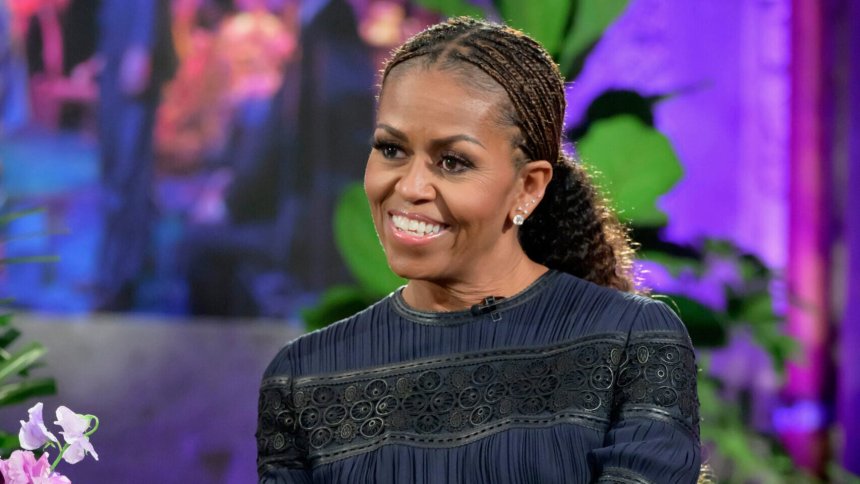
Former First Lady Michelle Obama reflects on power, fashion, public perception and why choosing better leaders.
Former First Lady Michelle Obama has long understood that visibility comes with a price for women—especially for Black women. In her latest book, “The Look,” she put language to a truth many have lived, but few with her platform have articulated so plainly.
“When you’re a woman in the public eye, you’re often reduced first and foremost to your physical appearance,” Obama wrote. “If someone wants to take something away from a woman, they will try to rob her of her femininity, her beauty.”
The observation feels especially timely as female reporters face relentless attacks rooted in looks, gender, and stereotypes from political figures sitting in the Oval Office.
When asked why this kind of cruelty persists in a conversation with MS Now’s Jonathan Capehart, Obama’s response was simple: “We have to pick leaders that don’t do that. I can’t get into the minds of people who are cruel and mean. My empathy in me says that it comes from a place of brokenness and insecurity. And at a certain stage in life, it is not fixable. It is planted in there.”
Instead of focusing solely on the perpetrators, Obama turned the lens inward. Holding up the mirror to society’s tolerance for this behavior and the quiet complicity that allows it to thrive, urging everyone to ask themselves why.
“Why are we OK with it? You know, people are who they are. So in the present-day situation, we’re here because either we did do something stupid or we didn’t do anything, and we’re all culpable in it,” she emphasized. “We’ve got to want more for ourselves first. I think the conversation with us as women and as Black women and the men that we’re with, we’ve got to figure out, well, are you with us? Are you with you? Are you going to vote in your [own] interest? Are you going to vote in our interest?”
That internal reckoning partially inspired “The Look,” a book in which the former First Lady reflects not only on her sartorial choices but also on how something as simple as a sleeveless black sheath dress during her first year in the White House became fodder for outsized scrutiny and coded criticism.
“‘The Look’ to me starts with us because people will call you out of your name, but how it affects you starts with how we feel about ourselves,” she shared, noting how powerful fashion is in this conversation. “Fashion is a powerful thing in our lives. We’re all into it. It’s a multi-billion-dollar industry.”
“It is fun, it is beautiful, it’s all the things. But it can also be confining and restrictive and expensive and limiting, and it can also be used to make women feel small and less than and we should be talking about it openly and fully and honestly, because if we’re not doing it, how do we expect our husbands, our bosses, the people in our communities, to know where we what we feel, what we struggle with, if we’re not talking about it out loud,” she continued.
Now, after years of racing the clock to define herself before news outlets and opponents created a narrative about her, Obama has unapologetically discussed her experience living under the international public eye. And now, when asked why she doesn’t shy away from these conversations about diversity, especially at a time when DEI has become a scarlet letter, her answer was simple: “Because I can.”
“I’ve earned the leverage. I am in control of my life,” she said, explaining that not everyone has the freedom to push back without consequence. For young women trying to survive workplaces that police their bodies and hair, her advice is rooted in realism, not judgment. Sometimes, she said, you conform long enough to secure stability. “You don’t want to put yourself in a position where you have no power, no money, no resources.”
That leverage, she explained, is something you earn over time—and she has reached a place where it can no longer be taken from her.
“I am not trying to get a vote. I have a job. I control my own life,” Obama concluded. “I am 60-something years old. I’m wiser. I’m more centered in who I am. What better person at this time to have these conversations, honestly? You all know me now…the world knows me now, so you know my depth, you know, my caring.”
Share
What's Your Reaction?
 Like
0
Like
0
 Dislike
0
Dislike
0
 Love
0
Love
0
 Funny
0
Funny
0
 Angry
0
Angry
0
 Sad
0
Sad
0
 Wow
0
Wow
0