What Black Americans should know about Trump’s strikes in Iran
The joint U.S.-Israeli military operations have heightened national security concerns and will drive up gas prices. The joint U.S.-Israel strikes

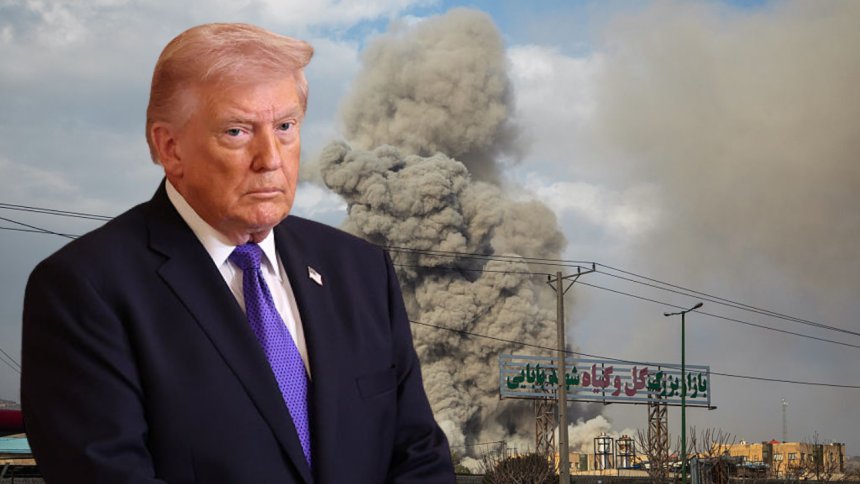
The joint U.S.-Israeli military operations have heightened national security concerns and will drive up gas prices.
The joint U.S.-Israel strikes in Iran on Feb. 28 leave many questions in the coming days and weeks — one of the most notable being whether the United States is at war with Iran. While the United States has not officially declared war in the Middle East, the U.S. is engaged in a deadly and widening military operation called Operation Epic Fury. President Donald Trump said the military operation could last four to five weeks; however, the president said military actions could last longer.
On Monday, March 2, Trump said he ordered the operation because Iran “refused to cease their pursuit of nuclear weapons” and that the Islamic nation’s ballistic missile program was “growing rapidly and dramatically.”
“This posed a very clear, colossal threat to America and our forces stationed overseas. The regime already had missiles capable of hitting Europe and our bases, both local and overseas, and would soon have had missiles capable of reaching our beautiful America,” said Trump.
On Tuesday, the Trump administration will brief members of Congress, as it did for top members of the U.S. House and Senate. However, Democrats are already skeptical of Trump’s justification and the operation’s ultimate outcome, and are pushing for a war powers resolution to limit or potentially end Trump and Israel’s military actions.
Are Americans safe?
Most Americans are likely wondering if they are safe when they hear words like “war” and “attack” as they relate to a foreign adversary.
Asha Castleberry Hernandez, founder of the Diversity in National Security Network, told theGrio many questions remain, such as what is the U.S.’s strategic plan to carry out its mission while also ensuring as least casualties as possible and that Americans, including tourists, currently stuck in the Middle East, are able to evacuate and return home safely.
To date, four U.S. troops have been killed by retaliatory strikes by Iran. That number is expected to climb given the injuries military servicemembers have already sustained. President Trump argued that deaths as a result of the Middle East conflict are essentially inevitable, saying, “That’s the way it is.”
The conflict in Iran has already expanded, with Israel striking the terrorist group Hezbollah in Lebanon. In addition, Pakistan and Afghanistan are also engaged in fighting, making the entire Middle East region “more fragile” and “volatile.”
Castleberry-Hernandez, a U.S. Army Reserve major who worked in the Middle East, explained that Trump’s remarks are “unsettling,” as based on what is known, the conflict in Iran is “coming off as unjust” and “more of a war of choice.” She told theGrio, “People don’t want to die as a result of something not necessarily perceived as an imminent threat.”
The national security expert explained that Iran said it would target Americans, whether they be military troops, contractors, or tourists. As a result of any such loss of life, Castleberry-Hernandez said a “boots on the ground” scenario becomes more likely.
What’s more, the threats to safety aren’t just against Americans currently in the Middle East. Major cities like Washington, D.C., New York City, and Los Angeles are taking additional safety precautions. In Austin, Texas, a naturalized U.S. citizen from Senegal killed two and injured 14 others following the strikes in Iran. The shooter wore Iranian paraphernalia, and the incident is being investigated as a potential act of terrorism.
“This happens when we’re engaged with wars overseas, and we definitely need to be more on alert, invest more in protective measures. And it’s not just physicality, it’s also the cybersecurity,” Castleberry-Hernandez told theGrio.
However, there could be a silver lining, as Castleberry-Hernandez said, in terms of the endurance. She believes the conflict against Iran will be “short-term.”
Gas prices are expected to skyrocket
As is often the case in war or armed conflict overseas, the military operation in Iran is driving up gas prices. Since the U.S. and Israel launched their joint strikes, the cost of natural gas has jumped as a result of the Strait of Hormuz — one of the largest oil routes in the world — being intentionally blocked by Iran.
U.S. oil rose 6.3% to $71.23 per barrel, which means a higher cost of gas for U.S. drivers and other goods is likely imminent. The timing could not be worse for U.S. consumers who have been feeling economic pain from inflation. Drivers could see those higher gas prices within weeks, or even sooner. In the event of long-term disruption to ship traffic in the Strait of Hormuz, prices could continue to climb.
Any disruption to global oil markets and a prolonged spike in gas prices could be politically damaging for President Trump and Republicans in the upcoming 2026 midterm elections.
The affordability crisis remains the top concern for Americans, including Black Americans, who are seeing disparate harms in Trump’s economy.
“The American people want us to focus on making their life better and making their life more affordable; not getting involved in another endless war in the Middle East that is going to end in failure,” said Rep. Hakeem Jeffries, the Democratic leader in the U.S. House. “This administration somehow found the resources, has found billions of dollars for bombs, but can’t find any money to actually bring down the high cost of living here in the United States of America.”
Share
What's Your Reaction?
 Like
0
Like
0
 Dislike
0
Dislike
0
 Love
0
Love
0
 Funny
0
Funny
0
 Angry
0
Angry
0
 Sad
0
Sad
0
 Wow
0
Wow
0