Tuskegee University’s new dress code bans bonnets, du-rags and bedroom shoes in class
The HBCU is also tightening its attendance and cellphone policies as part of a broader push to prepare students for

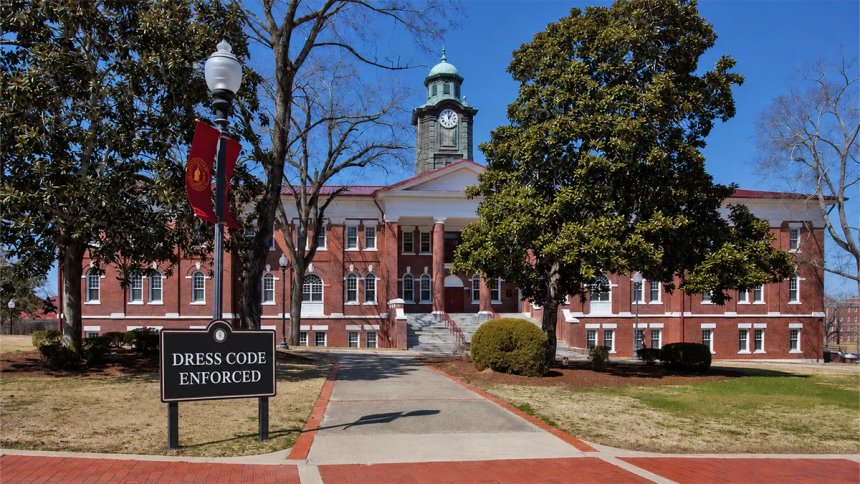

The HBCU is also tightening its attendance and cellphone policies as part of a broader push to prepare students for life after graduation.
Tuskegee University students will be expected to put down their phones, show up for class and leave certain casual clothing in their dorm rooms under a new set of campus policies.
In a message addressed to parents of incoming students, Tuskegee President Dr. Mark A. Brown announced new expectations governing student attire, attendance and cellphone use ahead of the upcoming academic year.
The Alabama HBCU’s dress code prohibits students from wearing revealing clothing in classrooms, dining areas and official university settings, including Convocation. Bedroom shoes, bonnets and du-rags will also be prohibited in classrooms and the university cafeteria.
Students attending business meetings and other professional events will be expected to wear business suits and appropriate shoes.
Brown said the changes are not intended to prevent students from enjoying their college experience. Instead, he presented the policies as part of Tuskegee’s responsibility to prepare its students for professional environments after graduation.
“The goal here is not meant to restrict students from enjoying the Tuskegee Experience, but to prepare them with a solid foundation for the workforce they will enter once they leave Tuskegee,” Brown wrote, according to HBCU Gameday.
The new dress requirements could revive a familiar conversation within Black communities about respectability, professionalism and the role HBCUs should play in shaping how students present themselves.
For generations, historically Black colleges and universities have emphasized professional preparation alongside academic instruction. That tradition developed in a society where Black graduates were often expected to arrive more polished, prepared and credentialed than their white counterparts simply to receive the same opportunities.
Many HBCU students and alumni may see Tuskegee’s policy as an extension of that tradition. Others may question whether banning bonnets and du-rags, which are commonly used to protect Black hairstyles, reinforces narrow ideas about what professionalism should look like.
Tuskegee’s new expectations extend beyond clothing.
Students will no longer be permitted to use their cellphones during class unless instructed to do so by a professor. Phones should otherwise be turned off to prevent them from disrupting instruction.
Brown also emphasized that students are required to attend their classes and said the university plans to monitor attendance more closely. While skipping class may have become a running joke within college culture, Tuskegee is treating regular attendance as a foundational part of academic success.
The changes arrive as the university expects to welcome its largest incoming class in 32 years. Brown described Tuskegee as entering a period of transformation and renewal, with the new policies forming part of a larger effort to strengthen student outcomes.
That effort will also include a greater focus on career readiness. Tuskegee students will be required to complete internships, identify professional certifications connected to their career goals and develop résumés before graduating.
The university reportedly offers more than 30 professional certifications to students at no additional cost.
Tuskegee has long been associated with an educational philosophy that combines academic study, discipline, leadership and practical preparation. Founded in 1881 with Booker T. Washington serving as its first principal, the institution has produced generations of Black professionals, scholars, scientists, artists and military pioneers.
The university’s existing student handbook tells students that their education should equip them with the skills needed to compete in a global economy. It also describes Tuskegee’s mission as extending beyond the lecture hall, with university leaders expected to provide students with guidance, even when that direction may be uncomfortable.
Whether students view the new rules as valuable preparation or excessive control may become clearer once they return to campus.
For now, Tuskegee is making its expectations plain: Students are arriving on campus not only to earn a degree, but to begin preparing for the professional world waiting beyond it.
Share
What's Your Reaction?
 Like
0
Like
0
 Dislike
0
Dislike
0
 Love
0
Love
0
 Funny
0
Funny
0
 Angry
0
Angry
0
 Sad
0
Sad
0
 Wow
0
Wow
0