The Who We Are Project asks whether America is at a tipping point
Chicago Mayor Brandon Johnson opens a new conversation series by reflecting on why he believes Barack Obama’s presidency marked one

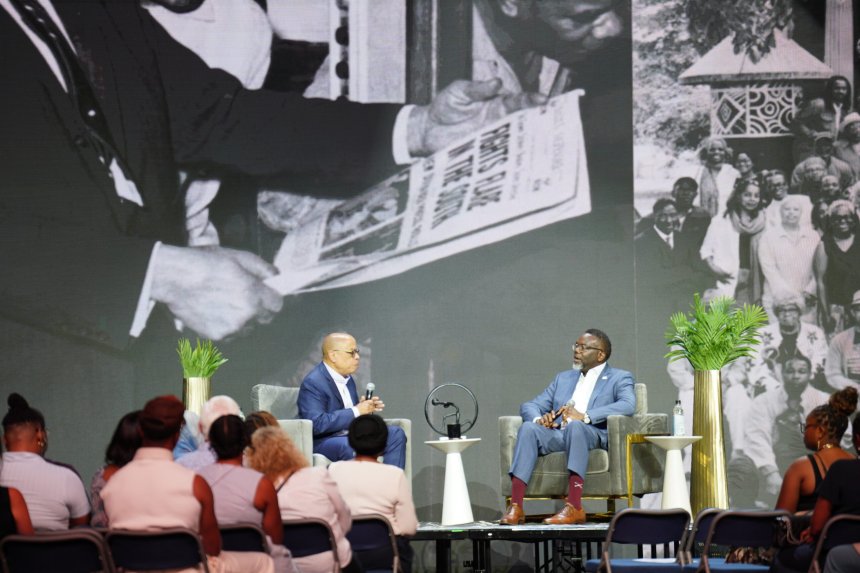

Chicago Mayor Brandon Johnson opens a new conversation series by reflecting on why he believes Barack Obama’s presidency marked one political tipping point and why America may now be entering another.
America’s 250 years have been shaped by many turning points, especially for Black Americans.
At every period in history, from the founding of the United States as a republic and the American Civil War to the abolition of slavery and the expansion of equality during the Civil Rights Movement, a collective of voices sparked a movement for change.
Jeffery Robinson, founder and executive director of The Who We Are Project, describes these moments as “tipping points,” in which individuals are presented with a set of facts that causes them to second-guess the state of things around them.
“It will make people have moments of cognitive dissonance, where they’re saying, ‘Wait a minute, this just isn’t right.’ And when people have those moments, that’s what makes them do things that are different,” Robinson tells theGrio.
Understanding this phenomenon, Robinson, a former criminal defense attorney and deputy legal director at the ACLU, argues that the U.S. is currently navigating a much larger, structural tipping point regarding its history of anti-Black racism. The Harvard Law graduate emphasizes that societal reckoning is a prolonged process, noting that “a country with a 400-year history doesn’t have a tipping point that lasts for an event or a moment, it can last for decades.”
In a new conversation series, “All Roads,” launched by The Who We Are Project, Robinson talks to people from different walks of life to interrogate America’s centuries-long history of white supremacy and anti-Black racism, as well as the “tipping points” that awakened them in the context of racism in America.
Chicago Mayor Brandon Johnson discusses Obama as a ‘tipping point’
In the premiere of the “All Roads” conversation series, Robinson sat down with Chicago Mayor Brandon Johnson to mark the 250th commemoration of the United States. Johnson, a former public school educator, reflected on the nation’s many tipping points, acknowledging that he believes the U.S. is currently at a crossroads.
“This tipping point is actually quite familiar. It’s a sort of regular occurrence in our history,” he tells Robinson. “You think about how young this nation is, and how long Black folks, in particular, have been subjugated to white supremacy. It’s an actual remarkable journey for our people, all things considering.”
As Black Americans see setbacks to decades of economic and political progress amid the Trump presidency, from jobs to voting rights, Mayor Johnson described this moment as a “re-reconstruction,” in reference to the period after slavery was abolished, when newly freed Black people saw historic gains in freedom, politics, and education. However, that period of progress over the span of 12 years was soon reversed with the rise of racial terror and segregation during the Jim Crow era.
Mayor Johnson drew parallels to today, as the U.S. continues to experience a decade-long “backlash” to the historic election of Barack Obama as America’s first Black president. 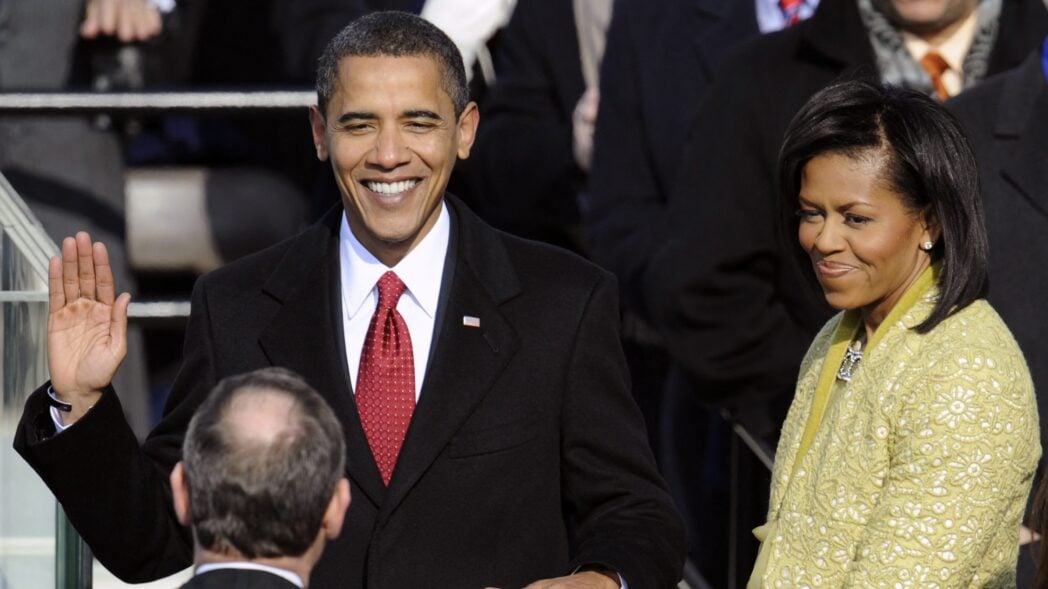
“If you think about what happened after President Obama was elected, white supremacy lost its mind, as if that could happen even more, but they did,” the Chicago mayor told Robinson. “The fear that President Obama’s ascension invoked in people…it was ideologically based. It was cloaked in religion. There are a lot of patterns here that we could point to.”
Tipping points are also driven by leaders and people willing to take action for change, something Johnson says he has been trying to do as mayor, particularly in addressing the residue of America’s racism and how it shows up in Chicago.
The mayor pointed to policies from his administration, such as a $21 million fund dedicated to helping first-time home buyers with closing costs and down payments of up to $70,000, and public safety investments to push back against the historical reliance on “jails and incarceration” to manage safety in Black communities.
Johnson said his policies are driven by convictions largely shaped by his childhood in Chicago during the Ronald Reagan presidency. He said he advocates for workers’ rights and other community-driven policies because of his father, a working-class pastor who fostered several children alongside Johnson and his siblings. As a member of the NAACP and the AFSCME union, Johnson’s dad raised him with a consciousness of civil and labor rights.
As his family struggled to make ends meet despite his father being a public employee, Johnson said he quickly realized that Reagan’s “trickle-down economics is crap.” 
“I grew up with this understanding that we have to look out for one another, that we have to take care of one another, that labor, all labor, should have dignity, and that there was a concerted effort to concentrate wealth into the hands of the few, while the rest of us had to struggle and beg, borrow, and plead,” Johnson shared. “So, through all of that, I managed to gain that type of consciousness to understand what my responsibility has to be, which is really to just serve.”
Robinson says it was important for him to premiere the “All Roads” series with a leader like Mayor Johnson for various reasons, including the city’s rich Black history, founded by the free Haitian pioneer Jean Baptiste Point du Sable. As an “important” mayor of one of the country’s most storied, largest cities, Robinson also felt it was a great way to draw parallels among cities and towns across the country.
“I’m thrilled that we were able to do this,” he told theGrio. Robinson hopes the podcast series and the work he is doing with The Who We Are Project can help the country navigate its tipping-point era.
But ultimately, he argues, that tipping point starts from within, which is why he’s interested in documenting the personal tipping points of his guests, things that later prompted them to act on advocacy for social change.
One of those guests is a former white supremacist who, after being incarcerated for a bank robbery, turned his life around, including removing a Nazi tattoo and running an organization working with Black prisoner groups to support incarcerated people in the state of Washington.
“A lot of that had to do with him healing,” says Robinson. “And so I see that as if this man can change, don’t tell me that people can’t change, and so that’s one of the reasons that we’re doing this project.”
Share
What's Your Reaction?
 Like
0
Like
0
 Dislike
0
Dislike
0
 Love
0
Love
0
 Funny
0
Funny
0
 Angry
0
Angry
0
 Sad
0
Sad
0
 Wow
0
Wow
0